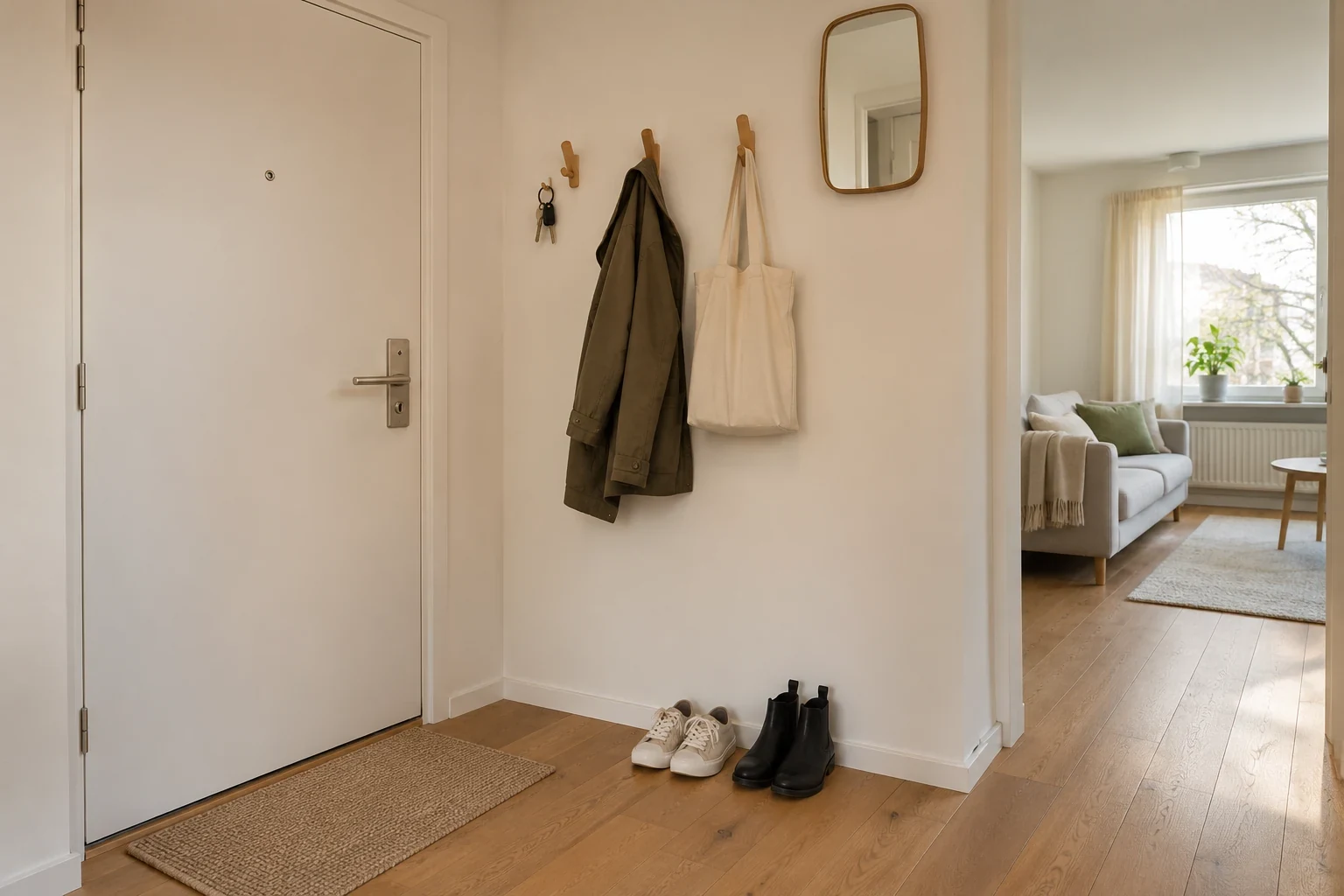
An entryway can work with very little furniture when the daily objects have deliberate places on the wall and the floor remains a route. In this arrangement, a short run of hooks takes the coat and bag, a separate small hook holds keys and the shoes stay at the wall edge outside the entrance door's swing.
The scene is intentionally modest. There is no console, bench or decorative floor basket. That does not make it an incomplete hallway: it makes the walking space part of the design. Use it as a starting point when the arrival routine is simple and a table would occupy space without adding a necessary task.
The Bag Is the Largest Wall-storage Object
Start the hook layout with your usual loaded bag. Hold it at a plausible position and observe how far it hangs down and projects into the route. Check its straps as well as the body. A compact hook can support an object that is anything but compact.
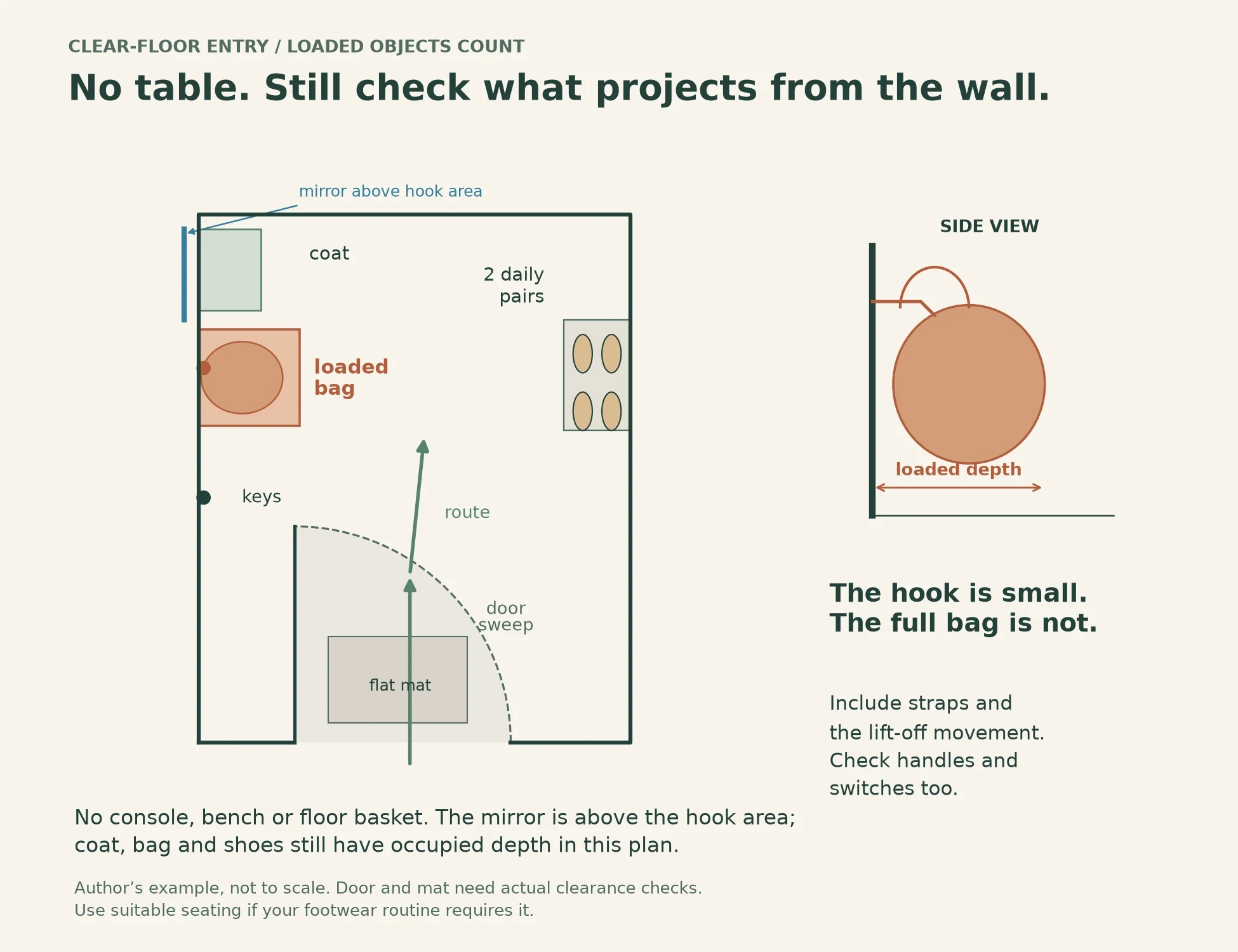
Keep the bag clear of the door handle, latch area and switches. If a coat shares the same cluster, separate the hooks enough that removing the bag does not pull the coat off. The right spacing comes from those objects, rather than a decorative rhythm measured across an empty wall.
Choose a hook and fixing system suited to the actual wall and load. Confirm rental permissions where relevant and follow the manufacturer's installation instructions. Do not substitute an unverified adhesive strip for a screw-mounted heavy-load product simply to avoid drilling.
The Keys Get Their Own Small Destination
Keys do not need a large furniture surface if a reliable hanging point suits your routine. Put the key hook where you can use it after the door is closed, without reaching behind the hanging coat. Keep it separate enough to see whether the keys are there before leaving.
If you also carry items that cannot hang, such as glasses in a case, add a genuinely useful small surface or move that part of the routine into the next room. A no-table arrangement is a choice for particular objects, not a rule requiring every household to avoid tables.
Keep Only the Current Shoes at the Door
The example places two everyday pairs beside the wall. That is an editorial choice about a limited daily set, not a storage solution for an entire shoe collection. Check the opened entrance door and the route past it with the shoes in place. Keep the mat flat and suitable for the door's clearance.
Move occasional footwear to another storage location. Otherwise, the clear-floor idea gradually becomes a row of shoes along every available edge. A small entry benefits from a capacity decision: how many pairs can live here without taking over the movement space?
For wet or dirty footwear, choose a location and surface appropriate to the actual conditions and materials. Do not put damp shoes into closed storage merely to preserve the picture of a tidy entry.
The Mirror Sits Above the Working Objects
In the scene, the mirror occupies a patch of wall above the landing objects and outside the opening door. It offers a quick glance before leaving without introducing another floor object. Install a mirror with appropriate fixings and leave the hook area usable below it.
Try its position at your actual standing distance. A mirror that looks centered in a photograph may be too high or obstructed by a coat in daily use. Position it for the people using the entry, not just for the wall composition.
Check the Arrival with Your Hands Full
Carry your normal shopping bag, enter, close the door and put things away. You should be able to hang the bag and reach the keys without stepping into the shoes. Try the departure too: remove the bag, put on the coat and open the door without clearing the floor first.
If you need to sit to manage footwear, include proper seating in a revised arrangement rather than using this furniture-free scene unchanged. If the daily objects need a stable landing surface, a shallow console may be justified. Keep the clear-floor principle where it helps, while letting the actual routine decide which elements belong.