A narrow entryway needs a reliable place for arriving things, but that place does not have to be a console table. Choose a table when you need a flat landing surface and can keep the route usable with everyday objects in place. Skip it when wall storage can handle the same routine without narrowing the passage. The useful comparison is the whole arrival setup, including bags, shoes and opening doors.
A slim table photographed against a bare wall can look like the obvious answer. At home, its depth is only one part of the space it occupies. A basket pulled out of the lower shelf, a tote hanging over the front edge and someone stopping to look for keys all change how the entry works. Test that scene before you buy the furniture.
Start with What Happens at the Door
Write down what you actually put down when you arrive. Separate things that need a surface from things that can hang or go straight elsewhere. Keys and a small envelope may need a shallow tray. A shoulder bag may work better on a hook. Wet shoes need a place that suits their condition, rather than being pushed into a decorative basket with clean scarves.
Try the movement with your usual load: unlock, step inside, close the door, put the bag down and take off your shoes. If you normally arrive with groceries, include a full reusable bag. Notice where you pause and which hand is free. Put the landing point where you can use it during that sequence, rather than on the first empty wall.
Keep the setup proportionate to the routine. A mail pile that needs weekly sorting is a different task from a landing spot for today's keys. The console should not become a holding area for everything that has not yet found a home.
Measure the Usable Route, Not Just the Empty Wall
Measure the width at the narrowest relevant point, including skirting, radiators, door trim and other projections. Mark the proposed table footprint on the floor with removable tape. Add the actual front edge of anything you intend to store below it. A basket deeper than the table defeats the benefit of choosing a shallow frame.
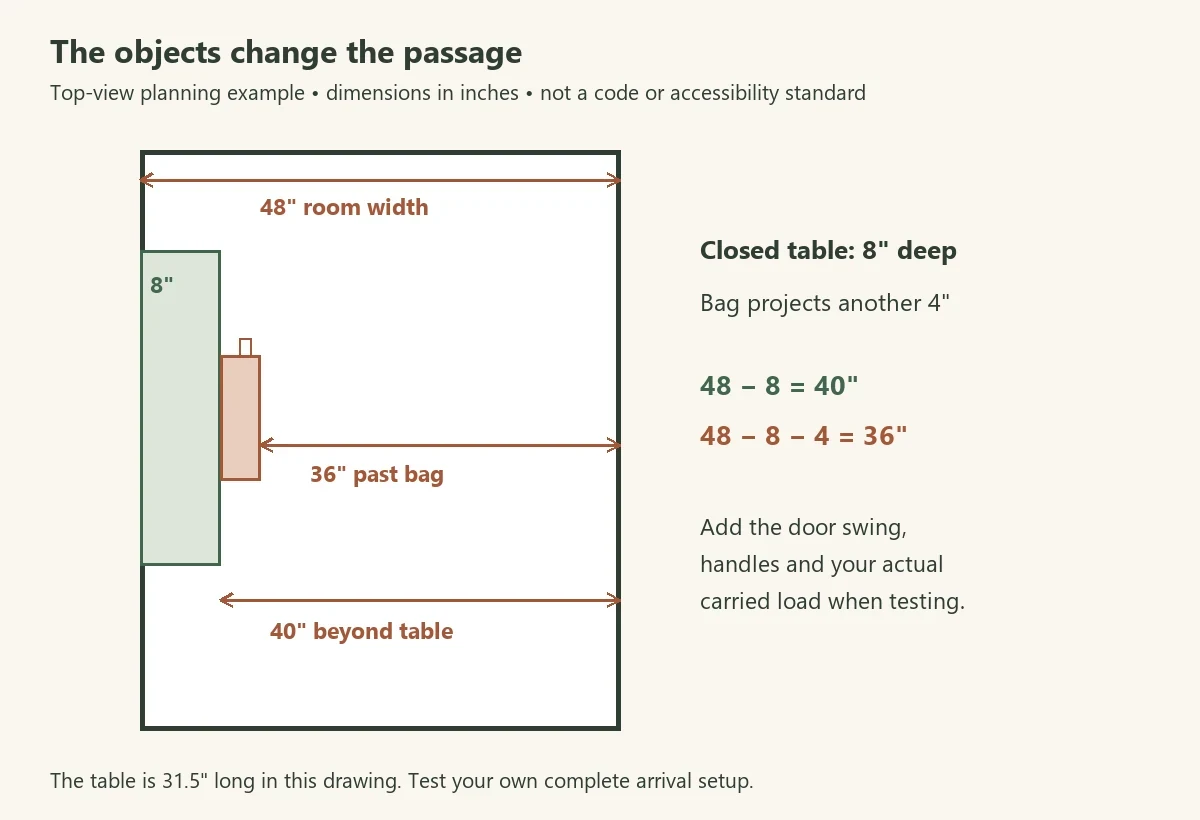
For a simple planning example, a 48-inch-wide entry with an 8-inch-deep table leaves 40 inches between the table front and the opposite wall. If a bag protrudes another 4 inches into that route, the remaining width becomes 36 inches. These are example calculations, not a universal passage or accessibility standard. Use your own measurements and the requirements that apply to your home.
Next, open the entrance door and any nearby cupboard fully. Check handles as well as door panels. Walk through with the largest normal load you carry. If you use a mobility aid, stroller or wheeled bag, test with that object rather than judging the gap by eye. Do not let the arrangement interfere with a required exit or the use of the door.
Choose a Console When the Surface Solves a Real Task
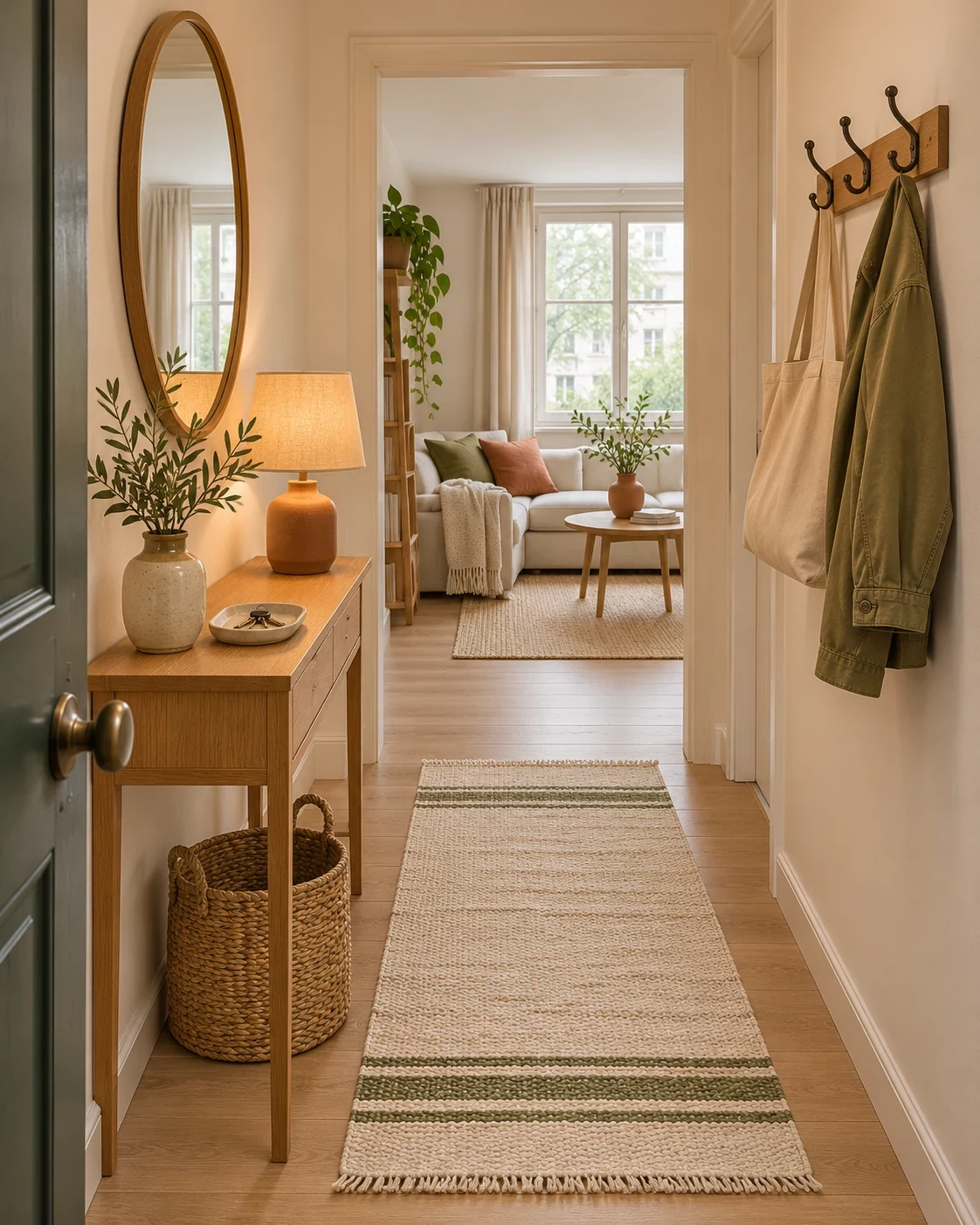
A console makes sense when several small tasks benefit from one fixed landing point: keys in a tray, a phone set down while removing shoes, and a light you can switch on when entering. An open lower shelf can hold a modest container if you can reach it without unloading the top.
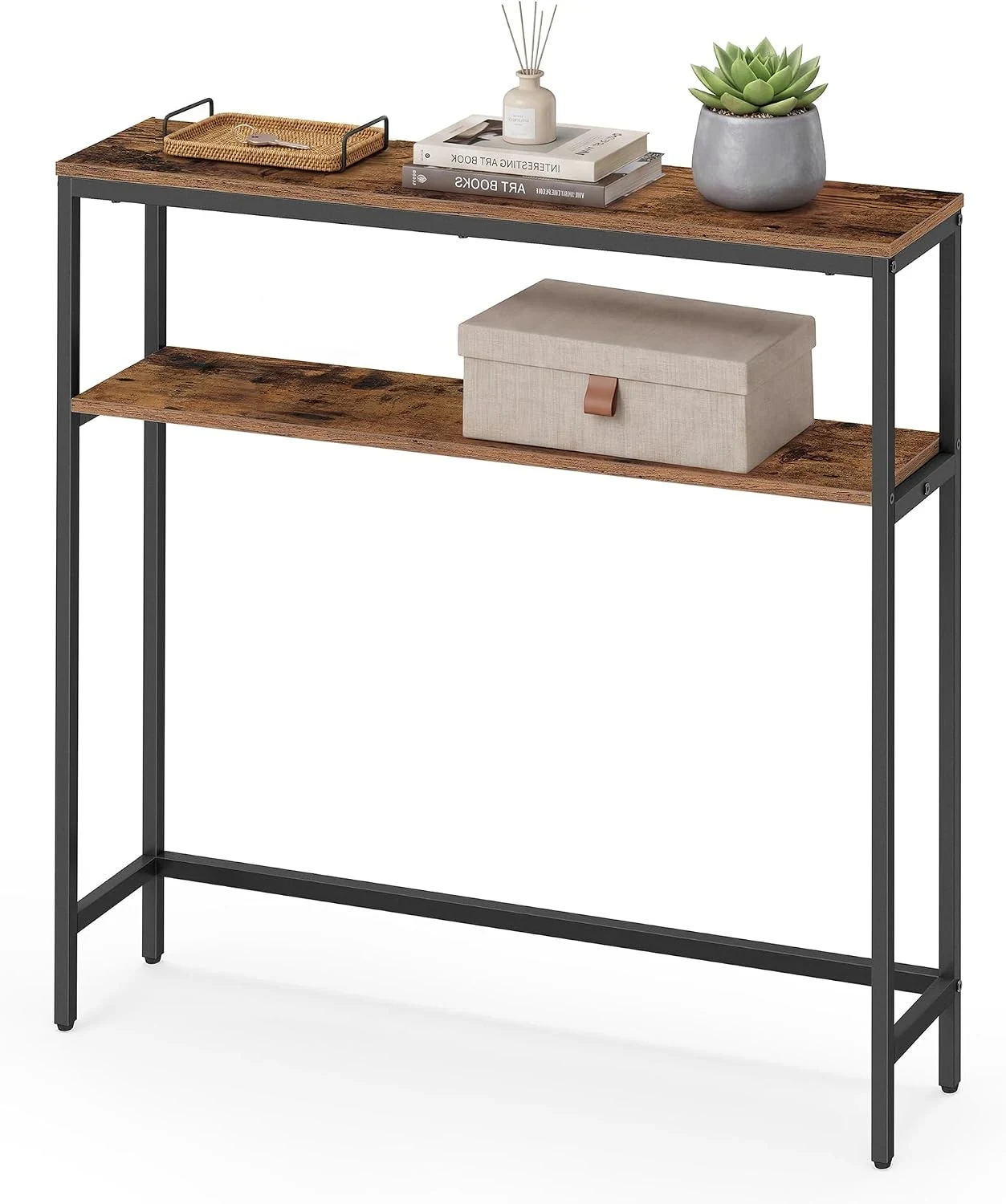
Keep the top useful. Place a tray toward the wall and leave an open patch for the item arriving in your hand. A lamp base, large vase and stack of books can consume the entire surface of a very shallow table. If a lamp is part of the plan, measure its base and route its cable along the wall without crossing the door or walking path.
Consider the VASAGLE 31.5-inch two-tier narrow console in rustic brown and black as a purchasing example. The listing for ASIN B0FC279283 gives a footprint of 7.9 inches deep by 31.5 inches wide and a stated height of 31.5 inches. That shallow footprint is useful to compare with a taped outline; it does not establish that the table fits your doorway or that a particular basket fits the shelf. Follow the supplied assembly and anti-tip instructions for the chosen item.
This is a landing table, not a seat. If sitting to put on shoes is the main need, start with a seating solution and evaluate its occupied space separately. Adding a console first can use up the only workable sitting area.
Skip the Table When Hanging Storage Does the Job
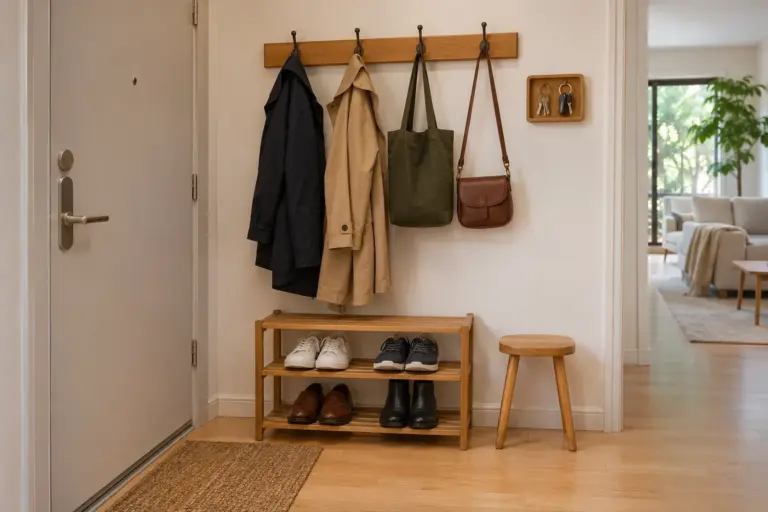
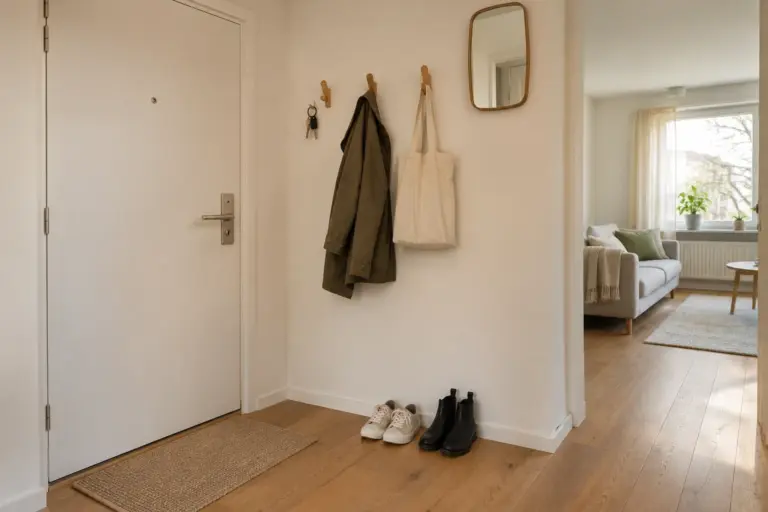
For a coat, a bag and a set of keys, a few suitable wall hooks may solve the daily routine with less furniture. Place them so that hanging objects remain clear of switches and the door. Check the bag's loaded shape: a deep tote on a hook still occupies passage space even though it has no legs.
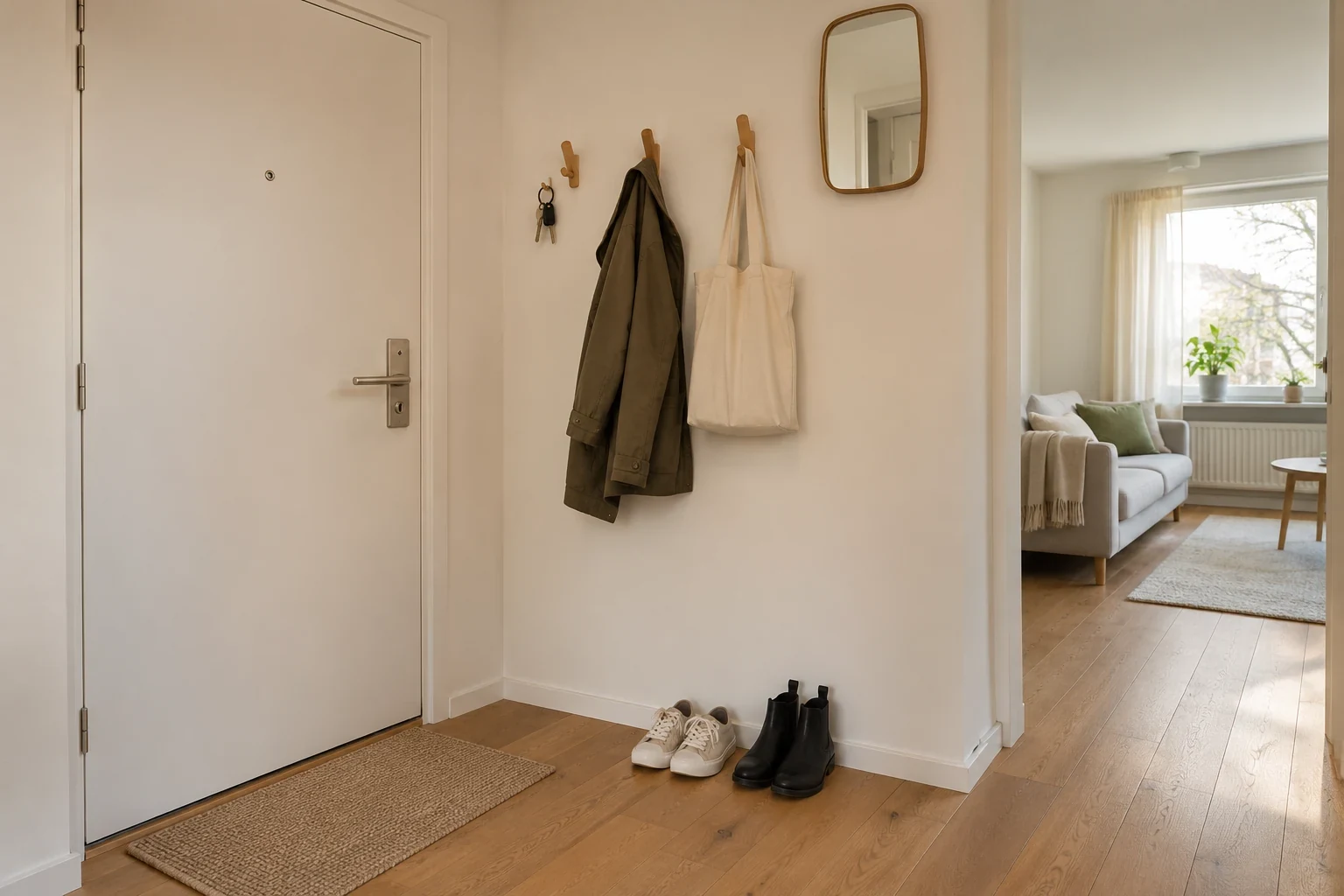
Choose fixings appropriate to the wall and the load, and follow the hook manufacturer's instructions. In a rental, confirm permitted installation methods. A claim that a hook is removable does not by itself establish that it can carry your bag on your wall finish.
A Door-back Option for Shoes
Another option is to move shoe storage to the inside of an adjacent cupboard door. This preserves the arrival floor, but only if the cupboard can close with shoes in the pockets. A fabric organizer is not a useful saving if it rubs against shelving or prevents the latch from engaging.
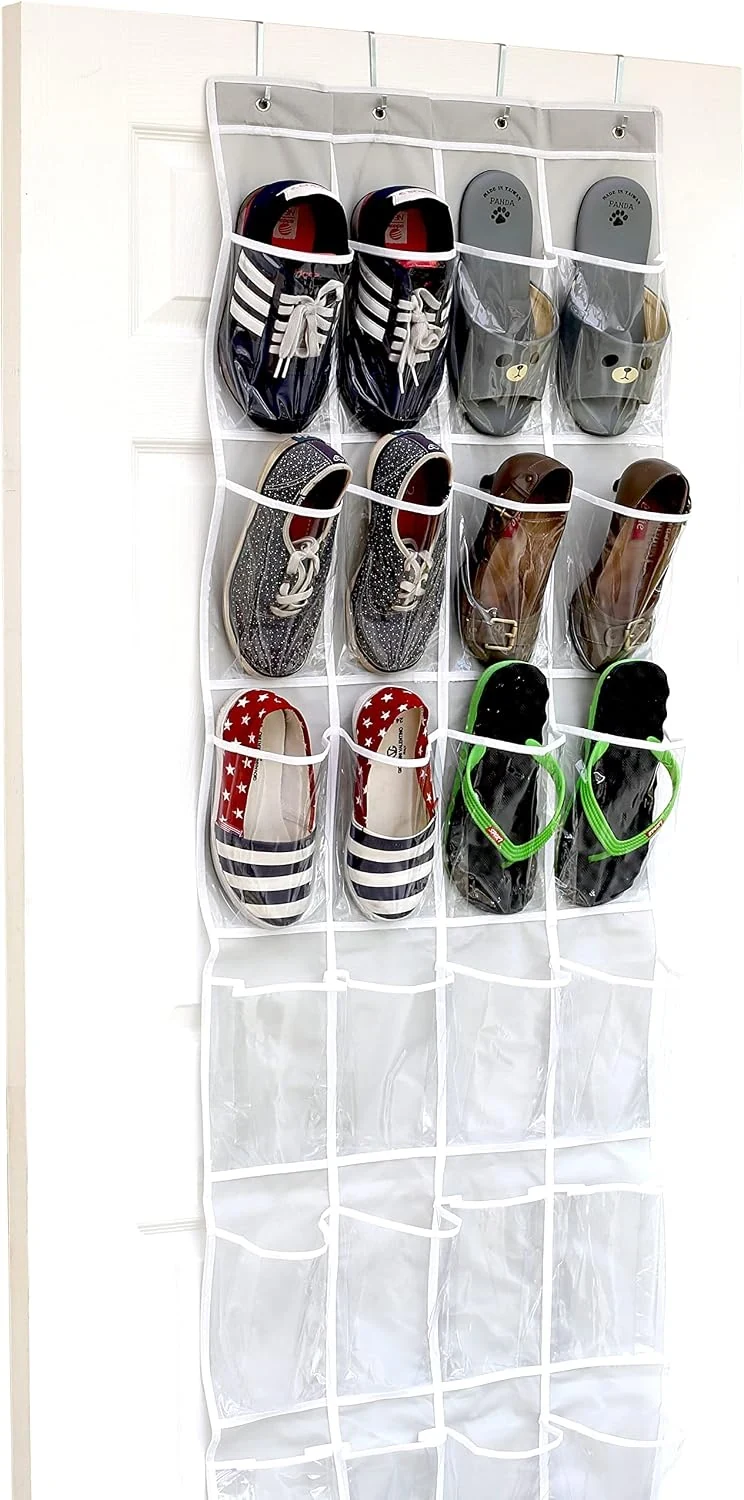
The gray Simple Houseware 24-pocket organizer, ASIN B01D58DRVC, is listed as 19 inches wide and 64 inches high. Its supplied hooks are described for doors up to 1⅜ inches thick. Pocket width and shoe shape matter: the number of pockets is not a promise that every pair of adult shoes will fit. Check the selected listing, door clearance and actual shoes before choosing it.
Give the Temporary Setup a Normal Day
Before ordering, use the taped footprint and a temporary landing point outside the route to rehearse the routine. Avoid balancing heavy objects on improvised supports. You are testing where things go and how you move, not building a substitute table.
At the end of the day, inspect what accumulated. If the landing point holds only keys, the table may be unnecessary. If bags keep landing on the floor, a better-positioned hook may matter more than extra shelf space. If you repeatedly need a stable surface while closing the door, the console has a clearer job.
Choose the smallest arrangement that completes your actual arrival routine. Leave useful empty floor where nothing needs to live. In a narrow entry, that space is part of the result.