A small living room can use several modest light positions rather than asking one ceiling fixture to support every activity. Give the room a comfortable general level, place useful light at the seat or task and make the controls easy to reach. The arrangement should still leave room for furniture and movement.
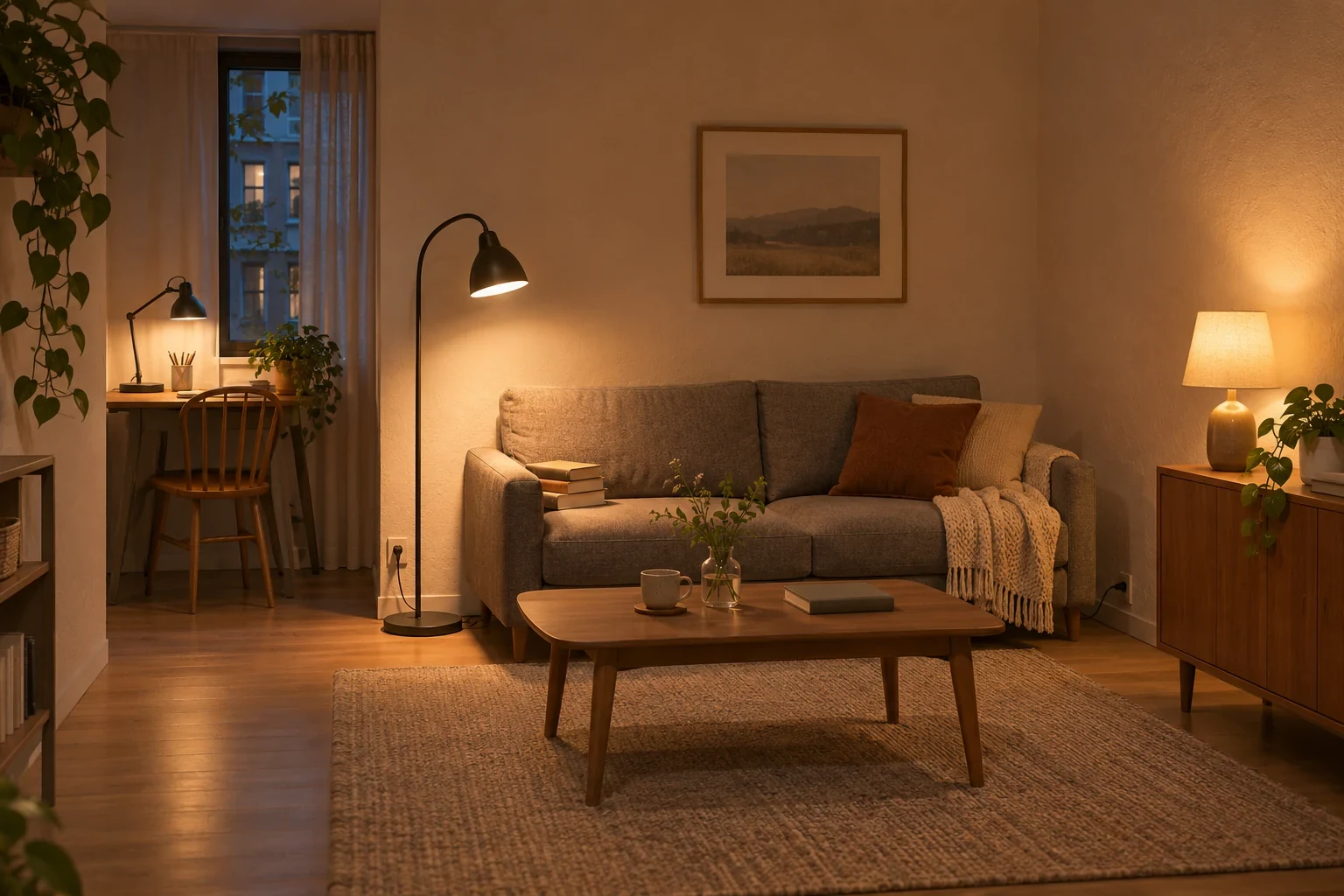
The illustrated evening room uses separate light sources for different jobs. It is a lighting concept, not a measured illumination comparison: choose actual fixtures and compatible bulbs for your room, then check the result where you sit and work.
Start with the Activities After Dark
List what happens in the room when daylight is gone. Reading a book, talking, watching a screen and walking through to another room need different relationships between light and objects. Mark those places on a simple plan before deciding how many lamps to buy.
General or ambient light supports the wider area; task lighting serves a particular activity such as reading. Those roles can overlap, but naming them makes it easier to understand why a room with a bright ceiling fixture can still need a better-positioned reading light.
Keep existing useful light. The goal is not to replace a working ceiling fixture or turn on every lamp at once. Add or reposition a source when it completes a task that the existing arrangement handles poorly.
Give the Reading Seat Its Own Useful Position
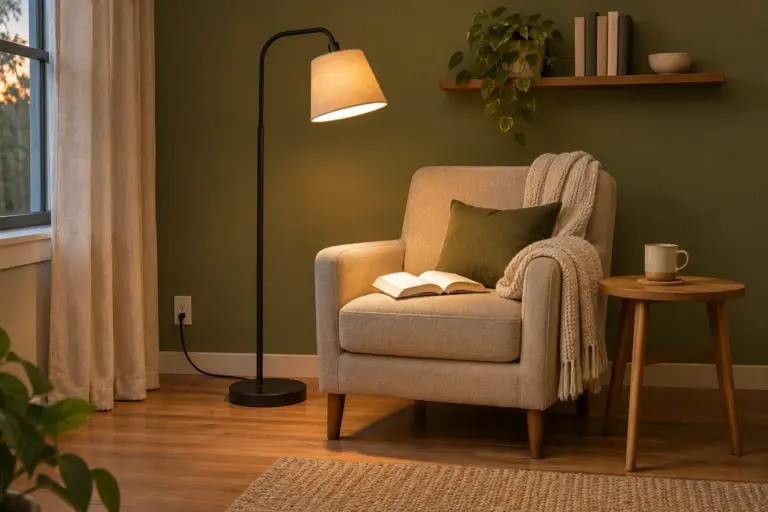
In the example, a shaded floor lamp reaches toward the book area from beside the seating. A small table remains available for the cup. The lamp base and cable stay outside the approach to the seat.
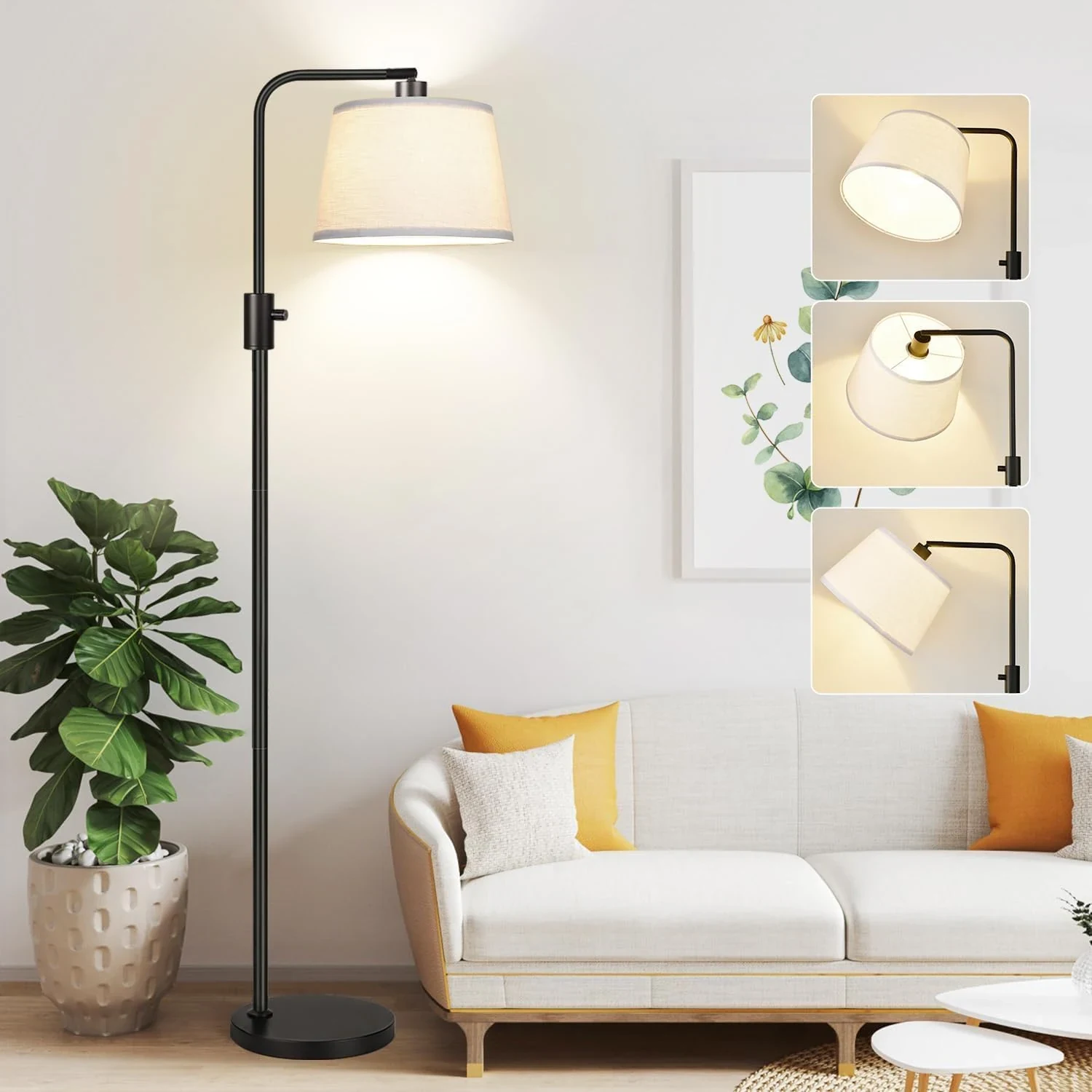
Sit in your normal position and check the view of the shade opening. Aim adjustable parts within their instructions and see whether your shoulder or chair back blocks the page. Check the next seat too, since a source hidden from the reader can be visible to another person.
The black Nintiue shaded floor lamp, ASIN B095NXXP8C, is a purchasing format to compare for head adjustment and rotary dimming. Its listing describes an included warm-white E26 bulb. Confirm current assembled dimensions before choosing it for a tight layout; the generic dimensions field is not a reliable height reference.
The named product and the room illustration are separate references. Choose the real fixture from its confirmed dimensions, permitted bulb and control arrangement rather than assuming it is the unbranded lamp pictured in the concept.
Use Another Position for the Rest of the Room
A lamp on an existing sideboard or suitable shelf can make the opposite part of the room available without adding a floor-standing object. Keep its support stable and allow the fixture's required space around the shade and nearby materials. Do not fill a narrow shelf with a lamp whose base barely fits.
Check the approach from the room entrance. If you must cross an unlit room to reach the first control, reconsider how the existing wall switch and lamp controls work together. Do not improvise electrical changes to achieve a particular switching pattern; choose appropriate compatible controls and use qualified help where needed.
Try the arrangement with only the sources needed for the current activity. A pleasant conversation setting may use a different combination from reading or tidying. The useful flexibility comes from accessible controls, not simply from adding more fixtures.
Keep Screen Reflections and Cables Visible in the Plan
Turn on the screen and sit at the normal viewing position. Check whether a lamp appears in the screen or shines directly into your view. Move the proposed fixture position before assuming a brighter or darker bulb will fix a reflection caused by its location.
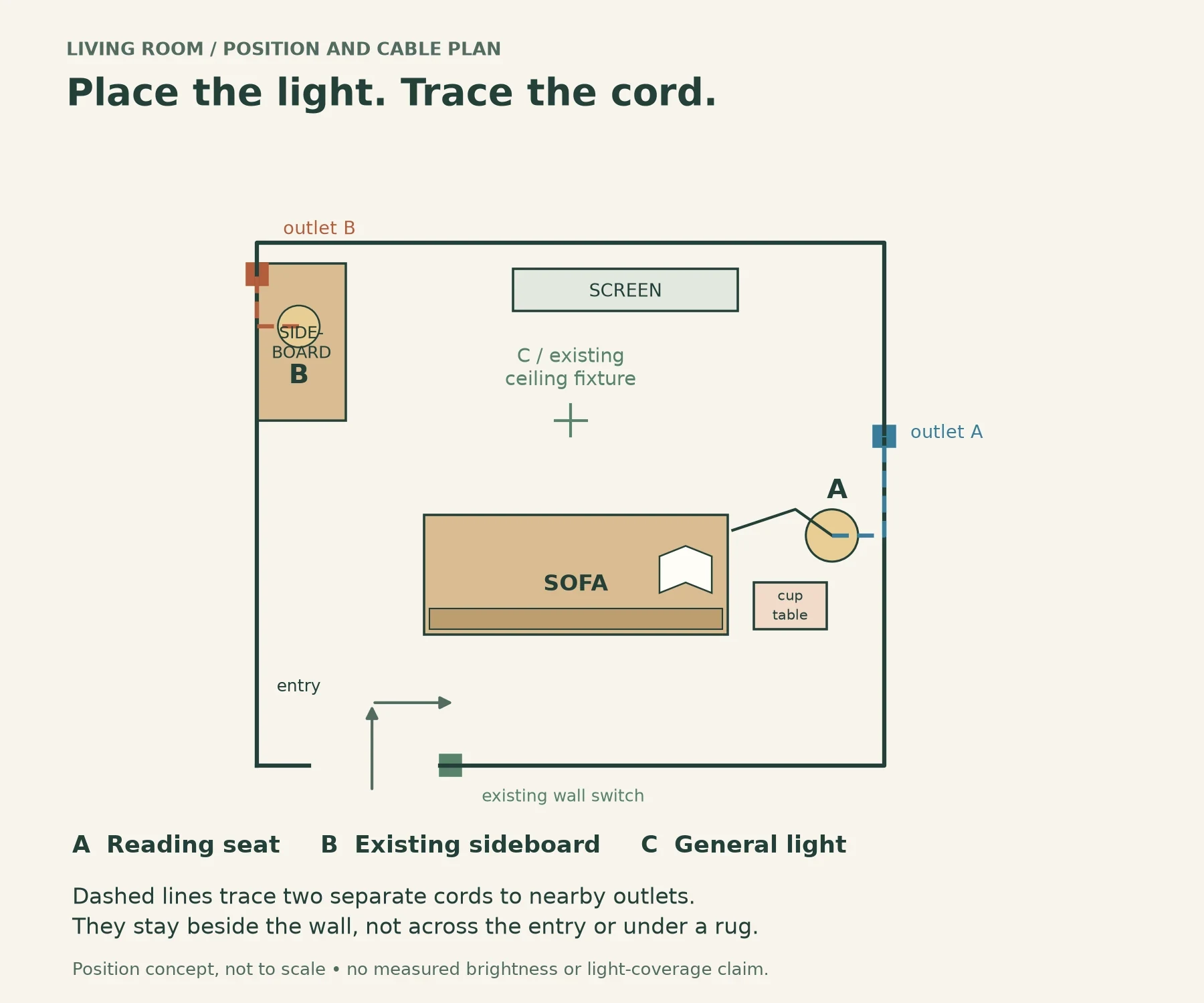
Trace each cable to its outlet. Keep cords away from walking routes and moving furniture, following the selected product instructions. Do not run one across a doorway or under a rug to create an otherwise convenient lamp position. A different outlet-side arrangement may be more useful than a perfectly balanced drawing.
Also check the objects that move: curtains, reclining backs, swivel chairs and doors. A light that clears fixed furniture can still conflict with these during use.
Choose the Appearance and Output Separately
For compatible replaceable bulbs, compare brightness in lumens and light appearance on the packaging. Wattage describes electricity use rather than directly telling you the brightness. Confirm dimmer compatibility for the particular fixture and bulb combination.
You do not need every source to have identical output. You do need each source to suit its job and to work comfortably with the others from the actual viewpoints. Avoid treating the warmth of a pictured room as a specification or a promise of the result in your room.
Finish by walking through an evening routine: enter, switch on, sit, read, change activity and leave. If you can use the room without rearranging lamps or stepping over cords, the lighting plan is doing useful work beyond making a single attractive view.