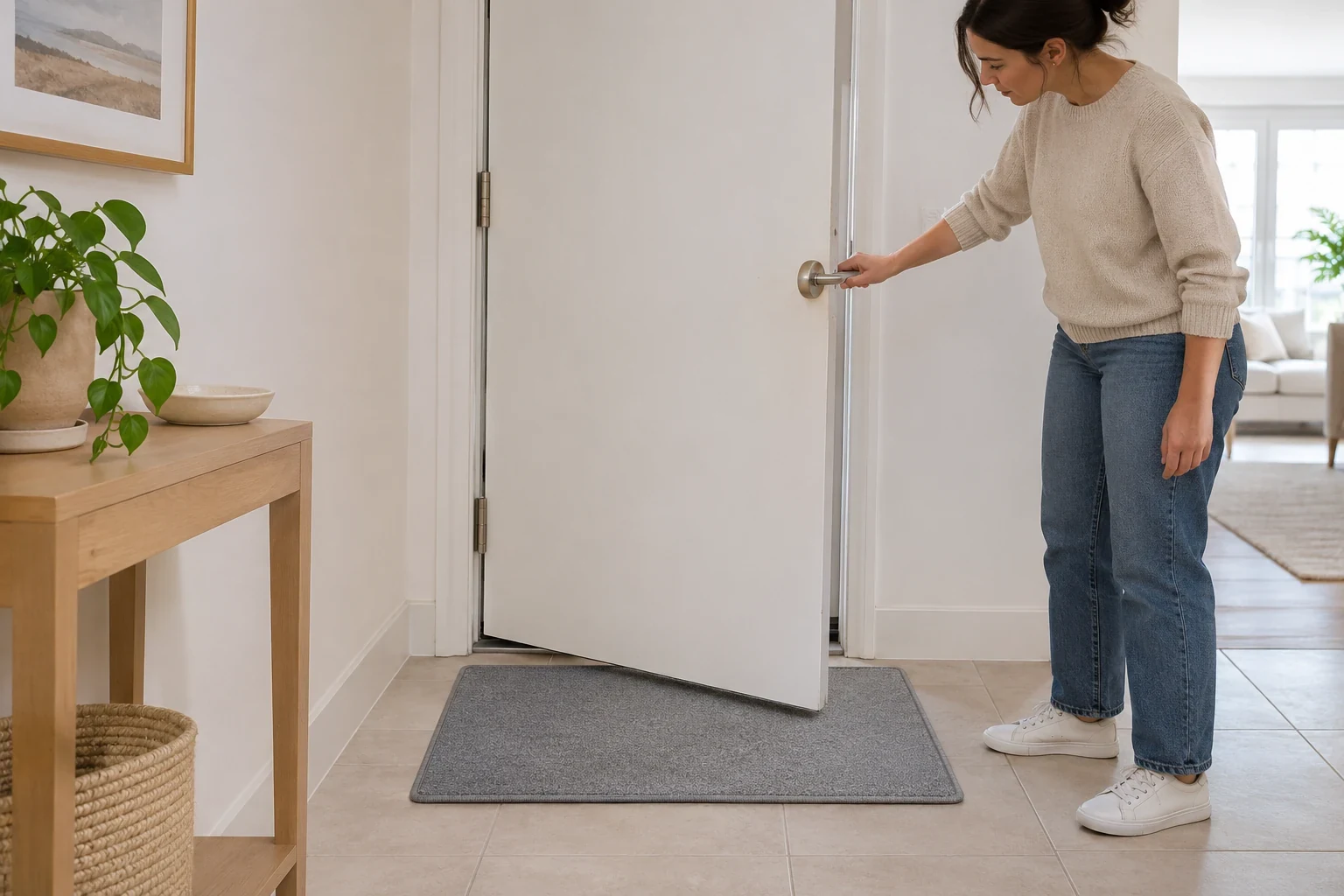
Choose a door mat from the space the door actually sweeps, not just the rectangle available behind it. Check the full opening and closing movement, the lowest clearance above the floor and the mat's highest installed profile. A mat can fit neatly in front of a closed door and still catch underneath it halfway through the swing.
Start with the entrance as it normally works. Keep the required route usable, check that the door closes normally and follow any building or door requirements that apply. A different mat or permitted position is preferable to changing a door or seal to accommodate an unsuitable purchase.
Map the Whole Door Movement
Identify the hinge side, opening direction and position the door needs to reach for normal entry. Observe it without a mat first. Keep hands and measuring tools clear while the leaf moves, and do not force a door that already drags.
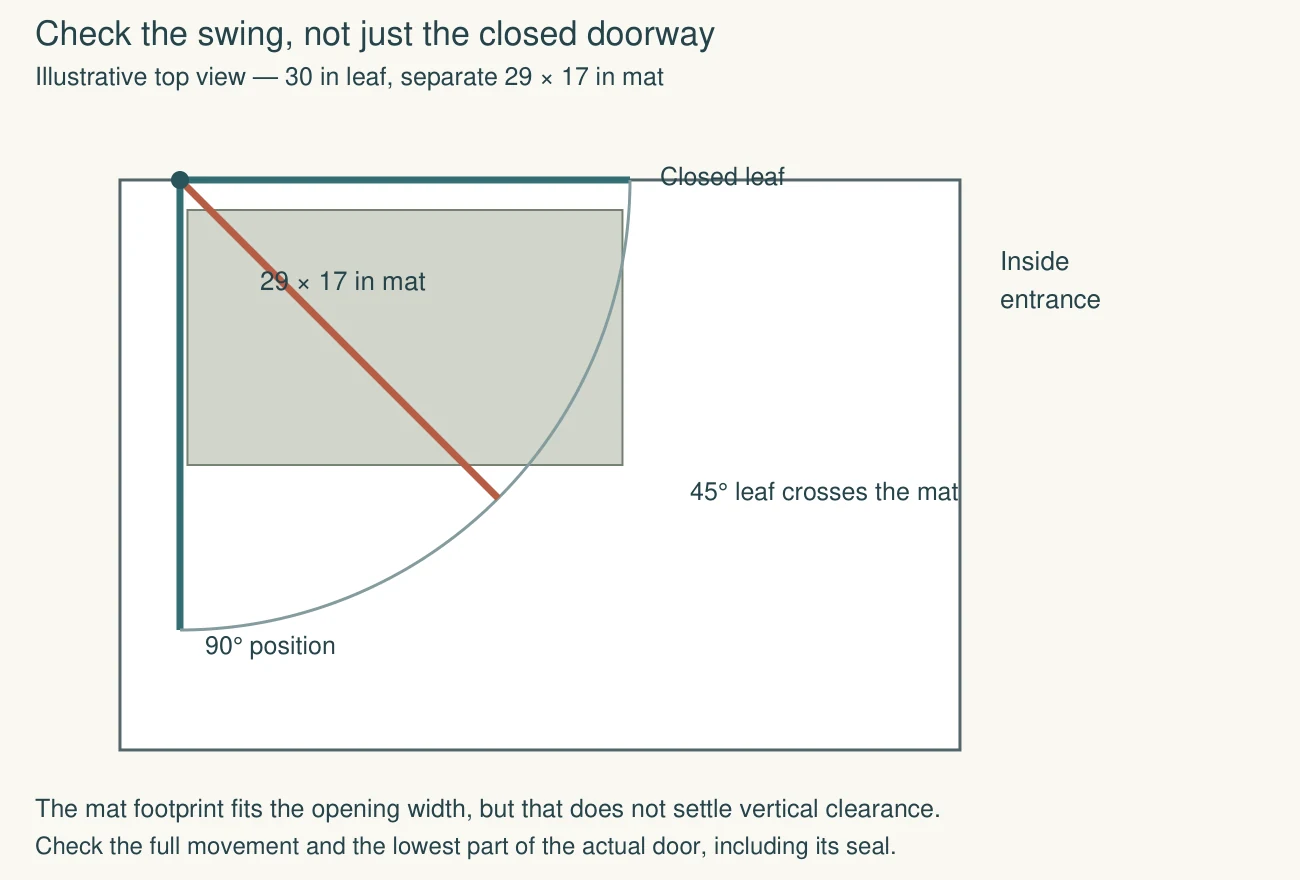
Measure the proposed mat's outside footprint and mark its position with an appropriate removable method. Include the mat border rather than only its textured center. A mat that extends into the hinge corner, nearby cupboard movement or another doorway may create a conflict even if its thickness seems suitable.
The illustrative plan uses a 30-inch door and a 29-by-17-inch mat positioned just inside it. The door crosses part of the mat during its swing. The mat's width being less than the door width does not remove that overlap; the two measurements describe different parts of the arrangement.
Check how you enter carrying the ordinary bag or belongings you bring home. The mat should not become a parking place for shoes or deliveries that blocks the door's movement. Hallway storage needs its own appropriate location, rather than borrowing the opening area.
Find the Lowest Gap Over the Proposed Mat
With the door stopped appropriately at several positions, check the space between its lowest part and the floor where the mat would lie. Include any sweep or seal extending below the solid leaf. Floor levels and the door's movement can change the gap, so a measurement at the closed threshold is not the complete check.
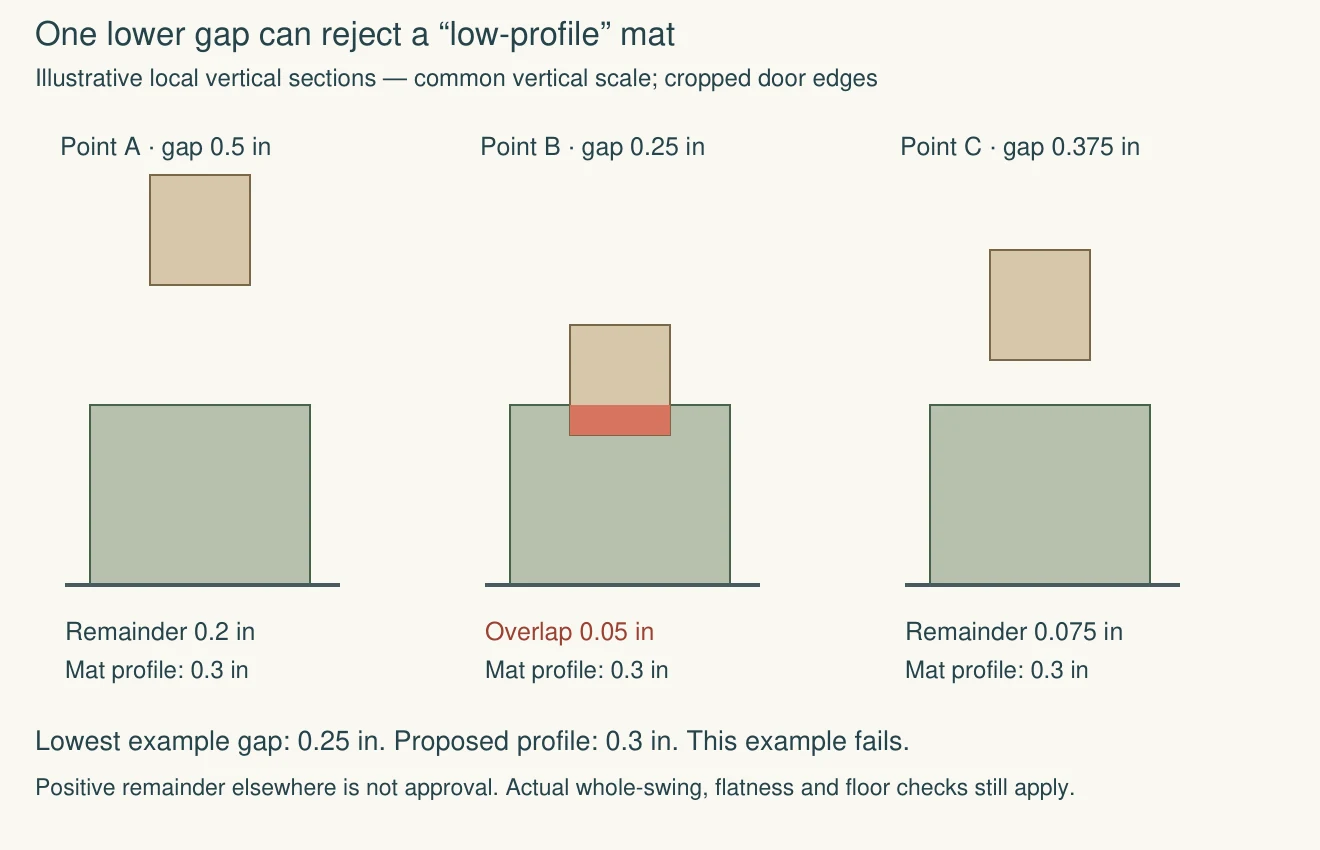
For a hypothetical example, three local measurements are ½ inch, ¼ inch and ⅜ inch. The lowest observed value is ¼ inch. A proposed mat with a highest profile of 0.3 inch is taller than that 0.25-inch gap by 0.05 inch. It fails this example even though it appears to clear at the other two positions.
The other calculated remainders are 0.2 inch and 0.075 inch. Those positive numbers do not approve the mat; the smaller gap still governs the conflict, and three sample positions do not establish every point of a real swing. Check the actual full movement and any operating margin the real arrangement needs.
If the door catches without a mat or its condition is uncertain, resolve that door issue through the appropriate maintenance route. Do not use the mat exercise as a reason to cut the door, remove a seal or change a closer.
Compare the Complete Mat Profile
Look for the thickness of the actual mat, including its highest pile, border and backing. A rolled shipping dimension is not its installed height. If specifications are unclear, obtain the correct information before making a close-clearance purchase.
Include any permitted underlay in the total profile. Do not quietly add a second layer after comparing only the mat thickness. Likewise, do not assume a soft mat will compress whenever the door passes: the door should not need to scrape, bunch or push it aside during normal operation.
Check that the mat can lie flat in its proposed position. Curled corners, a raised border or movement during ordinary use can change the condition you measured. Follow the mat's instructions rather than trimming, stacking or adding an improvised backing to make it stay in place.
For an entrance subject to specific building, accessibility or door requirements, use those requirements alongside the furniture-scale exercise. A small numerical gap in an illustration is not approval for a particular doorway.
Check a Specific Product Against Your Own Doorway
Disclosure: As an Amazon Associate, Livable Corners earns from qualifying purchases.
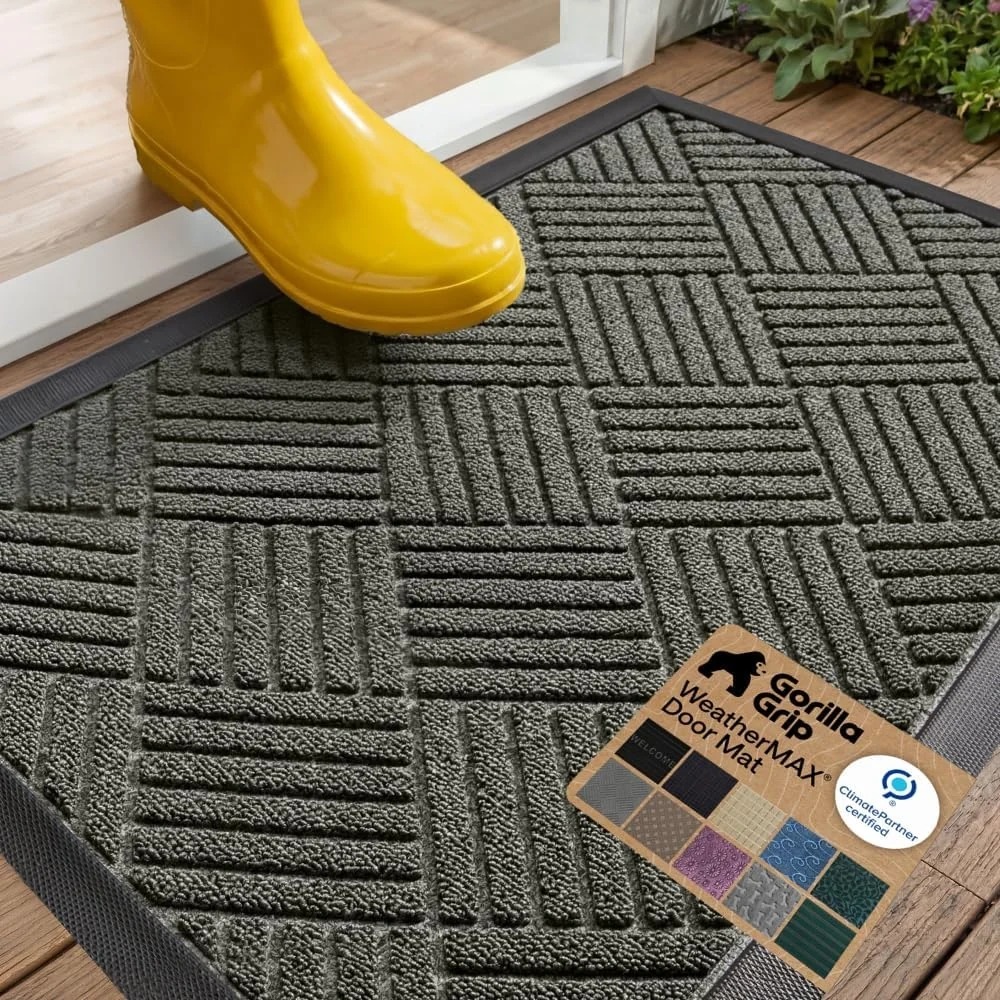
The GORILLA GRIP WeatherMAX mat in Gray Diamond, 29 by 17 inches, is one exact size to compare. The current selected Amazon listing is ASIN B072K1G53F, one mat, with a stated thickness of 0.3 inch. Its UPC, 653341825124, matches the manufacturer's Gray Diamond 17-by-29-inch variant.
Check the single 29-by-17-inch Gray Diamond WeatherMAX mat on Amazon
This candidate fails the hypothetical ¼-inch minimum gap above. Consider it only where your actual doorway, floor and mat checks support that profile. The retailer's thickness is a specification to verify against the delivered mat, rather than a measurement of your entrance. The plain mat in the room illustration is a separate generic example.
The manufacturer also says the mat is not suitable for every floor type, including concrete and certain finished deck surfaces, and directs buyers to check the floor manufacturer's guidance. It says to keep the area underneath dry and ensure the mat lies flat. A suitable door gap does not settle that separate floor-compatibility decision.
Repeat the Check During Ordinary Use
Once you have an appropriate mat, lay it flat as directed and observe the door opening and closing without forcing it. Check the needed opening position and normal latching. If it catches or shifts, stop using that arrangement and reassess rather than treating resistance as something to wear in.
Approach and leave the entrance normally. Include the other people and access needs that apply, while keeping the route clear. Do not infer secure footing or suitability for every user from a backing material or a product's marketing label.
Follow the actual care instructions and keep the floor beneath the mat in the required condition. The WeatherMAX maker's care guidance includes removing excess dirt, appropriate spot cleaning and air drying. Recheck after cleaning or repositioning because a previously flat mat may not be in the same state when returned.
Keep the mat when its real footprint, profile, condition and floor compatibility work with the complete doorway routine. The useful result is an entrance you can use and close normally, with the mat remaining where it belongs throughout that movement.