Fit the bed by checking the wardrobe in use, not just by fitting two closed rectangles into the bedroom. Leave room for the actual fronts to move, the clothes or internal fittings to come out and the intended user to stand or reach. Then check that everyone can still use the bed and enter the room.
Begin with the furniture you have, or exact drawings for the pieces you are considering. A mattress size does not describe the whole bed frame. A wardrobe's outside depth does not describe the space needed to open it. Measuring both states can reveal a workable move before you spend money on replacements.
Draw the Bed Frame and the Fixed Room First
Measure the bed's widest and longest outside points, including the headboard, footboard and any projecting frame. Note features that move, such as underbed drawers. For an adjustable or storage bed, obtain its actual operating requirements rather than drawing only the mattress.
Draw the room with door and window positions, their opening directions and fixed obstructions. Include radiators, vents, projecting trim and other features that reduce the usable floor or wall. IKEA's measuring guide calls for a bird's-eye plan with openings, furniture measurements and things projecting into the room.
Record the wardrobe's outside body and its usable front opening separately. If it is fitted or must remain in its current position, treat that as a fixed condition. If a freestanding unit could move, check the actual assembly, installation and anti-tip requirements before treating another wall as available.
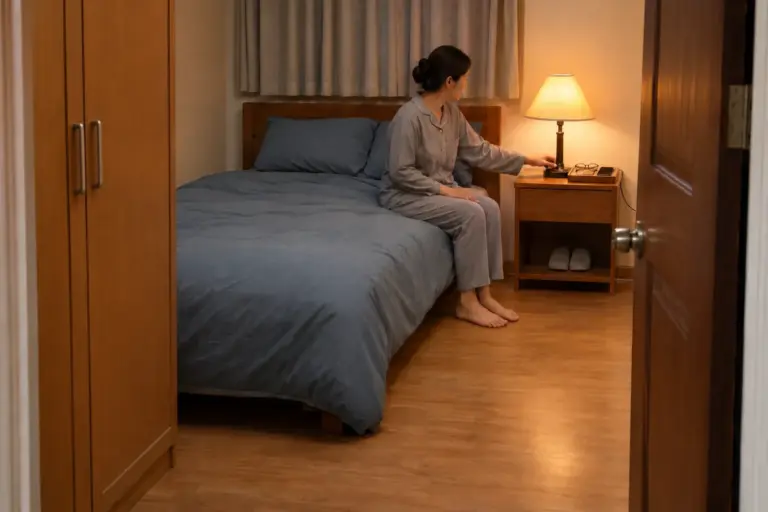
Mark any bedroom entrance route that needs to remain open. A bed placed across the middle can leave generous space beside the wardrobe while cutting off the way to it. The room plan needs to show the approach as well as the space immediately in front of the clothes.
Add the Wardrobe’s Real Opening Movement
For hinged doors, locate each hinge and measure or obtain the leaf width. Trace the door from closed to the opening position required by its instructions and fittings. A door can begin to open and still stop short of the angle needed for a drawer or clothes rail inside.
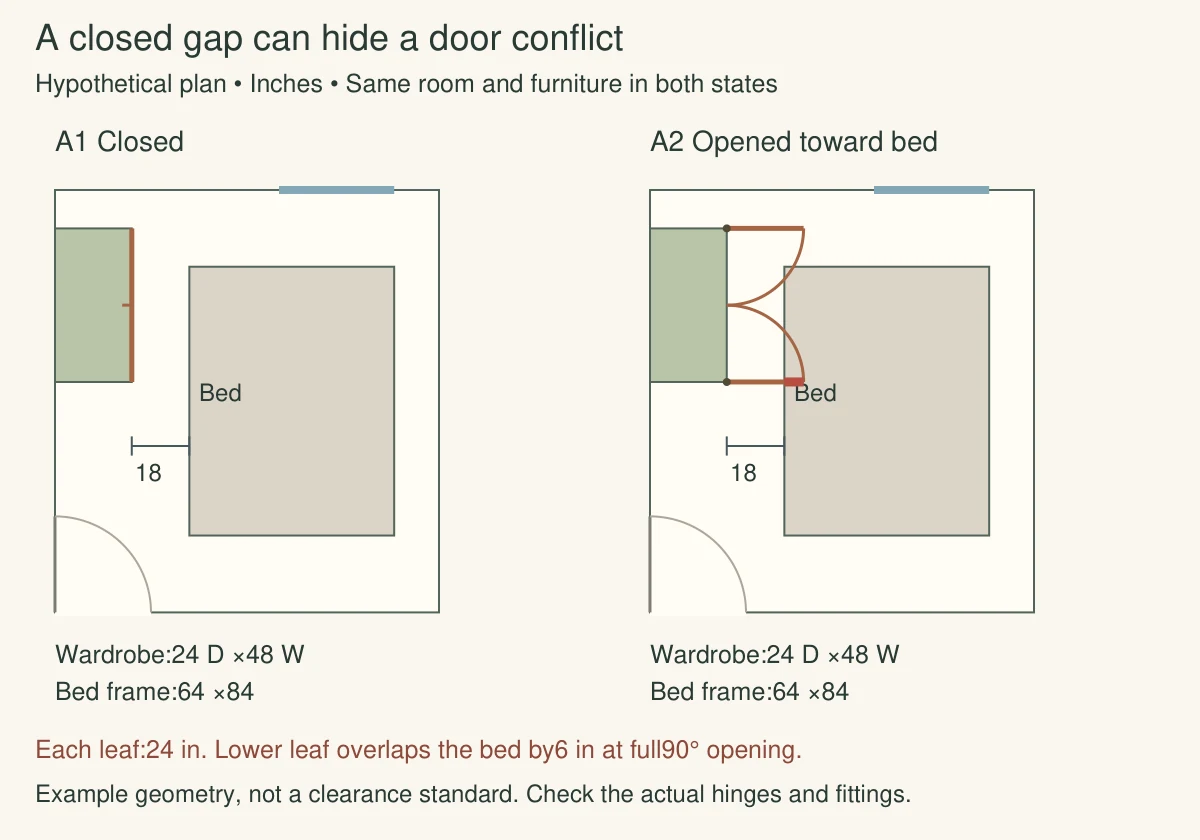
For example, a 24-inch leaf needs its own 24-inch radius of movement from the hinge in a simple right-angle opening. That is geometry for the illustrated leaf, not a recommended gap for all wardrobes. Handles, hinges and opening angles may require a different outline for the furniture you actually own.
The first plan shows why measuring the closed gap alone can be misleading. The example wardrobe is 24 inches deep; the nearby bed begins 18 inches beyond its front. The lower 24-inch door cannot complete the illustrated right-angle opening because the bed occupies part of its path.
Do not force a door against the frame or assume a soft mattress will make room. Keep the bed's real outside edge in the plan. If a handle or another fitting extends beyond the leaf, include it when checking the moving shape.
Compare Two Positions with the Same Furniture
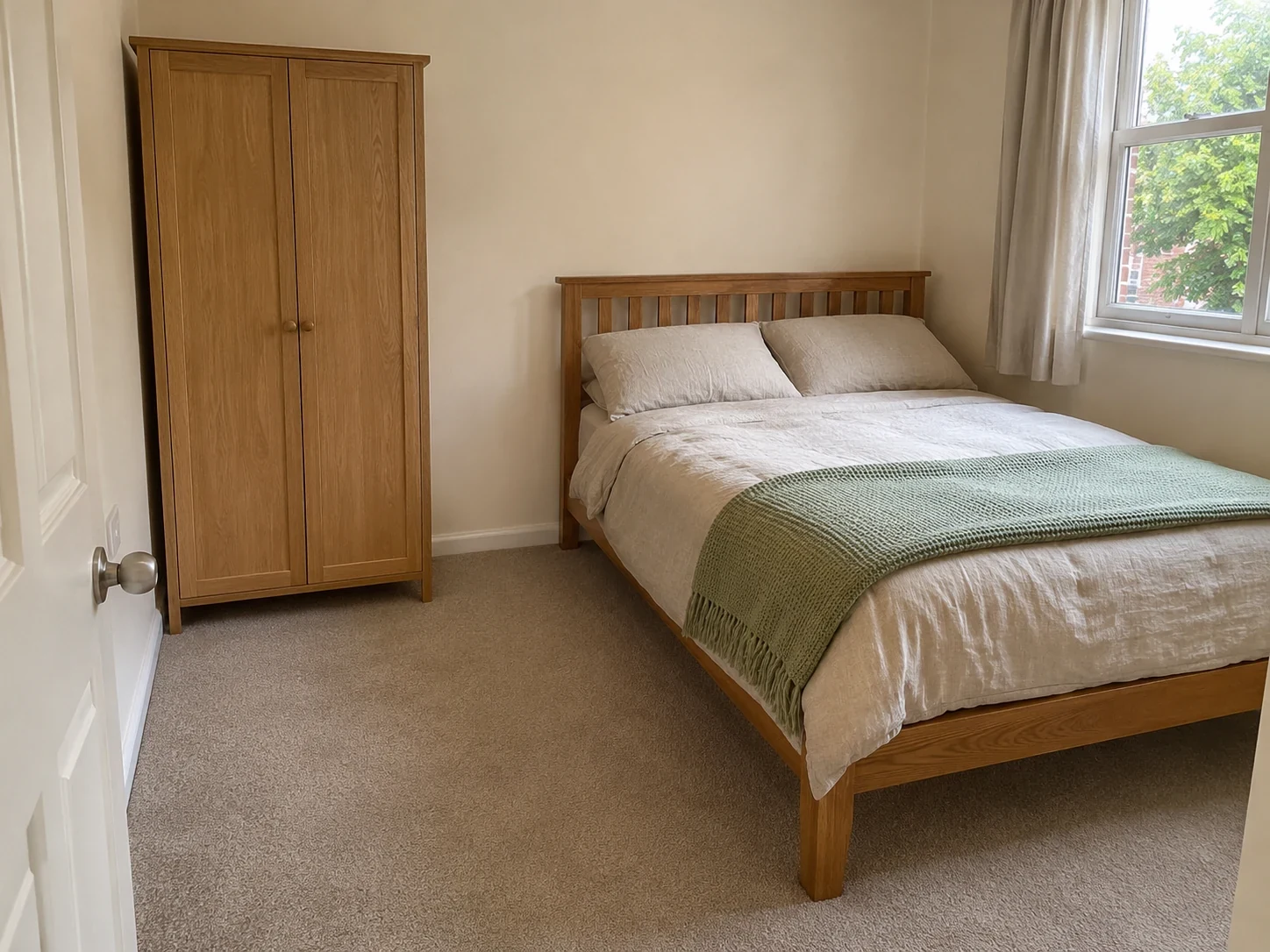
The paired plans use a hypothetical room 120 inches wide and 132 inches long. Both retain a 24-by-48-inch wardrobe along the left wall and a 64-by-84-inch outside bed frame. These are example measurements, not standard dimensions for a mattress category or a particular product.
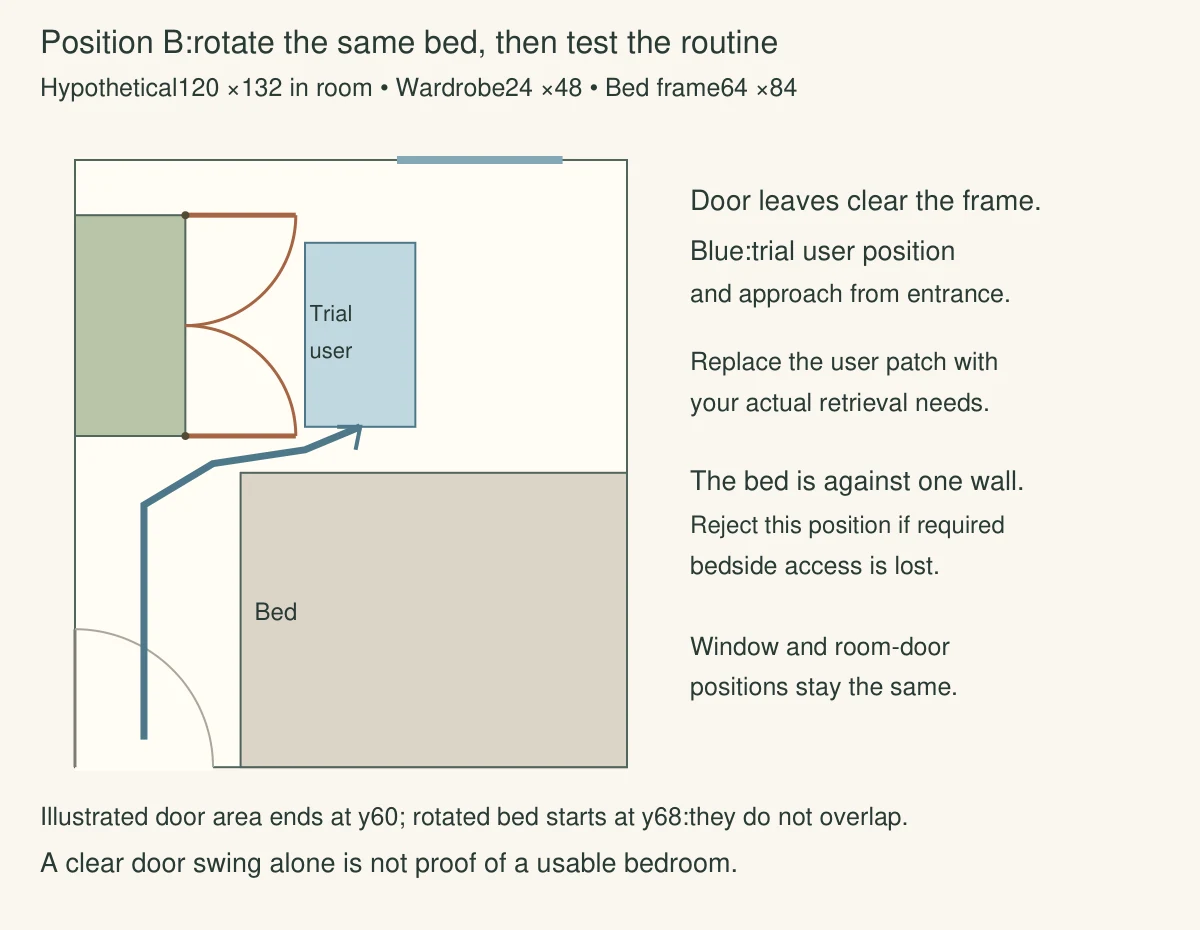
In position A, the bed's long side faces the wardrobe. Its left edge is 42 inches from the left wall, giving 42 minus 24, or 18 inches, between the wardrobe front and the bed. The closed bodies fit, but the lower door reaches across that gap into the bed outline when opened fully.
Position B rotates the same bed into the lower-right corner. The wardrobe remains where it was. The bed now starts beyond the wardrobe's door area rather than running alongside it, so the illustrated doors can open without meeting the frame. A trial standing patch sits beyond the open leaves, connected to the entrance route.
This is a candidate to test, not a complete recommendation for every household. Position B puts one long bed side against the wall. That may be unacceptable for two sleepers, assisted access or the way you make the bed. It also requires the real headboard and frame to work in the proposed corner. Reject it if those needs fail, even though the wardrobe doors clear.
Use the same method to compare your own second position: keep the actual furniture shapes, change only their positions or orientation and redraw the moving fronts. Do not quietly shrink the bed or remove an awkward door from one version to make it look better.
Reserve Room to Retrieve Clothing
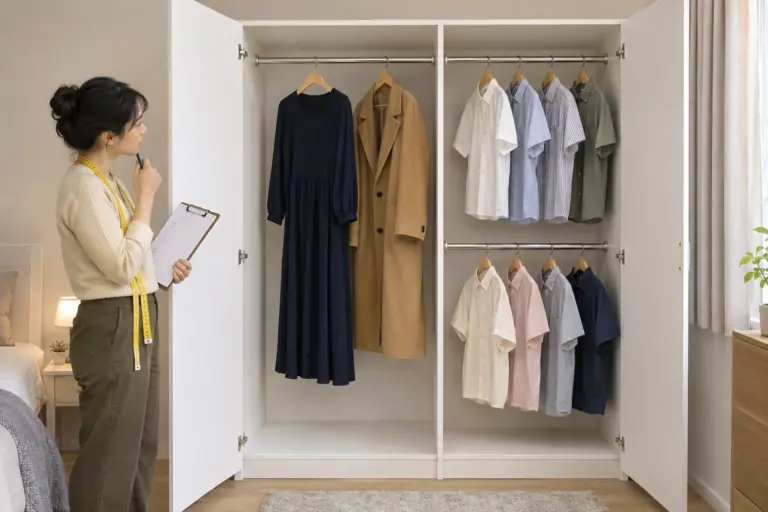
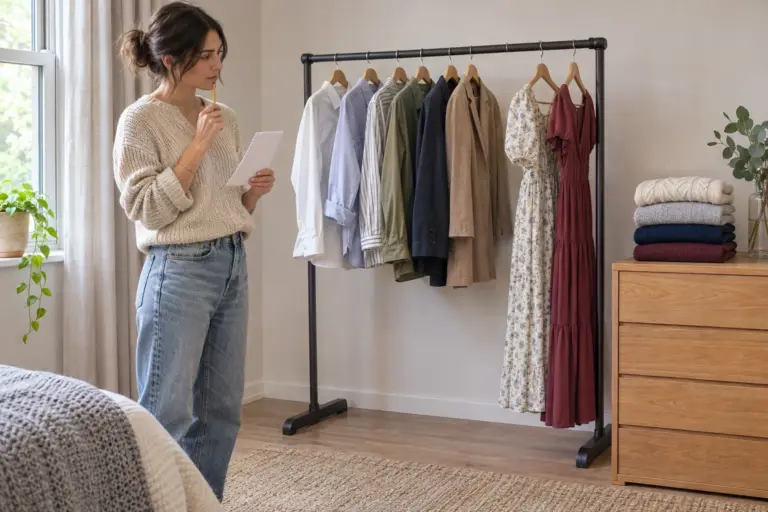
An open wardrobe is useful only when someone can use it. Add your actual standing or reaching position, then trace the item coming out. Try lifting a storage box, taking a hanger off the rail and reaching the lowest everyday shelf. A narrow remaining strip may let the door open while making those actions awkward.
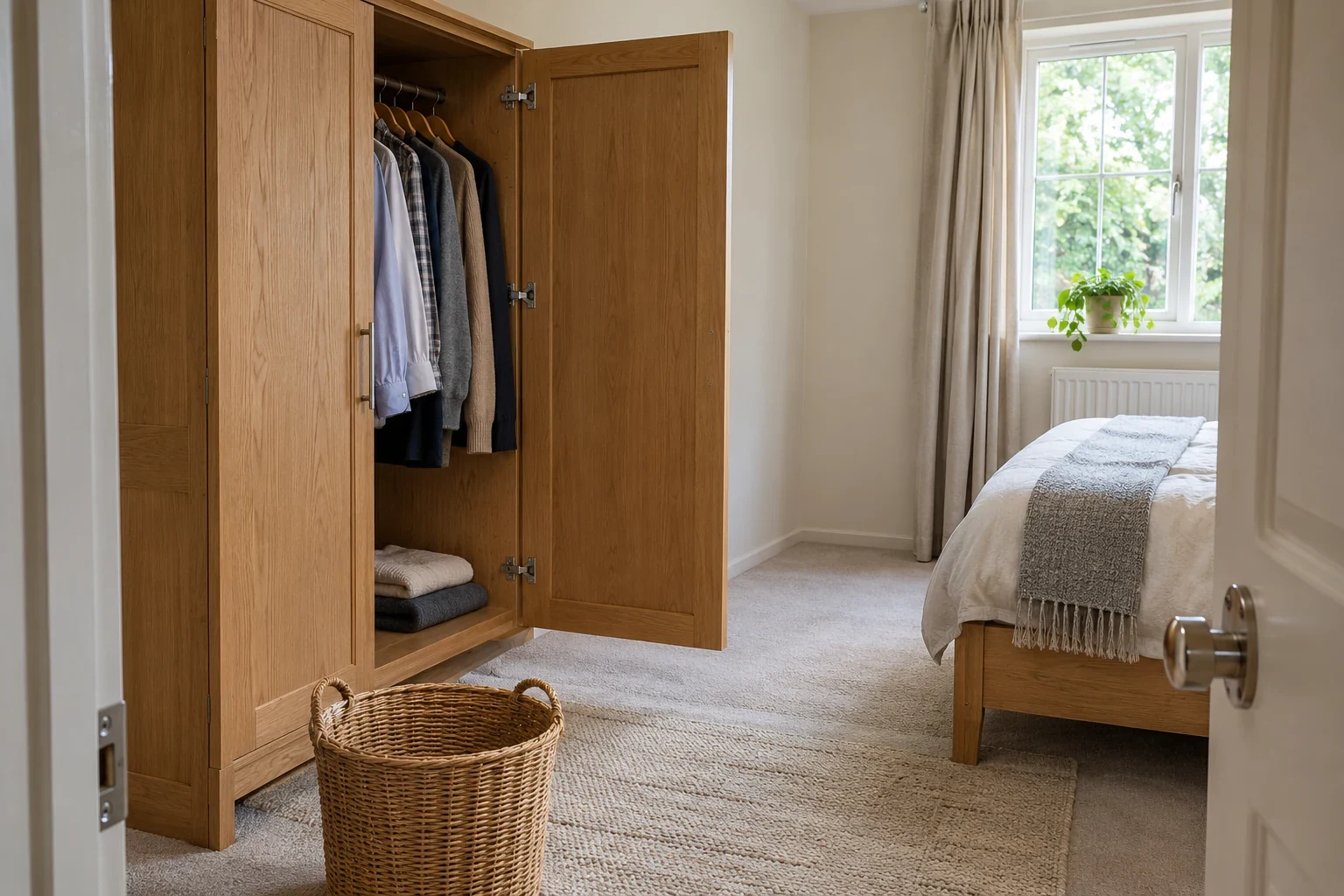
The example's standing patch is a place to test the intended user's movement; its outline is not a clearance standard. Check with the person who uses the wardrobe, the clothes they retrieve and any access equipment they need. Account for another person using the room when that is part of the normal morning routine.
Use the complete room scene to think through that sequence: approach, open the correct leaf, retrieve the clothes and leave. A laundry basket temporarily placed in front of the doors belongs in the operating check, even if it is absent from a tidy floor plan.
Do not rely on climbing over the bed or repeatedly shifting it to reach ordinary clothing. Put the most frequently used wardrobe sections where the routine remains practical. An occasional upper compartment and the daily hanging rail can have different access patterns, but both still need a usable method of retrieval.
Check What a Different Front Would Actually Change
Sliding doors can remove a hinged leaf's swing into the room, but they do not remove the person using the storage. They also reveal only the portion of the opening permitted by the particular system. Check which internal drawers or fittings can operate with the selected front position.
IKEA's small-bedroom guidance shows curtains in place of outward-swinging wardrobe doors. That changes the front's movement, rather than making all access space disappear. Fabric still needs support and somewhere to gather, and the clothes and user still need room. Follow the actual furniture instructions and any rental conditions before changing a front.
An open clothes-storage section has the same retrieval requirement. Hiding it behind the bed may produce an attractive headboard view while putting everyday clothing out of reach. Judge the route to the storage from the occupied room, not solely from the doorway photograph.
Underbed storage is another possibility in IKEA's small-space examples, but it has its own operation. A pull-out drawer needs extension space; a lift-up system has its manufacturer's access and use conditions. It is not an automatic solution to a blocked wardrobe.
Mock up a Normal Morning Before Committing
Mark a proposed bed outline on the floor with a suitable removable method, keeping the entrance usable. Add the actual open-door edge and internal pull-out reach. If furniture is already in place, observe the existing limits without forcing or moving heavy pieces unsafely.
Walk in, open the wardrobe, take out the items you normally use and close it again. Check where a basket, shoes or tomorrow's clothes would be during that action. Then sit on the bed, get in and out on the required sides and consider making it. Include window access and the room's other fixed conditions.
If neither bed position works, write down the exact conflict before shopping: a particular door leaf meets the frame, an internal drawer cannot extend or the required bed side becomes inaccessible. That identifies whether a different position, appropriate front system or genuinely different furniture size could help. Simply choosing a narrower-looking style does not resolve an unmeasured obstruction.
Keep the arrangement that passes the complete routine. A bed fits when its real frame, the wardrobe's operating space and the household's daily access can share the room without turning ordinary clothing retrieval into a furniture-moving task.