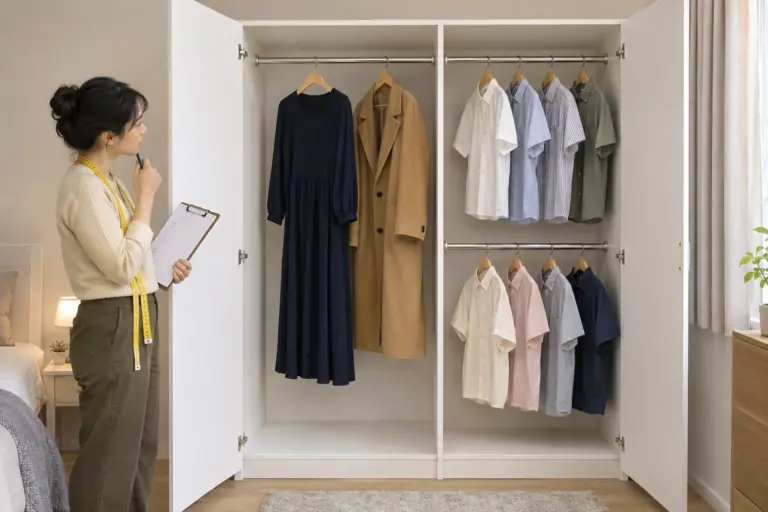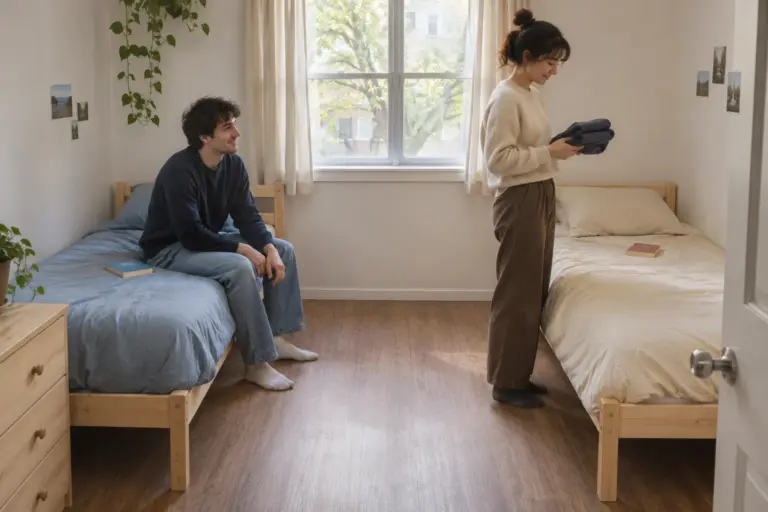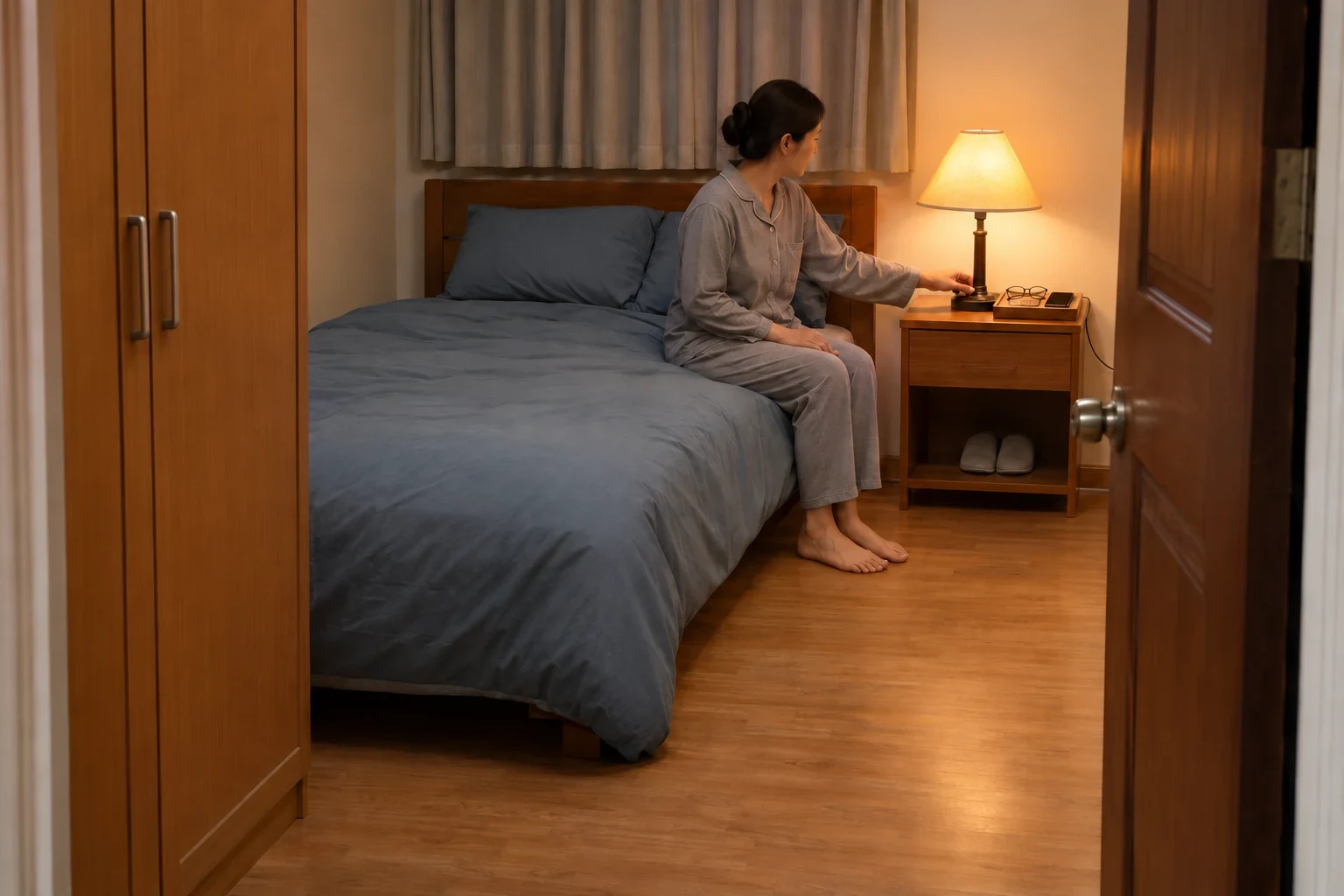
Prepare the route from the bed to the bedroom door in the state the room actually occupies at night. Include the duvet, slippers, bags, cables and doors, not just the furniture drawn in a daytime plan. Give anything removed from the route a real home so it does not return to the same floor patch before bedtime.
Begin with the existing room and the people using it. Follow an ordinary sequence: reach useful light, get out of bed, reach the door, open it as needed and return. The aim is a repeatable arrangement that supports those actions without moving an obstacle each time.
Start Where the Person Gets Out of Bed
Identify the usual exit side and position for each sleeper. Follow the actual movement to sitting, placing feet and standing. A clear strip at the foot is not enough if a bag occupies the spot where the person first gets up.
Look at the bed's complete outside shape, including projecting rails or a footboard. Make the bed normally and check the bedding as it hangs. Do not plan the route from mattress dimensions while ignoring the frame or a duvet reaching into the same space.
If two people use the bed, try both routines rather than assigning the far-side sleeper a route across someone else's occupied bed. Keep any personal access requirements in the decision. The drawing is an example of ordinary room planning, not a required width or a prediction of how every body will move.
IKEA's bedroom-storage guidance encourages assigning practical homes to everyday belongings. Apply that to the objects at the first getting-up position before deciding that the bed itself must move.
Follow a Continuous Route to the Actual Door
Walk the whole connection from the bed side around any necessary turn to the bedroom door. Check the foot of the bed, bedside furniture, wardrobe fronts and the space near the handle. A series of separate empty gaps does not establish a continuous usable route between them.
Use the door through its ordinary complete movement. Include its handle and anything stored behind it. The final fully open position can look clear even though the leaf strikes an object partway through the swing.
In the illustrative plan, the room is 108 inches wide by 132 long. The bed occupies 60 by 80 inches along the left wall. A 32-inch inward-opening door sits at the bottom-right, while the existing wardrobe remains at the bottom-left. These dimensions locate the example objects; they are not minimum room or passage requirements.
The dotted connection begins beside the bed and continues toward the door. It has no drawn width and does not represent an approved body envelope. Try the actual turning and opening actions with the furniture and users, rather than treating a line between objects as proof of access.
Move the Bag and Slippers to Defined Homes
The first plan includes a blue bag on the floor beside the bed and slippers farther along the route. Moving the bag to the other side of the door would simply move the interruption. The reset gives it a suitable available place inside the existing wardrobe.
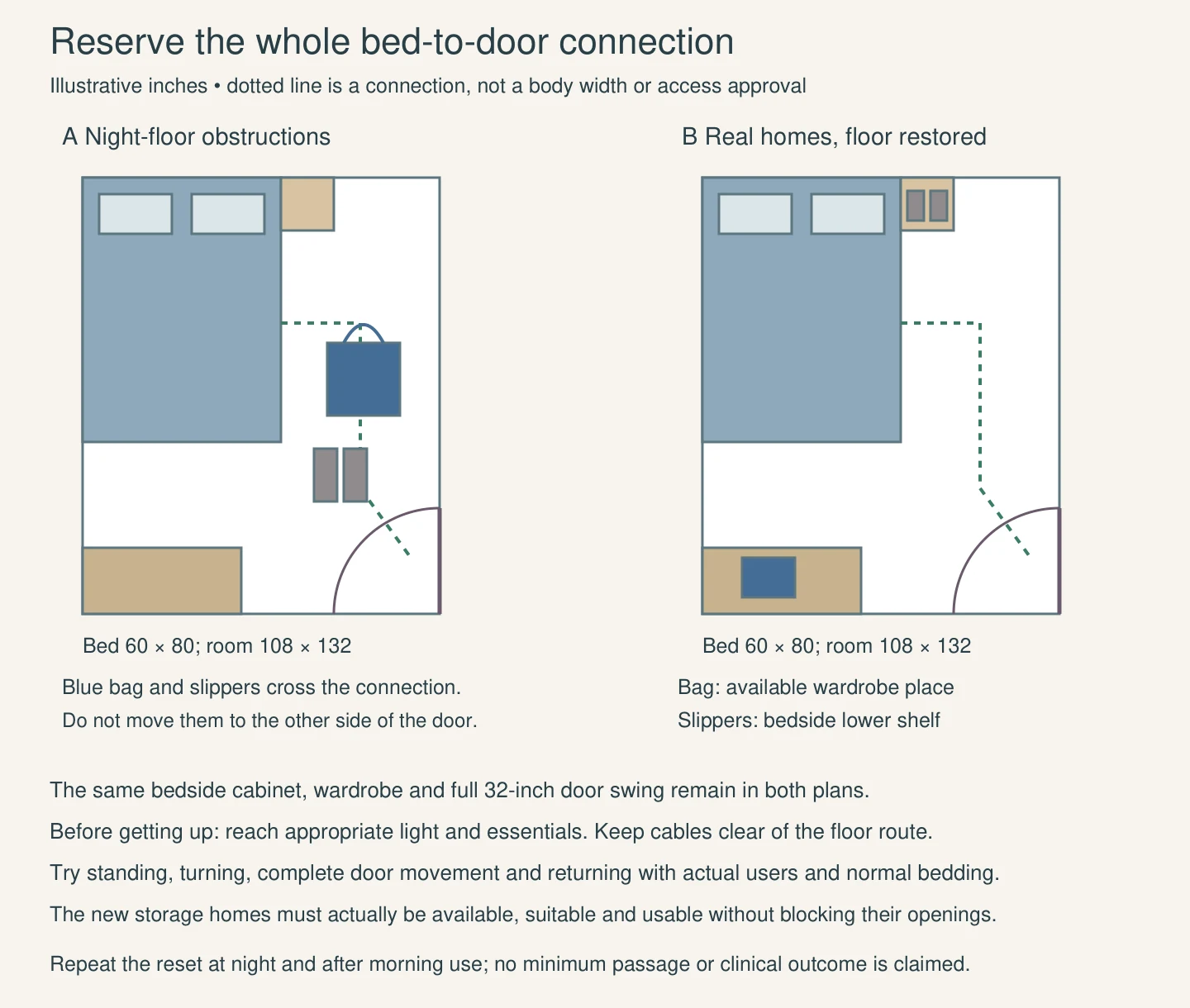
Check that destination before relying on it. The bag must fit, remain appropriate for the location and be retrievable without displacing someone else's daily items. A wardrobe already full of clothing is not spare capacity because its doors conceal the contents.
The slippers move to the existing bedside cabinet's suitable open lower shelf. Try taking them out and returning them from the position you use. Do not squeeze them into an unsuitable gap or let their toes project back into the floor route. Keep the shelf appropriate for the footwear's condition and care needs.
University of Illinois Extension's organizing guidance emphasizes giving retained items a home rather than merely stashing them. Here, the bag's wardrobe place and the slippers' shelf place make the evening reset specific. You can identify where each object should return instead of repeating “keep the floor tidy.”
Keep Bedside Essentials and the First Light Reachable
Place the ordinary things needed before getting up at an appropriate reachable bedside home. In the example, glasses and a phone have a separate patch on the existing cabinet, and the lamp control remains accessible. Their place should not require reaching across the floor route or pulling on the lamp.
Trace chargers and lamp cords to their actual outlets. Keep them appropriately routed clear of feet, moving furniture and the door, following their instructions. Do not create a cord crossing simply to make the phone's top-surface position look convenient.
Try the light from the position used before getting out of bed. Check the visible route with the bedding and furniture in place, including shadows from your own body. Existing useful light may be enough. If it is not, resolve the actual lighting need rather than assuming a new low glow makes every floor object identifiable.
Keep the control sequence practical on return too. Use the available room controls so you do not need to cross the route in darkness to restore the normal night setting. Test the arrangement as a whole rather than judging a lamp independently from the movement it is meant to support.
Include Ordinary Storage and the Next Morning
Check the wardrobe and bedside cabinet in their normal use states. A route that depends on leaving a wardrobe door or drawer partly open needs reassessment. Close things as intended before the night routine, and confirm that storing the bag has not prevented the wardrobe from operating properly.
Do not fill the cleared floor with the next temporary object. Laundry, a delivery box or tomorrow's outfit needs its own suitable assignment. If a new item must stay in the bedroom, check the route again with that item in place rather than relying on yesterday's clear drawing.
In the morning, retrieve the slippers and bag through their normal storage actions, then return anything staying in the room to its home. The bed-to-door connection should not depend on a one-time photograph taken immediately after tidying.
Keep the arrangement when the people using the room can complete the actual getting-up, light-control, door and return sequence with normal belongings present. If a step fails, identify its specific cause and revise the placement. A useful nightly route comes from those working relationships and the repeated reset that keeps them available.