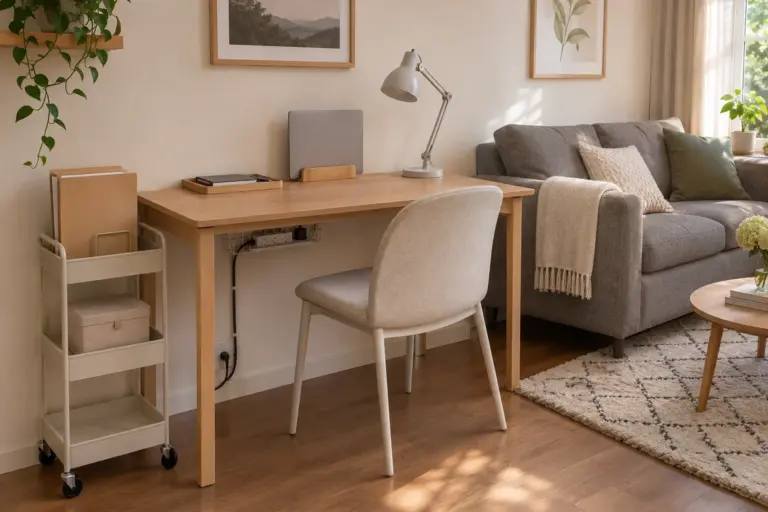
When a desk sits in front of a window, choose curtains from their travel as well as their closed size. Check where the fabric hangs, where it gathers when open and how you will reach the controls. Then confirm the desk, equipment, nearby heat source and lamp can remain clear in each position.
A curtain pair that suits the window can still be awkward behind a desk. The fabric may catch on the rear corner, push against the screen or require leaning over work to open it. Plan the desk and curtain as one arrangement.
Follow the Fabric from Open to Closed
Find the proposed rod position and the fabric's line of travel. With an existing curtain, close and open it slowly while watching the back edge of the desk. With a new arrangement, mark the intended hanging line and the area where the panels will gather.
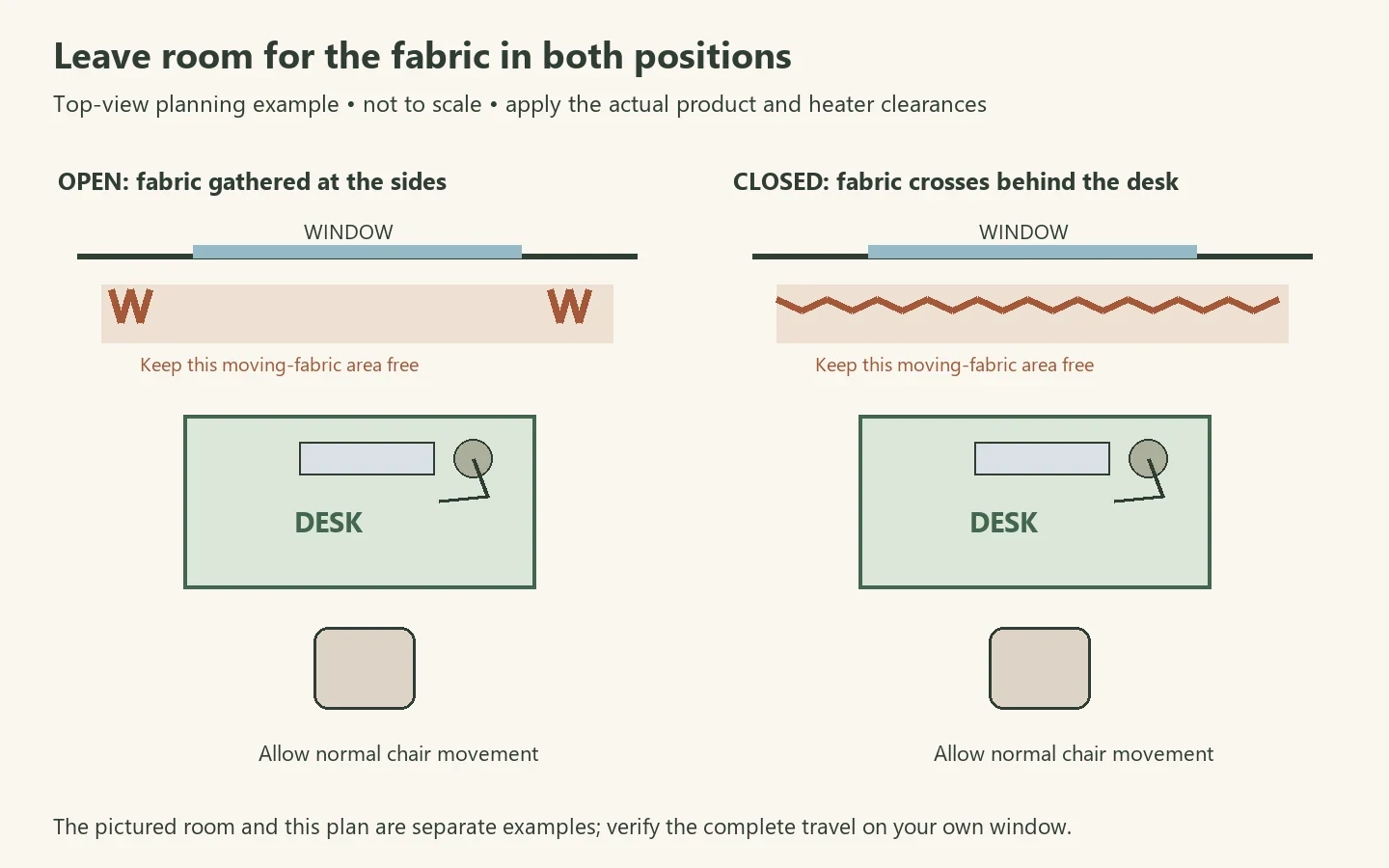
Include the folds, hem and any movement caused by normal opening or airflow. A nominal flat panel is not the same as a perfectly thin vertical sheet. Keep the desk and its contents out of that moving area. Do not use a computer screen to hold the fabric away from another object.
If the desk must move forward, check the room behind the chair before accepting the change. Recovering curtain clearance by taking away the chair's usable movement can create a more important problem. Consider a different window-treatment format when the space cannot support both functions.
Check Heat Sources and Operable Windows
Look for a radiator, baseboard heater, vent or other equipment at the window. Follow the applicable equipment and curtain instructions for safe placement and clearance. Do not guess a universal distance or assume a curtain can be allowed to rest on a heat source because the fabric feels substantial.
Open the window as normally used and check the handle and moving panel against the desk, screen and fabric. You should be able to operate the window without lifting electrical equipment or pulling on the curtain. Keep required ventilation and exit functions available.
If these conditions cannot be confirmed for your equipment and window, resolve them before choosing a long curtain to fit the picture. A shorter or different treatment may be appropriate, but its suitability depends on the actual installation.
Measure the Installed Arrangement
Use the proposed installed rod span and the desired drop from the relevant hanging point. Check how the selected heading attaches: grommets, rings and other headings do not all hang from the same reference point. Read the exact curtain measurement guidance rather than measuring the visible glass alone.
Decide where the panels gather while open. Stacked fabric can take useful width beside the window and may occupy a desk corner even when the closed curtain clears it. If one side is inaccessible behind a monitor, consider how you will draw and arrange that panel each day.
Do not pair a heavy curtain with a tension rod solely because both fit the opening. Check the complete hanging load, end contacts, permitted span and installation instructions. A tension rod is not a general substitute for every fixed bracket arrangement.
Choose the Light Effect for the Work
Notice when the window causes difficulty: direct sunlight on the screen, a bright background behind it or a lack of privacy after dark. Those are different reasons to change the fabric or position. A very dark curtain may solve one condition while removing daylight you want during other hours.
Test the screen at your normal seated position with the current window treatment in the positions available. Changing the desk or screen angle may be useful before buying a more opaque curtain. Keep a task lamp's shade, bulb and cable clear of the fabric through its full travel.
Avoid interpreting a product's light-blocking percentage as a guarantee of complete darkness in your room. Installed gaps at the top, sides and center, along with the selected color and fabric, affect the visible result.
A Specific Curtain Format to Compare
The black NICETOWN grommet pair, ASIN B015SJ8AM2, is listed as two panels, each 52 inches wide by 84 inches long, with 1.6-inch-inner-diameter grommets. The seller's light-blocking description is a product claim, not a measurement of your installed window. Check the selected color and construction; similar brand listings include different blackout formats.
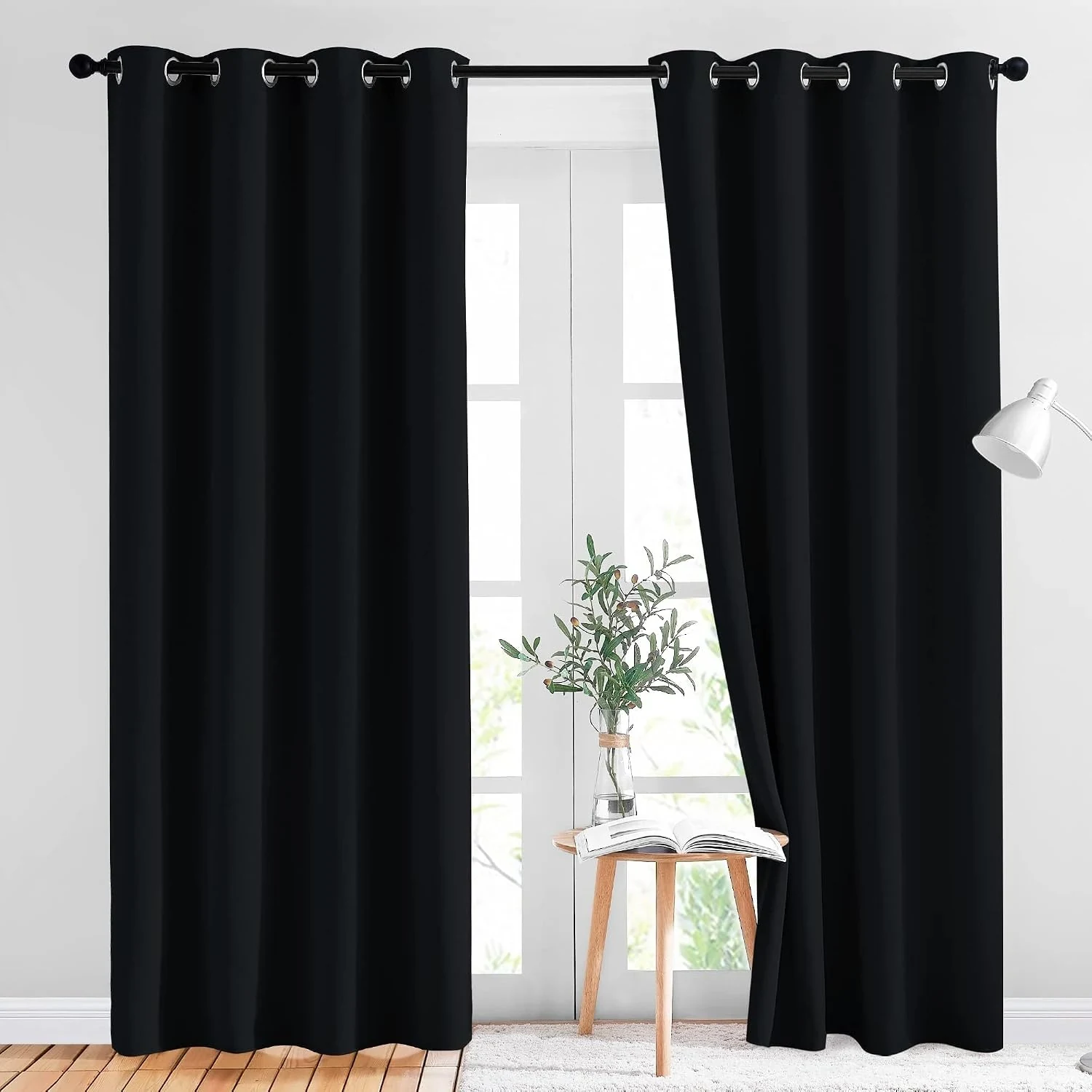
Use the pair's actual dimensions to evaluate the rod and fabric travel. The combined flat width is not the same as a neat installed span with the folds you want. Follow the selected product's hanging guidance.
Before keeping the setup, complete an ordinary workday transition: open the curtain, use the window where appropriate, sit and work, adjust the light, close the curtain and leave the desk. A workable curtain arrangement stays clear and reachable through that sequence without turning the desk into an obstacle.