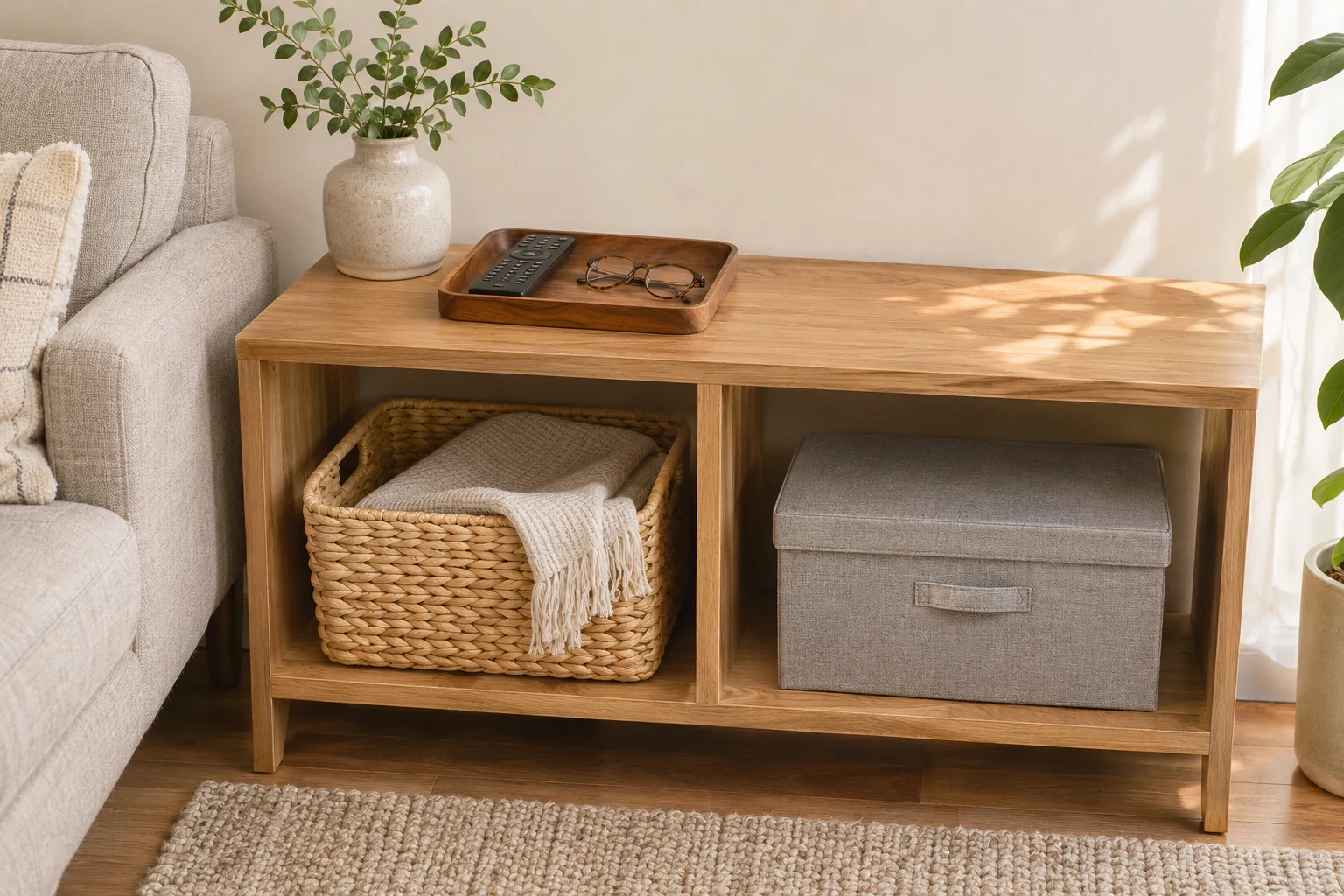
Choose an open basket when quick, frequent access matters and the contents can remain visible and uncovered. Choose a lidded box when containing and concealing the objects is worth the extra opening step. Then test how the chosen container fits its actual shelf and the items you want to retrieve.
The best-looking container can be a poor organizer when its shape conflicts with the job. A deep basket for a few remotes makes them harder to find. A lidded box for the throw used every evening adds a lid to manage without necessarily improving the routine. Start with the objects and frequency.
Sort the Contents Into a Real Task
Lay out what is currently loose in the room. Separate daily-use objects, occasional supplies and things that belong elsewhere. Do not buy one large container to avoid deciding between those groups; the mixture is likely to return as soon as you need the smallest object at the bottom.
A basket beside the sofa can suit a folded throw you lift out in one motion. A shallow box on a shelf may suit a small game and its pieces when the whole set comes out together. Charging cables need a different kind of access from a spare cushion, even if both are often described as clutter.
Name the retrieval you want to make: “take out the current knitting project” is more useful than “store living-room things.” The container size and opening become easier to judge from that action.
Compare the Opening Step
An open basket makes its contents available without removing a cover. That is useful beside an occupied seat or for a project that returns to storage several times a day. The trade-off is that the contents remain part of the room's visible arrangement and do not have a lid between them and settling dust.
A lid can conceal a mixed set and help keep loose pieces contained. It also needs a way to open: lift off, hinge upward or slide. A lift-off lid needs a place to rest. A hinged lid needs clearance above and behind. A box under a low shelf may have to come all the way out before either can open.
Try that sequence at the actual location. If a covered box must be lifted onto the sofa, moved again to remove its lid and then carried back, it may be appropriate for occasional storage rather than the everyday kit you intended.
Check Inside Dimensions and the Narrowest Opening
Outside dimensions help establish whether the container fits the furniture. Inside dimensions and the opening establish whether it holds your objects. Handles, tapered walls, thick lining and a rounded rim can make the useful space different from the outside rectangle.
Measure the longest or least flexible object first. A game box, hardback book or rigid craft tray sets a clearer requirement than soft fabric. Check whether it passes through the opening in the orientation you will use, without assuming that a diagonal insertion will always be convenient.
For shelf storage, include the room needed to grip the container and pull it out. A basket that fills the opening edge to edge may be hard to remove even if its published width is technically smaller than the shelf. Keep the load manageable and follow the furniture and container limits.
Decide What Should Remain Visible
An open basket can show at a glance whether the throw or active project has been returned. It can also reveal every unrelated object dropped into it. A lid hides that mixture rather than sorting it, so use internal grouping only when it makes retrieval simpler.
A small label on the visible edge of an opaque box can prevent repeated opening. Choose a description of the contents that will remain useful, such as “card games,” rather than a vague label like “miscellaneous.” If the contents change weekly, use a label method you can update without making a permanent guessing game.
Consider the surface and object care requirements. A rough basket interior may need a suitable liner for delicate fabric. An ordinary decorative box does not establish moisture control, child-resistant storage or protection for valuables. Choose specialist storage when the objects actually require it.
Use Furniture Storage Only When Its Access Suits the Contents
A storage ottoman can conceal a larger soft-item group while serving another room function. It also makes access depend on the top being available. If the coffee tray normally lives there, removing it is part of every retrieval.
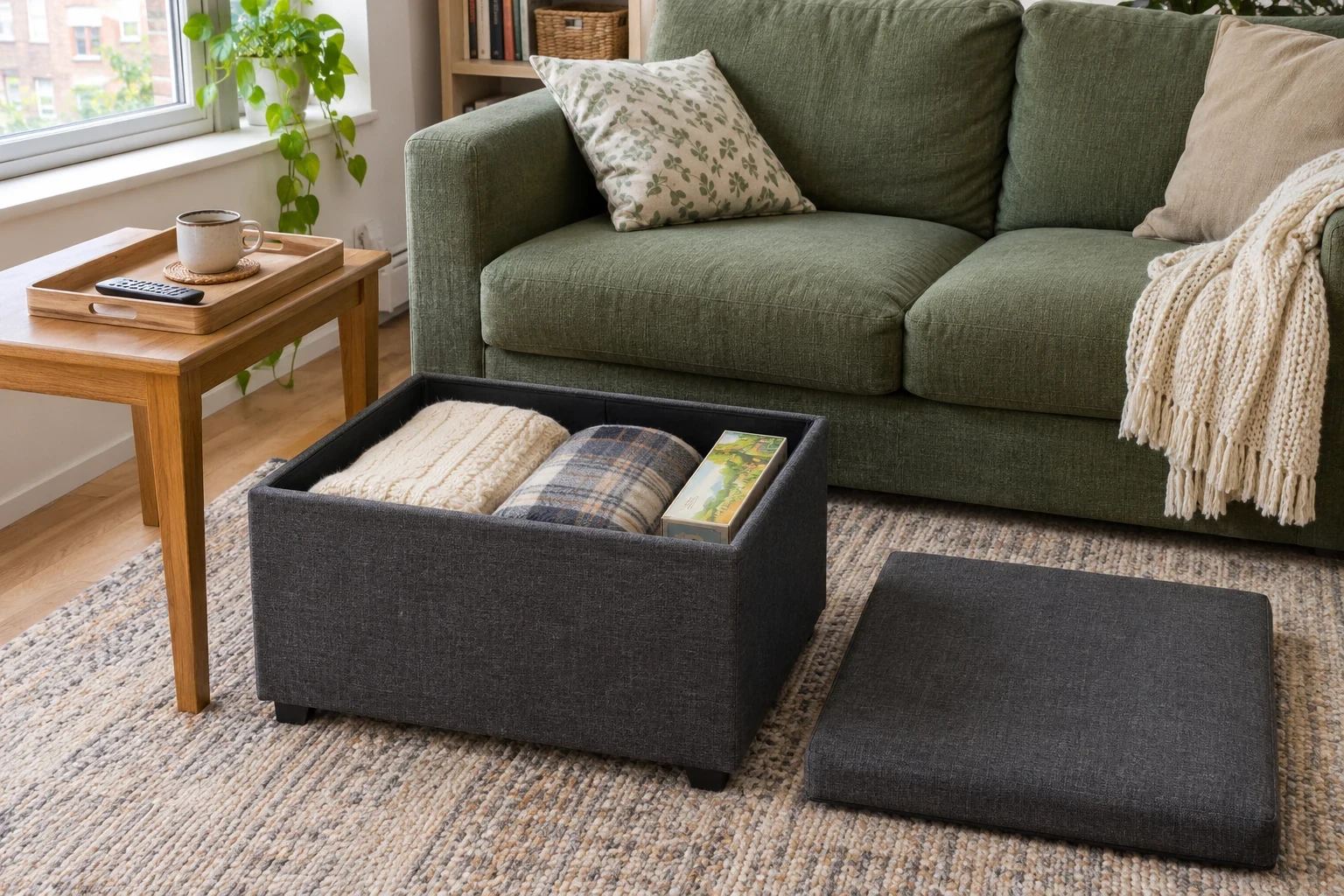
For frequently handled small objects, a simple open container on an existing shelf may be more direct. Do not buy another furniture footprint solely to house a group that fits conveniently elsewhere.
Test One Category Before Buying a Matching Set
Use an existing suitable container for a few normal days. Keep the category fixed and observe the access: do you return things, leave the lid off, or start placing objects beside the box because opening it is inconvenient? Those behaviors show which format suits the job.
Choose the finished basket or box from that test and the real measurements. A coordinated row can be pleasant, but repeat the format only where the storage tasks genuinely match. Useful storage is the container you can put away and use again without rearranging the whole room.