Reserve a suitable place for the coats you expect, tell guests how the handoff works and return each coat to its owner before resetting the space. Without a dedicated coat closet, an occasional visit needs a temporary capacity plan. The everyday entryway should still support the people who live there.
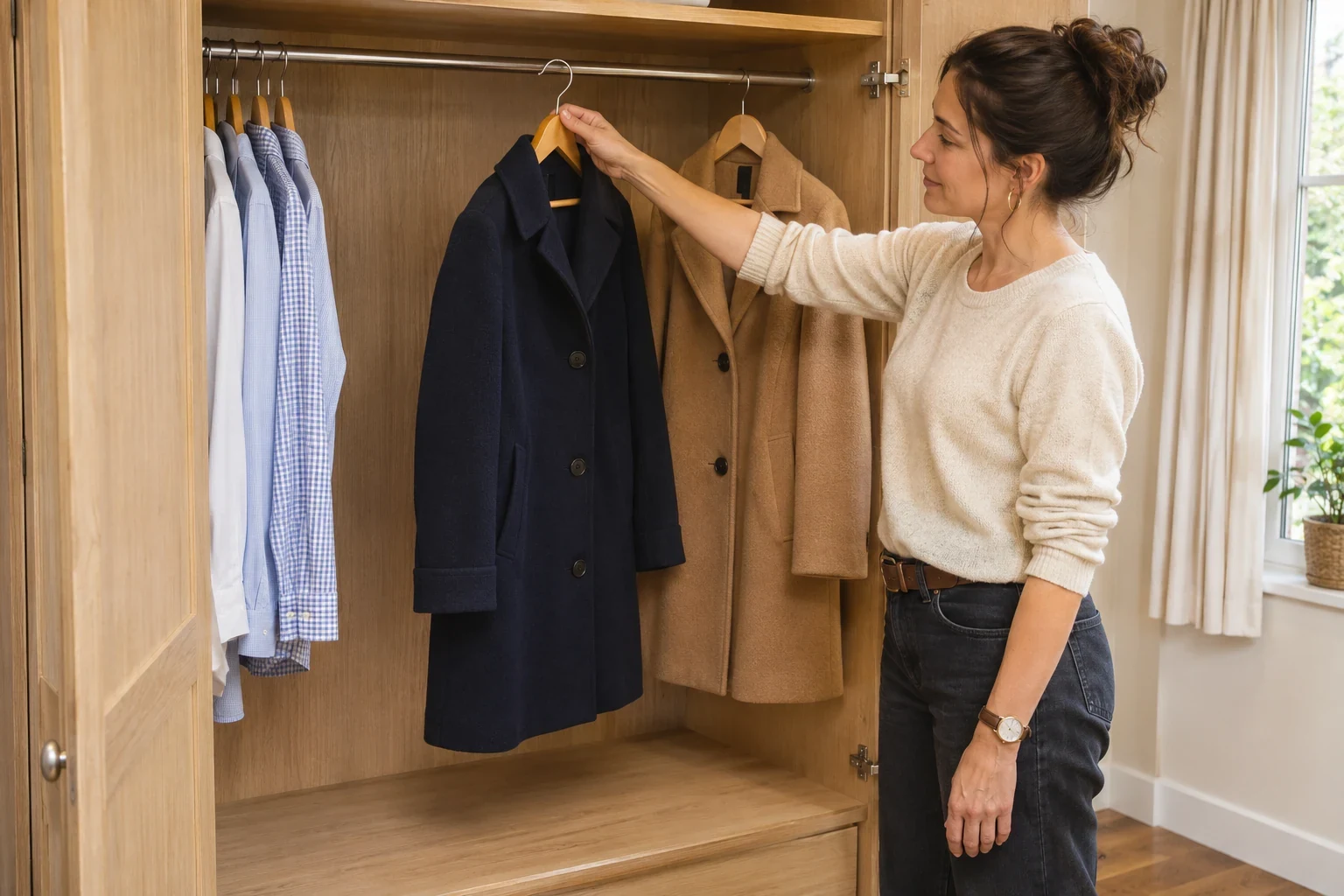
For two visitors, the answer may be two appropriate hanger places in an existing bedroom wardrobe. A permanent rack is not automatically necessary. The example follows Ari's dry navy coat and Mei's dry tan coat from arrival to separate hangers, then back to their owners and an empty reserved space.
Reserve the Actual Places Before Guests Arrive
Count the visitors and the outer layers you reasonably expect. Consider the actual coat lengths and bulk rather than counting hooks or hangers alone. Two lightweight jackets and two long winter coats can make different demands on the same available space.
Look for a suitable existing rail or hanging arrangement outside the busy entrance. Check the actual storage's condition, support requirements and permitted use. The garment needs an appropriate hanger or hanging method too. A convenient door handle is not a substitute for a place intended to support that object.
IKEA's small-hallway material assigns arrival functions to appropriate storage within the available space. For an occasional visit, that place can be elsewhere in the home, provided the route and handoff work. You do not have to concentrate every arrival task immediately beside the front door.
In this example, the host reserves two genuinely unused hanger places in a bedroom wardrobe. The resident's shirts remain in their own section. Nothing is moved into a heap on the bed to create the impression of capacity. Confirm that both guest coats can hang appropriately without crowding the existing contents.
Keep the Household Entrance Available
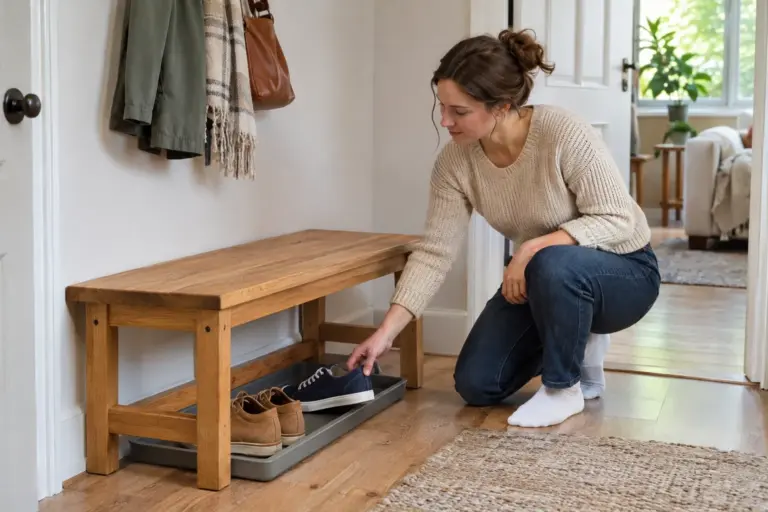
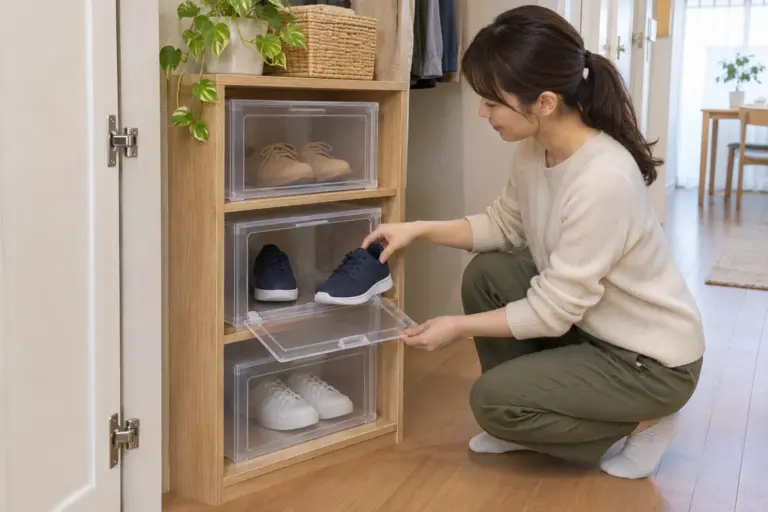
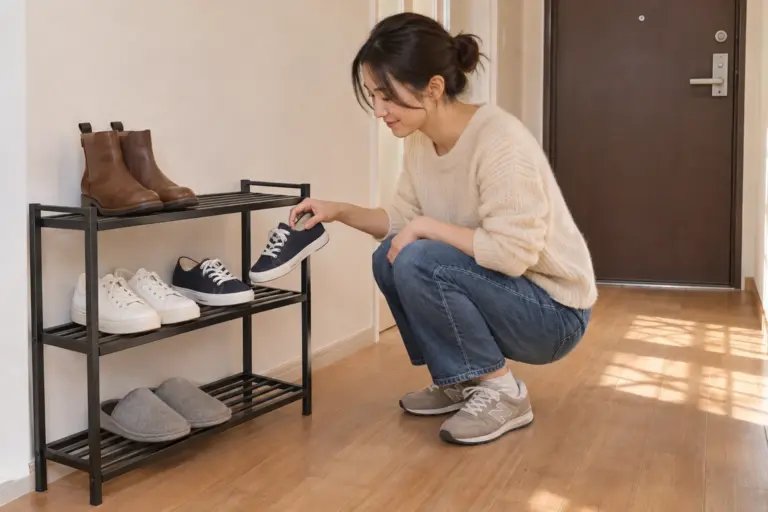
Leave the daily coats, bags, keys and footwear usable during the visit. A guest arrangement that covers everyone's ordinary hooks may make the arrival photograph tidy while making the next household departure awkward. Decide where the visitors' coats go before that conflict occurs.
Walk the route between the entrance and the reserved place with the actual storage doors operating normally. Check where the host stands to receive and hang a coat, and where the guest waits. Keep the front door and required access available rather than pausing the whole entrance while someone searches for a spare hanger.
Agree which rooms guests may enter. If the reserved place is in a private bedroom, the host can handle the coat transfer with the guest's permission. Explain where it will be kept and how to ask for it. A useful system does not require visitors to search personal storage to retrieve their belongings.
Keep another household activity in the check. Someone may need the bedroom or wardrobe during the visit. The temporary coat place should still permit that normal access, without shifting the coats onto a chair each time the storage is used.
Make the Arrival Handoff Clear
Offer to take the coat rather than assuming the guest wants it stored. Let them remove anything they want to keep with them. There is no need for the host to inspect pockets or separate personal belongings in order to make the storage routine work.
Identify the owner through the handoff. Here, Ari gives the host the navy coat and Mei gives the host the tan one. Different colors make the illustration easy to follow, but color alone is not reliable ownership information when several people arrive with similar coats.
Put each coat on its own appropriate hanger in the reserved section. Keep sleeves and hems clear of the wardrobe's moving parts and any stored objects below. Close the storage only when the actual garments, door and conditions permit it. Do not compress the second coat into whatever narrow gap remains.
IKEA's bedroom-storage ideas consider different objects and the places needed for them. Keep the guest reservation distinct from the resident's normal clothing groups. If the actual coats exceed the space you checked, arrange another appropriate agreed location rather than treating the original count as guaranteed capacity.
Make a Different Plan for Different Conditions
The illustrated wardrobe arrangement is for ordinary dry coats. A damp outer layer, a garment needing a special hanging method or an unusually bulky item requires its own appropriate location and care. Ask the owner about the garment rather than applying a single drying or storage rule to every fabric.
Do not put a damp or dirty coat onto clean bedding or among dry clothing simply to remove it from view. Choose a place and support suited to the actual conditions and garment instructions, with the entrance and other household access still available. Resolve that need before relying on the dry-coat example.
Keep the plan proportionate to the visit. If more guests are expected, test the larger actual set in advance. More hangers do not create more rail capacity, and a new rack needs an appropriate complete footprint and loaded-use assessment of its own. Do not expand temporary storage into the walking route by default.
Return Each Coat and Reset the Reservation
Ask the departing guest which coat is theirs and retrieve that item. In the example, the host takes Ari's navy coat from its hanger while Mei's tan coat stays in place. After Ari confirms and receives it, the empty hanger returns to its reserved rail position.
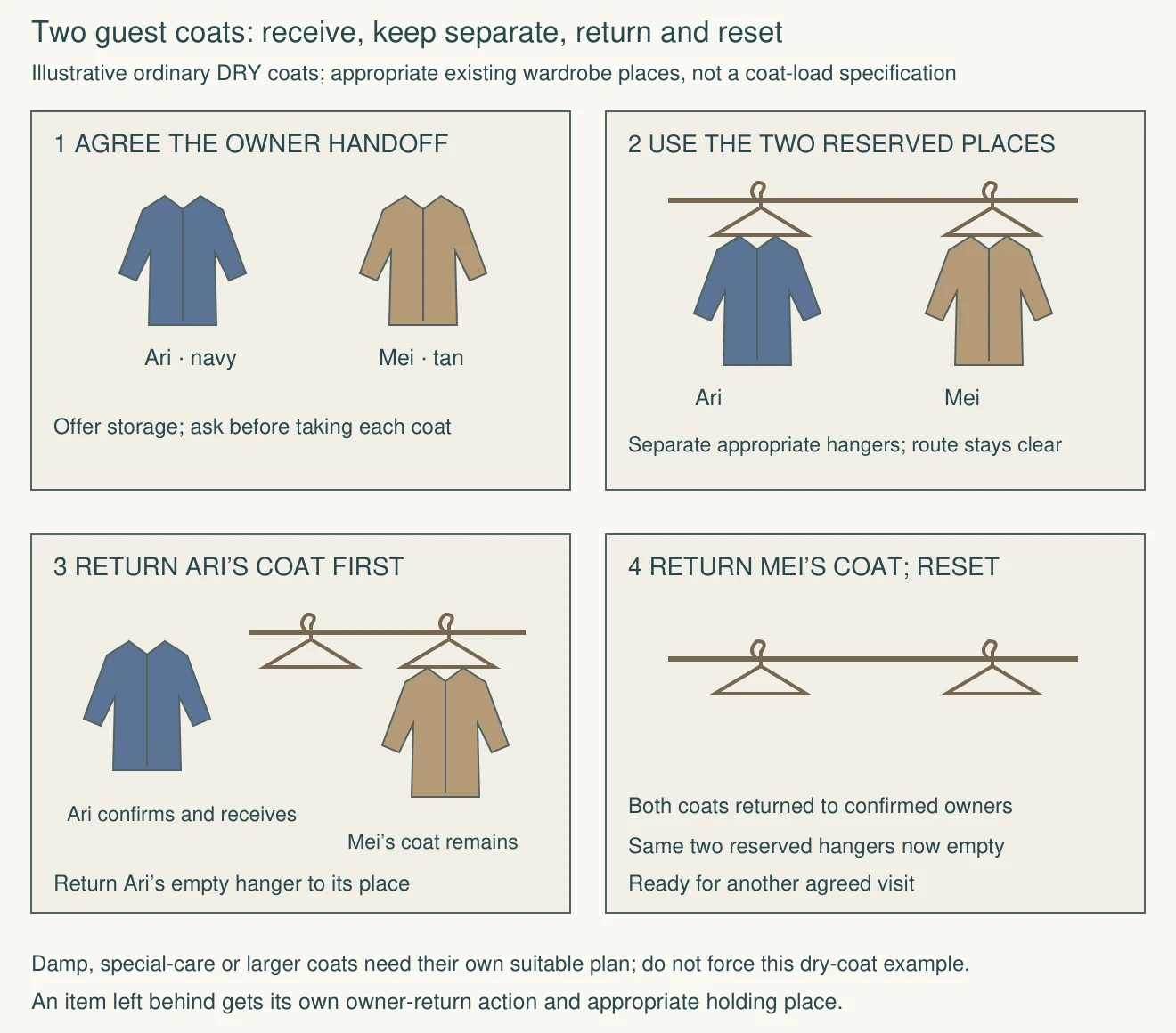
When Mei leaves, repeat the same handoff for the tan coat. Check that the right garment goes to the right person, especially if guests depart separately. Keep anyone still using the entrance in view while the coat is put on and the front door opens.
After the visit, confirm that both coats have left with their owners and both reserved hangers are empty again. University of Illinois Extension's organizing guidance emphasizes real homes and returning retained items to the appropriate place. Apply that idea to finishing the temporary task, rather than letting guest storage become an unassigned household backlog.
If something is left behind, give it an agreed appropriate holding place and contact its owner about return. Keep that unresolved item separate from the next visit's promised capacity. The coat spot is ready again when its actual places are available and the household entrance continues to work normally.