Start with the book and your usual seated position, then place the floor lamp so its light reaches the pages without the bare bulb becoming the brightest object in your view. Check the base, switch and cable before committing to the position. A lamp can look right beside an empty chair and still be awkward to use once someone sits down.
There is no single side or height that works for every armchair and shade. A deep chair, a high wing back and a reclining seat create different relationships. Use the following placement sequence with the chair you actually read in. If you are shopping for the lamp, make a simple sketch of the needed shade position and the available floor area before comparing products.
Put the Reading Position First
Sit as you normally would, including the cushion you use. Hold an ordinary book or magazine at your usual angle. The important target is the open page, which may be well in front of the back of the chair. Placing the light directly above the head can leave the book in a less useful position than a lamp reaching in from the side.
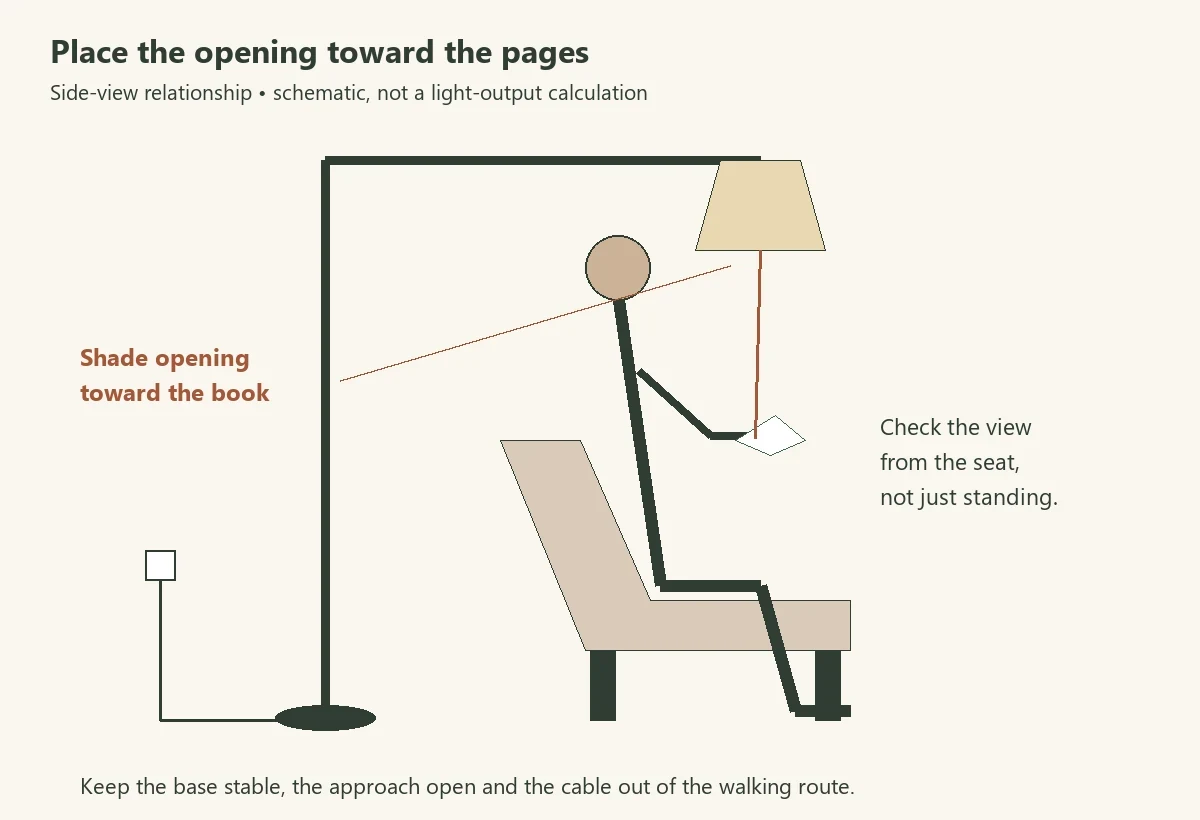
Begin with the lamp beside and slightly behind the chair, on whichever side has a workable base position and cable route. Then evaluate it from the seat. Can you see the bulb through the shade opening? Does the chair back or your shoulder block the useful light? Can you turn a page without moving into the lamp? Adjust the head or position within the manufacturer's instructions rather than forcing a joint farther than it is designed to move.
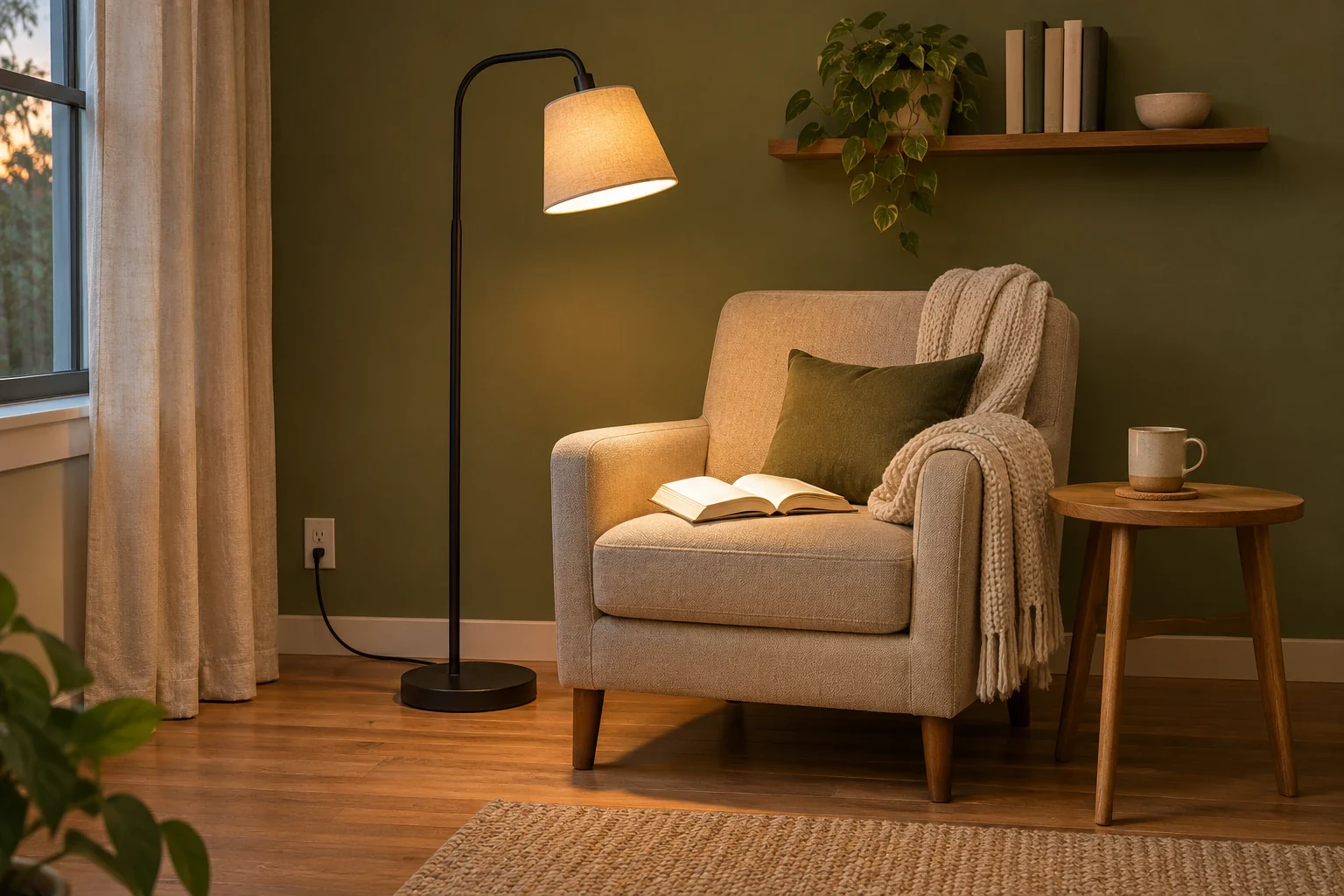
The example corner uses a lamp outside the chair's left rear corner and a separate table on the right. This divides the jobs: light reaches in from one side, while the hand putting down a cup uses the other. Reverse the arrangement when your room, dominant hand or outlet position makes that more convenient.
Check the Shade from the Seat
Look toward the book, then look forward and toward anyone sitting nearby. A shade that hides the bulb from one viewpoint may expose it from another. The result should suit both reading and normal conversation; you should not need to keep your head in one precise spot to avoid an uncomfortable view.
If the shade is fixed, move the whole lamp in small steps and sit down again. With an adjustable head, change one variable at a time. First establish a useful position, then adjust brightness. Turning the lamp down can make a glaring source less intense, but it does not move the source out of your eyes or stop a shoulder casting a shadow.
Do not choose the lamp's height from the top of the chair alone. Note where the light-emitting opening sits relative to your eyes and pages. A tall arc can work if it reaches the right place; a shorter directional lamp may work if the head clears the chair arm and aims usefully. The silhouette is secondary to those relationships.
Give the Base a Real Parking Space
The base belongs fully on a stable, suitable surface. Do not plan for it to perch on the edge of a rug or disappear beneath furniture unless the lamp and furniture genuinely allow that arrangement. Mark the base footprint beside the chair and include its full width in the approach route.
Test getting in and out. If the chair reclines or swivels, check the moving envelope and the lamp's cable at the positions you use. A lamp that fits beside a stationary chair may interfere when the back reclines or the seat turns. Do not use the lamp as a handhold when standing up.
In a compact corner, an open approach can matter more than symmetrical styling. Keeping the table at the front of one arm and the lamp farther back on the other side can leave a clearer way into the seat than placing two objects directly beside its front legs.
Reach the Control and Trace the Cable
From the seat, try the actual switch or dimmer location. A switch halfway down the stem may be easy to reach beside one chair and hidden behind a wing back in another. An inline floor switch also needs a sensible location; it should not be pushed under a heavy chair or left where feet catch the cable.
Trace the cord all the way to the outlet. Keep the chair's moving parts and the walking route clear, and follow the lamp's electrical and cable instructions. Do not run the cord under a rug to hide a crossing. If the only workable route cuts across the entrance to the chair, reassess the side, outlet or lamp type.
Compare the Useful Features Before Choosing a Lamp
For replaceable bulbs, compare brightness in lumens and light appearance on the packaging rather than treating wattage as brightness. Check bulb base, allowable wattage and dimmer compatibility against the fixture instructions. A compatible combination matters more than an attractive bulb description.
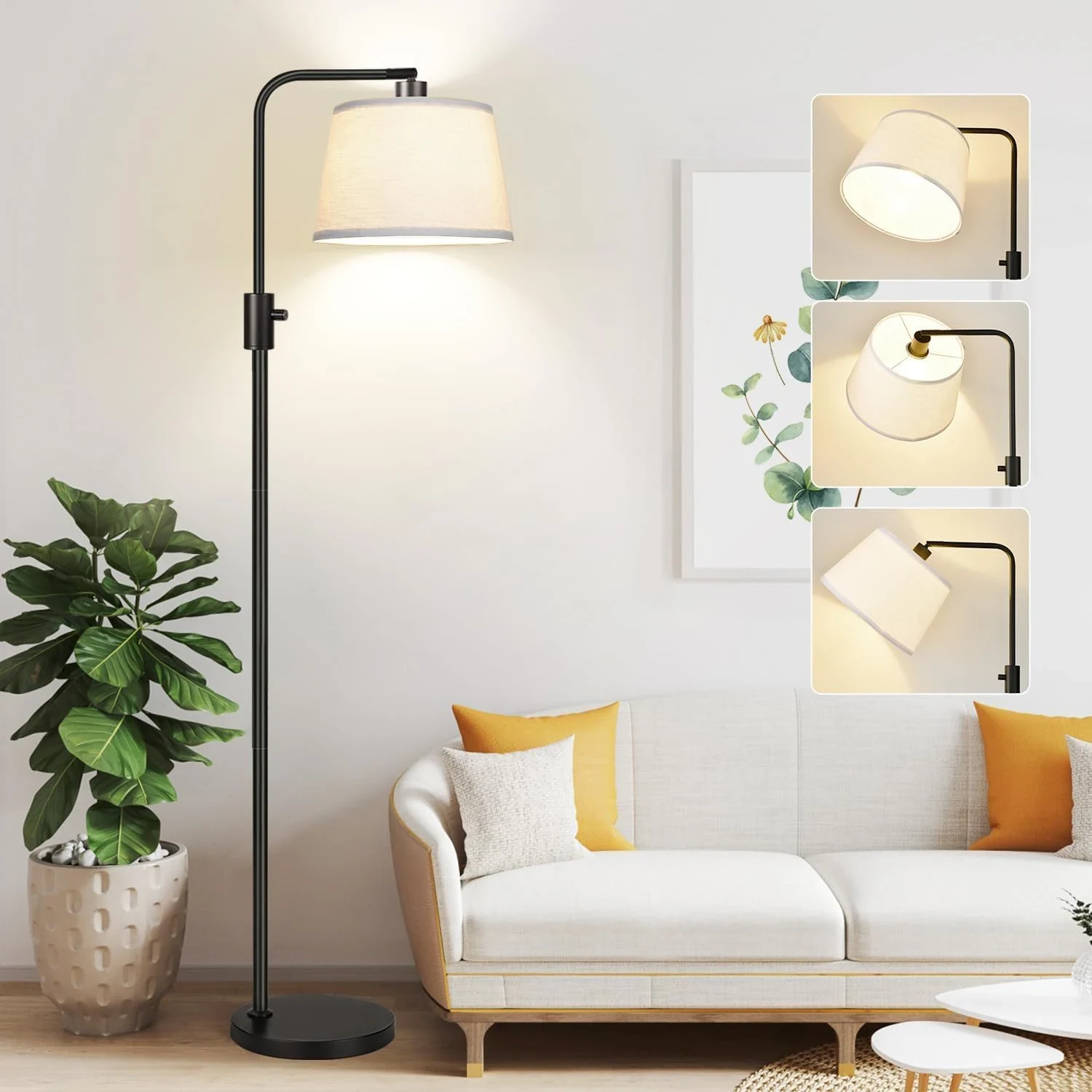
One purchasing example is the black Nintiue dimmable floor lamp, ASIN B095NXXP8C. The selected listing describes an adjustable head, rotary dimming control and an included warm-white E26 bulb. Those are relevant features for this placement task. The listing's generic dimensions field does not provide a reliable assembled-height reference, so use a confirmed current dimensional drawing or seller clarification before buying for a tight height or reach constraint.
The pictured arrangement illustrates the chair, light and table relationship; use the selected product's actual measurements for a purchase. If a lamp cannot put light where you need it without occupying the route, a table lamp on an existing surface or a properly installed wall lamp may be the better format.
Finish the check in the conditions when you normally read. A corner that feels bright in daylight may need a different balance in the evening. Keep enough other room light for the surrounding activity, then tune the reading lamp for the pages. You are arranging a usable seat, rather than trying to illuminate the entire room with one fixture.