
A plug-in wall lamp can free bedside surface space, but it still needs a suitable mounting position, secure fixing, reachable control and a safe cord route to an outlet. Choose it as a small installation, rather than treating the plug as proof that the whole setup is temporary or drill-free.
Begin with the bed and the activities beside it. You need the light to work while reading, stay clear while getting into bed and switch off comfortably from your normal position. A swing arm adds movement to that plan; it does not remove the need to check the complete swept space.
Decide Which Bedside Job Moves to the Wall
If a table lamp's base occupies most of a small shelf, moving the light can make room for water and a phone. Keep that freed surface modest and useful. Replacing the lamp with a larger display of objects loses the practical benefit.
Sit up in bed with your usual pillow support and an open book. Identify a plausible light position beside you, outside the head and shoulder movement area. Then lie down and stand up as usual. The fixture should not occupy the path of your head or the point where you naturally brace yourself to rise.
Do not determine mounting height from a photograph of another bed. Mattress height, headboard, pillow arrangement and your own reach change the result. Mark a possible wall position with removable tape, then compare it with the exact lamp drawing before drilling.
Check the Whole Arm Movement
A swing-arm lamp occupies a range of positions, not a single point. Find the dimensions of the mounting plate, arm sections and shade, together with their permitted rotation. Check the reach in the reading position and the parked position.
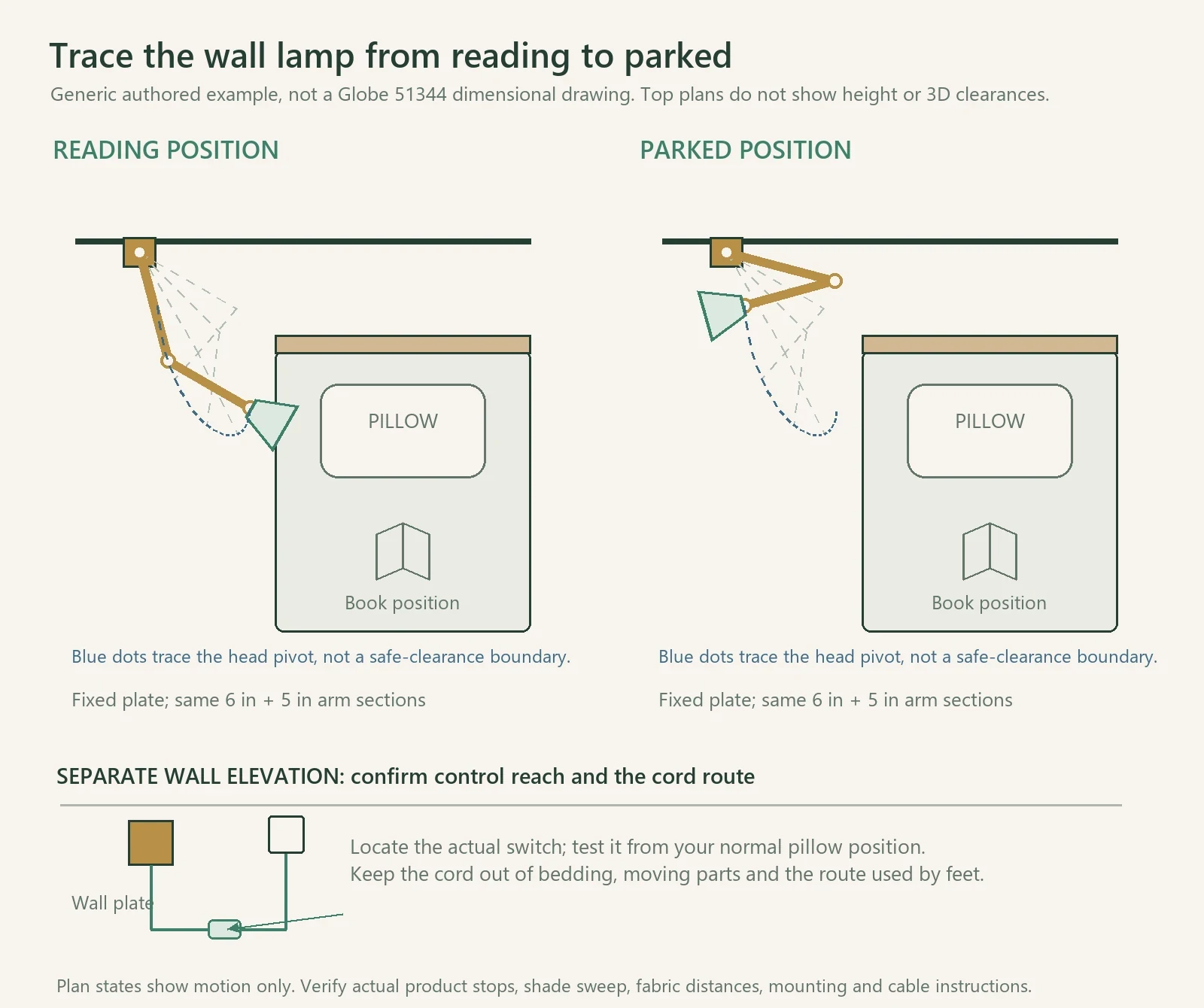
Trace that movement against the headboard, shelf, curtain and bedding. A shade may clear the pillow when parked yet pass through the same space when pulled forward. Keep the actual fixture's required clearances and operating instructions in view, especially around fabric.
An overall length in a retailer table may not describe the maximum installed reach or the folded depth. If your arrangement depends on those dimensions, obtain a current drawing or manufacturer clarification. Do not treat a different model's photograph as a measurement source.
Confirm the Mounting Method Before Purchase
Read the manual for the exact lamp and selected installation mode. Check the wall construction, supplied hardware and any additional fixings needed for that wall. In a rental, confirm what installation is permitted. A power plug solves the electrical connection format; it does not establish that a wall bracket can be hung on adhesive strips.
Keep plug-in and hardwired options distinct. A product that supports both can have different parts and instructions for each. Use the intended plug-in arrangement when that is the chosen mode. Have hardwire work handled by an appropriately qualified installer rather than improvising a conversion.
Do not use retailer marketing bullets as a substitute for the installation manual. Mixed product text and generic instructions can appear on otherwise useful listings. Confirm the actual mount and supplied components before making holes or planning close clearances.
Plan the Control and Cable as Visible Objects
Locate the actual switch or dimmer. Try its position from the bed: can you reach it without leaning across water or pulling the cable? If the control is on the cord, decide where it rests in both the reading and parked configurations.
Run the cord along a suitable wall route in accordance with the manufacturer's instructions. Keep it clear of mattress edges, adjustable bed parts, drawer runners and the route used by feet. Do not hide a crossing under a rug or trap the cord between the bed and wall to make it disappear.
The plug should remain reasonably accessible for the intended use and disconnection. A low outlet behind a tightly fitted headboard can be inconvenient even when the cable is long enough. Check the full route, including strain at the plug and any moving arm.
Compare a Specific Plug-in Format
The white-and-brass Globe Electric Berkeley 51344, ASIN B07JJWD6ZJ, is listed as a plug-in-or-hardwire wall sconce with a swing arm and pivoting head. The selected listing specifies one E26/medium-base bulb, sold separately, with a stated 60-watt maximum. Follow the actual current fixture label and manual when choosing the bulb.
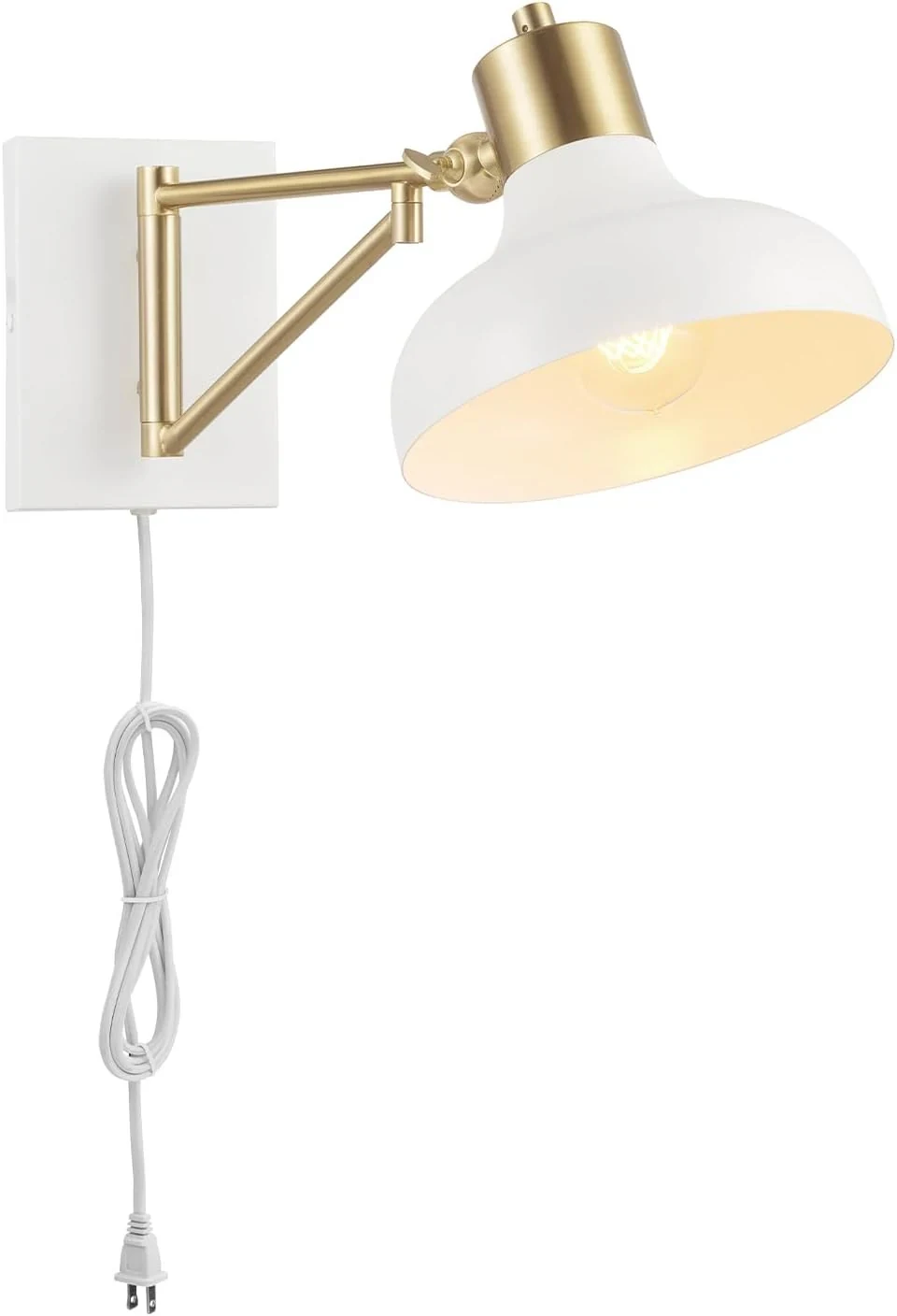
Its listing includes a stray pendant-style installation bullet, so use the exact product manual for mounting rather than following that generic sentence. The published overall dimensions are also not a confirmed installed swing envelope. Verify the arm and shade movement before relying on a tight bedside fit.
The room scene illustrates a wall-light arrangement with a separate bracketed shelf. The diagram compares two positions of a generic two-part arm in plan, with a separate wall elevation for the pillow and headboard. Its blue path tracks the head axis, not the full shade clearance. Neither image shows this specific lamp's verified installation or movement envelope. Use the actual arm, shade and mounting measurements to transfer the idea to your bed.
Check the Reading View Before Fixing the Position
Compare brightness and light appearance using the selected compatible bulb's information. For a dimmable setup, confirm both fixture and bulb compatibility. A pivoting head changes direction; it does not automatically provide brightness control.
From the bed, check whether the bulb is exposed in the direction you look while reading or talking. If another person shares the bed, check their viewpoint too. Move the planned fixture position or choose a different shade format if the useful reading position leaves the source uncomfortable for the adjacent person.
Once installed according to the product instructions, test the normal sequence: enter the bed, adjust the light within its permitted movement, read, return it to its parked position and switch off. The surface space you recovered is valuable only when the light, cord and control all remain easy to use.