Give the bags for your normal shopping trip one ready-to-carry home beside the exit you actually use. Keep the appropriate clean, dry group together, take the whole group when leaving and rebuild it after unpacking and any needed care. The storage succeeds when the bags return to service, rather than simply disappearing into a bag full of miscellaneous bags.
Begin with bags and a suitable storage place you already have. An existing open shelf, supported box or other appropriate home can work. The useful addition is a complete outward-and-return routine, not necessarily another organizer.
Choose the Exit and the Normal Trip
Watch where you leave for shopping. The front door may be the right place in an apartment, while another household uses a different exit. A beautiful bag holder at the wrong door does not help when you remember the bags only after setting out.
List the bags normally needed for that trip. Separate the everyday grocery group from occasional oversized bags, insulated carriers and bags used for non-food shopping. Each has its own use and care requirements; the exit does not need to hold every bag the household owns.
Keep the ready group small enough for the actual storage and the person carrying it. Include the outer carrier itself when deciding how many bags the group contains. A tote used to carry two folded bags is still another bag that needs inspection and appropriate care.
For a shared household, agree which group belongs to which job and where it returns. If two people shop independently, one vaguely shared bundle may repeatedly leave the second person without suitable bags. Give each needed ready group an identifiable home without letting the entrance overflow.
Make One Group Easy to Take
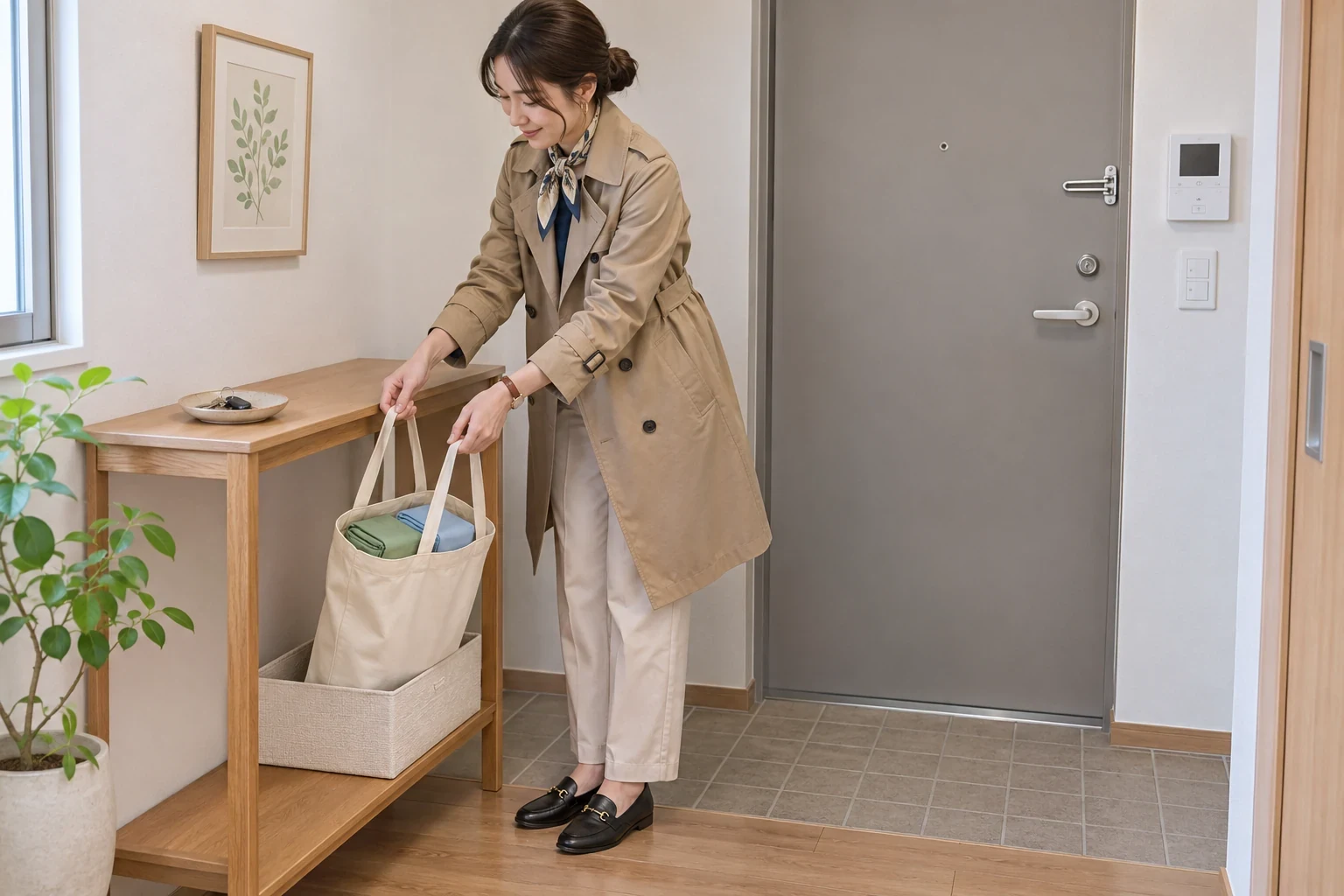
Try placing the appropriate folded grocery bags inside one dedicated outer grocery tote. The opening scene uses two folded bags inside that tote, making one supported group to lift from the shelf box. This is an example to adapt to your own trip, rather than a recommended number or bag size.
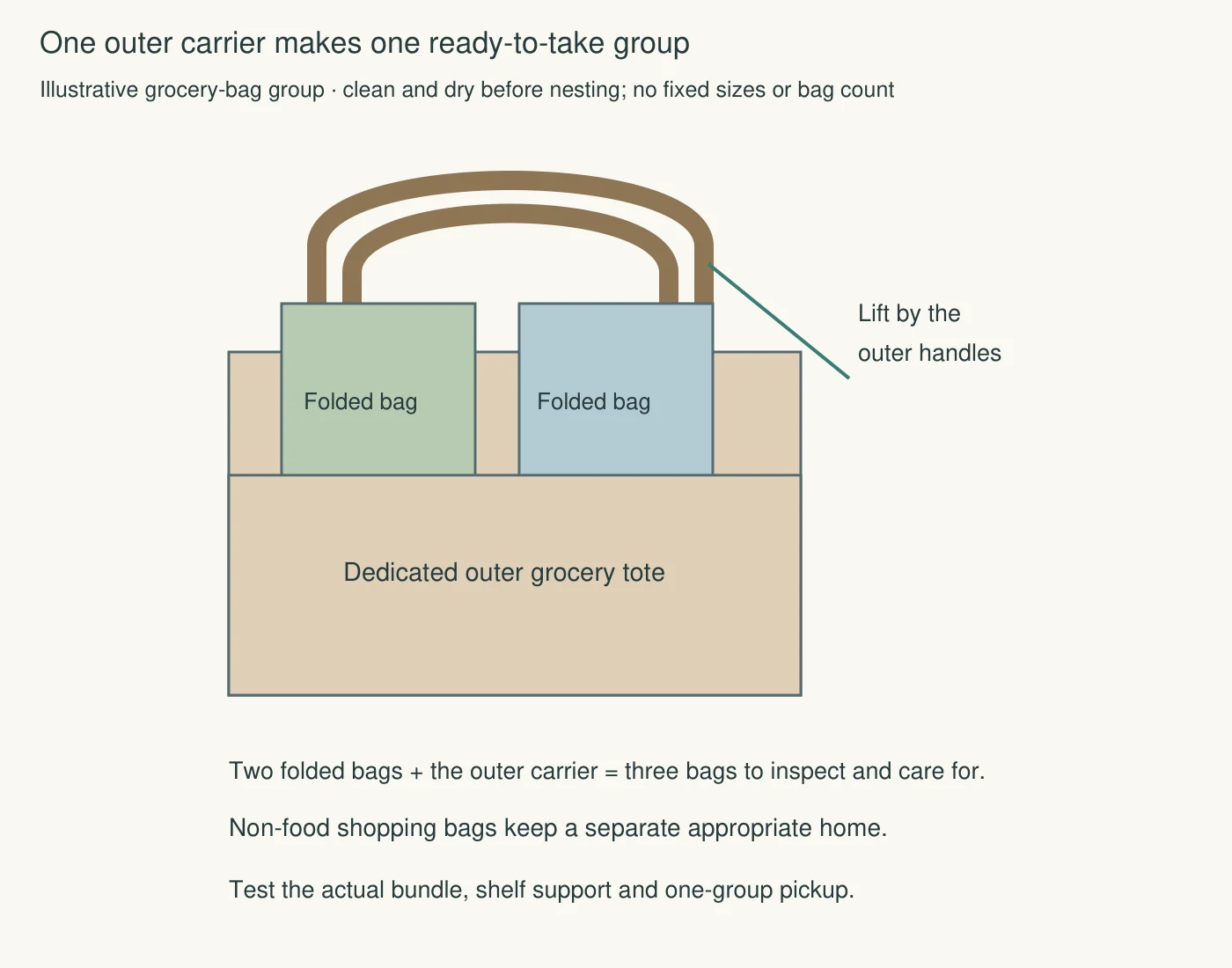
Fold only as neatly as you are willing to repeat after use. A complicated decorative fold can make returning the bags feel like another task. Keep the handles contained so they do not catch on the shelf, snag another item or hang into the walking route.
Check the whole bundle in its storage position. Can you grip the outer handles without pulling a second object out? Does the box support the tote and its contents? Can the actual user approach, lift it comfortably and close the entrance door normally?
An insulated carrier or stiff-sided bag may not suit nesting. Give it an appropriate separate place according to its instructions, and make the trip check include it when needed. Do not force it into a small bundle or treat every shopping bag as the same washable fabric.
Keep the Ready Home Clear of Arrival Clutter
Use one defined place for ready bags. In the example, a box on the console's lower open shelf holds the group, while the key dish stays on top. The bags do not occupy the floor beside the entrance or share the key dish's small surface.
IKEA's small-hallway guidance treats pocket emptying, hooks and other storage as distinct arrival functions. Apply that same separation here: the ready bags have a home, and incoming parcels, shoes and unrelated belongings need their own suitable destinations.
Check the complete stored shape, including loose handles and a bag that springs open. If you use an existing hook instead, follow its mounting and load instructions and keep the hanging group out of the door and body route. A small empty-bag bundle does not establish that the same hook can hold loaded groceries.
Keep the place understandable when it is empty. The absence of the ready group should mean it is in use or going through its return process, rather than inviting another object to take over the shelf. A simple household label can help if several people share the entrance.
Unpack Before Returning the Bags to Ready Storage
After the trip, take the bags to the appropriate unpacking area and deal with their contents first. Do not put full shopping bags in the ready box and assume they will be remembered later. The entrance holder is for the prepared next trip, not a pantry or a temporary home for purchases.
Inspect each bag and the outer carrier as part of putting them away. Remove receipts and other loose contents. Notice spills, food leakage, dirt or dampness before folding one bag inside another. A dry-looking outside does not settle what happened inside during use.
Health Canada's grocery-bag guidance calls for frequent washing, drying after washing and thorough cleaning before reuse when food juices have leaked. It also addresses cleaning bags before grocery use after carrying non-food items. Follow the actual bag manufacturer's care instructions for its material and construction.
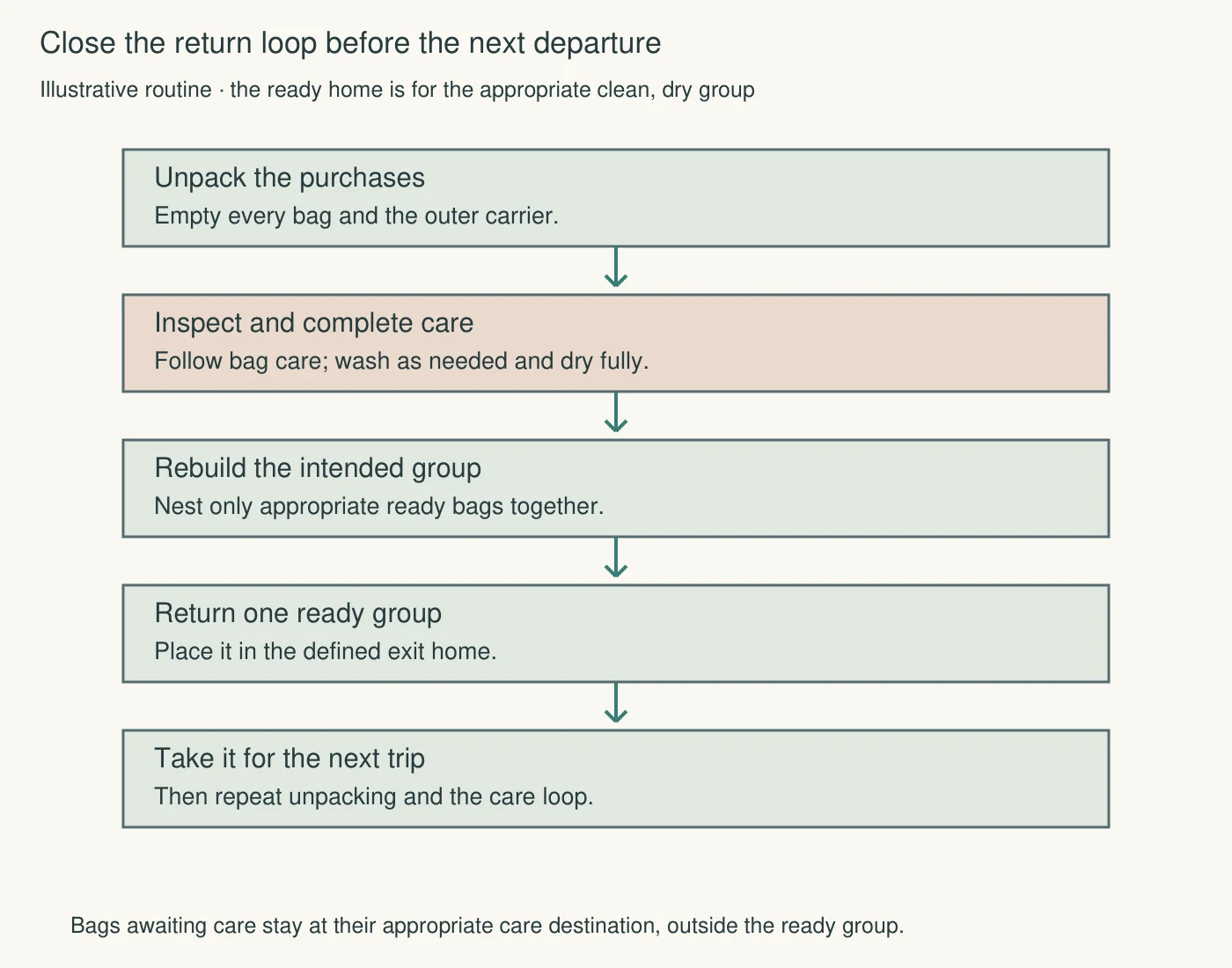
Keep bags needing care out of the clean ready group. Give them a defined appropriate care destination, clear of the entrance route and food-preparation surfaces, and complete that care before rebuilding the bundle. Do not place a damp bag inside a folded stack merely to clear the counter.
Rebuild the Group Only When It Is Ready
Once the relevant bags are clean and dry, fold them in the ordinary way and return the intended group to its outer carrier. Check the carrier too. Then put that one group back into its exit home, with the handles available for the next departure.
Keep non-food shopping bags separate from the grocery group, with their own appropriate home and care. Do not mix an unexamined bag used for household cleaners into the food group because it is the right color or conveniently empty. The grouping is based on intended use and condition, not appearance.
The flow diagram keeps the care step visible: unpack, inspect, carry out any needed washing and drying, rebuild, then return to the ready home. It is not a shortcut from a used bag directly into the clean bundle, nor a washing recipe for every bag type.
If a bag is still drying when someone needs to leave, use another appropriate ready bag or adjust the trip. Keep the missing member visible in the household routine rather than taking an unsuitable bag just to preserve the bundle's usual count.
Use Missed Trips to Improve the Location
Try the arrangement through a few normal shopping trips. Notice where the bags are when someone leaves, what makes the group inconvenient to lift and whether it returns after care. Ask the people who use it to carry out the whole sequence.
If the bags are repeatedly forgotten, move the ready home closer to the actual departure action while keeping the route clear. If they return to the kitchen but never reach the entrance, attach that transfer to the completed unpacking-and-care routine. A second decorative container will not complete the missing step.
If unused bags accumulate, distinguish the normal trip group from genuine occasional needs. Store the latter appropriately elsewhere and decide what to do with surplus bags deliberately. The useful exit supply is the group that is ready, easy to take and reliably put back.