Before choosing an over-door shoe organizer, check the hook fit, the closed-door clearance and the loaded pocket depth. Then test your actual shoes. A narrow fabric panel can offer useful vertical storage, but its published flat dimensions do not describe the space occupied by shoes hanging behind a door.
Use the door you intend to use. A bedroom door, closet door and bathroom door can have different thicknesses, frame gaps, hinges and nearby obstructions. “Standard door” in a listing is not a measurement of your door.
Check the Hook and the Door Together
Measure the door thickness where the supplied hooks will pass over it. Compare that with the specific hook range in the selected product information. Include any relevant trim or surface shape at the top; do not force a hook into a location it was not designed to fit.
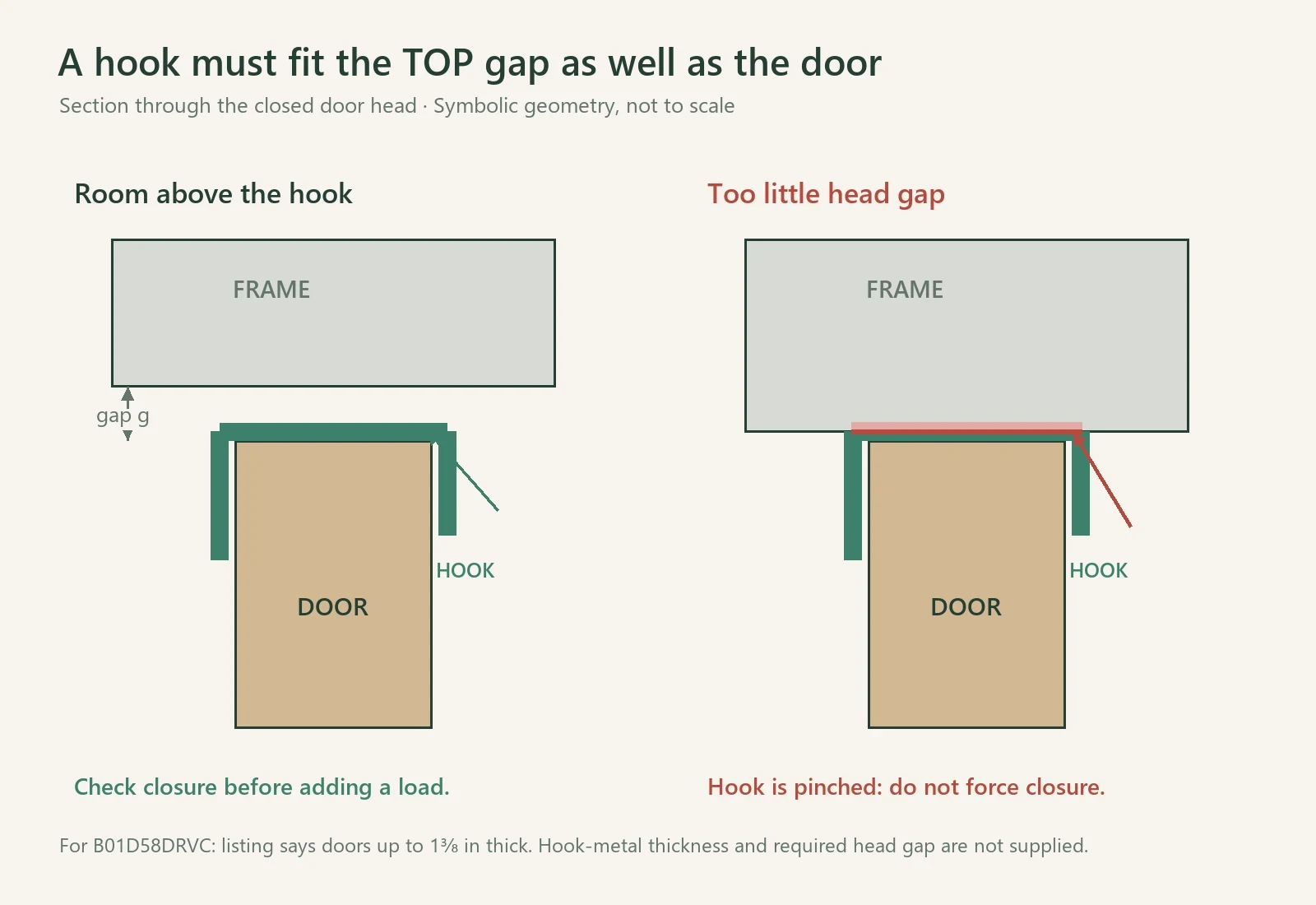
Door thickness is only one check. The hook also occupies the gap between the door top and frame. A door can match the stated thickness and still fail to close correctly with the hook installed. Inspect the real gap and follow the product instructions. Do not hammer a hook thinner, file the door or force the latch to rescue the fit.
Try the intended hanger carefully before loading it. The door should open, close and latch normally without scraping or binding. If it does not, choose another storage location or a mounting method designed for that door. Do not modify a fire-rated door or required exit assembly to accommodate an organizer.
Look at the Space Behind the Loaded Pockets
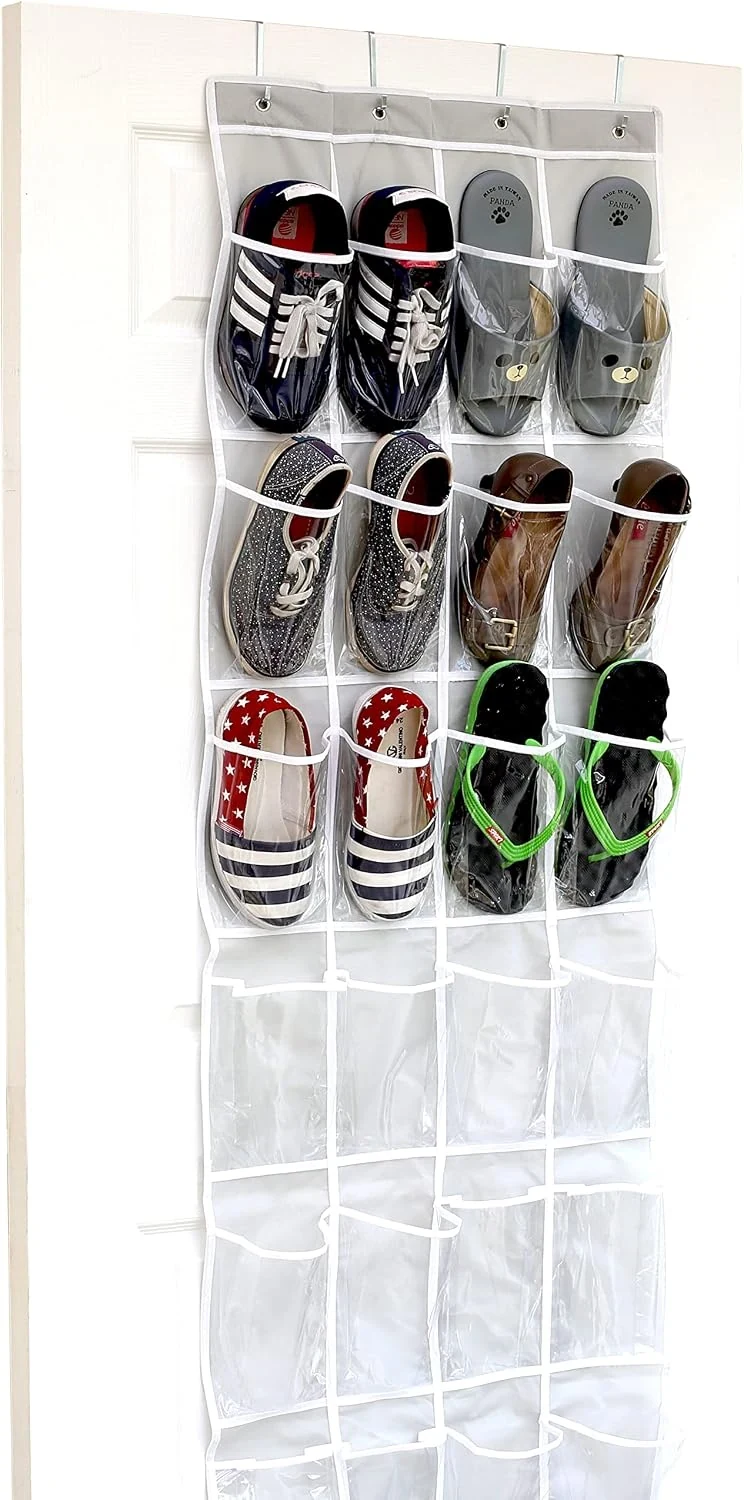
An empty organizer lies relatively flat. A sneaker in a pocket projects into the closet, hallway or room behind the door. Check that projection against shelves, hanging clothes, a wall and adjacent furniture through the complete door movement.
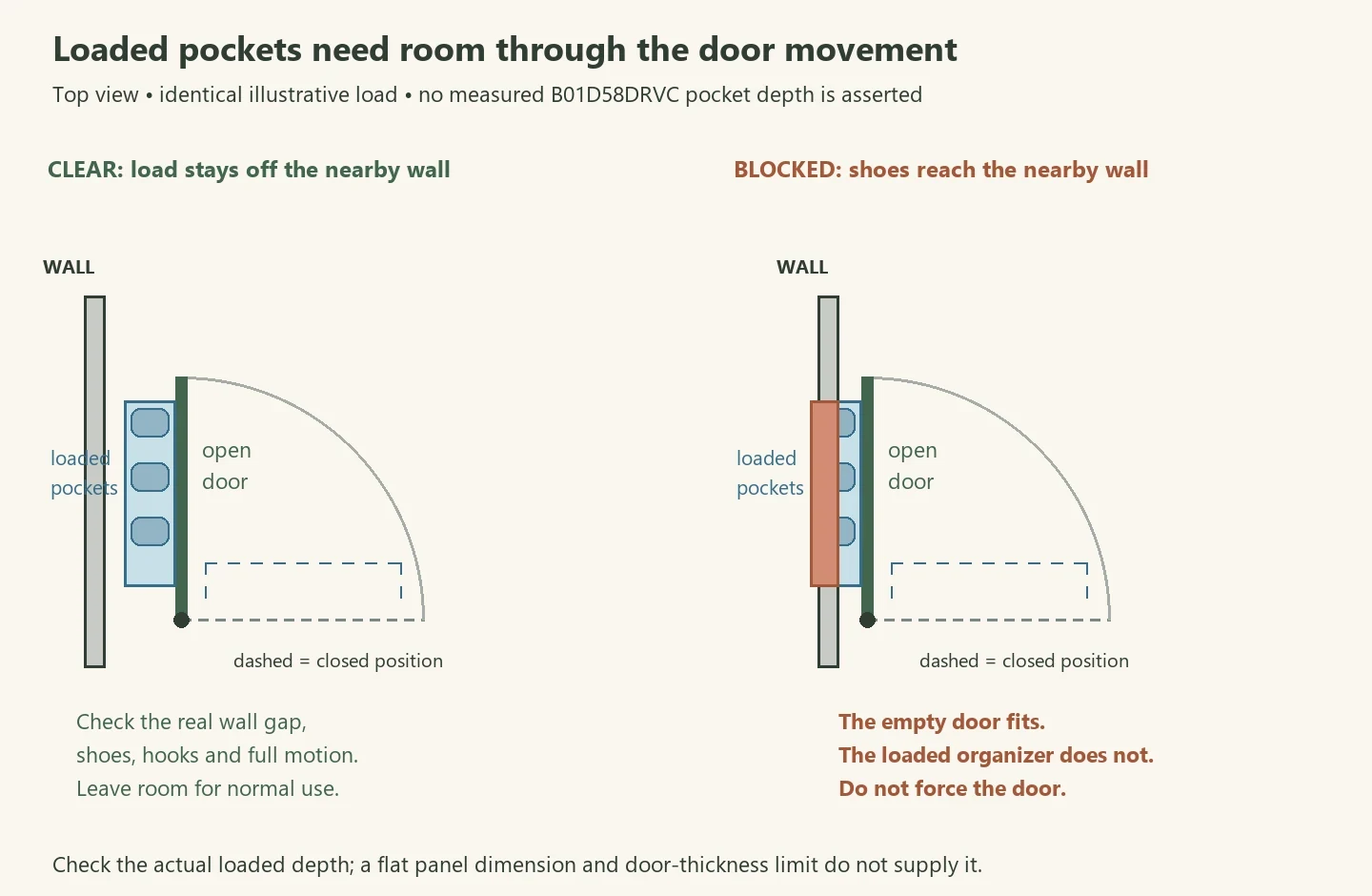
Hold one representative shoe at the planned pocket position. Open the door fully and close it. At the hinge side, objects may approach nearby surfaces in a different way from those at the latch side. Test the fullest part of the panel, not just an empty corner.
For a closet door, check access while the door is open too. A panel can clear the frame yet make it awkward to reach a drawer or walk into the closet. Storage should not depend on holding the door in an inconvenient intermediate position.
Match Pockets to Objects, Not the Headline Count
Measure a shoe at its widest useful entry point, and compare the pocket opening, depth and height. A pocket suitable for flats or sandals may not take a bulky sneaker or ankle boot. Fabric flexibility does not guarantee that a larger shoe will sit securely or be easy to remove.
Treat each pocket as a pocket, rather than assuming a pair belongs in it. If one shoe occupies one pocket, a 24-pocket organizer has a different practical capacity from a 24-pair rack. Plan the actual everyday set before ordering.
Clear fronts are useful when small objects need to remain visible. They can also make an untidy mixture more visible, so group by use rather than filling every available space. Keep heavier or awkward items within the maker's permitted loading and placement instructions. Do not add a new use, such as storing cleaning chemicals, without considering the product and household conditions.
Check the Lowest Row and Everyday Access
Measure from the hook position to the bottom of the panel. Make sure it does not drag on the floor, catch the threshold or obstruct a door stop. The top row must be reachable by the intended user without climbing on nearby furniture.
Put frequently used items where they can be seen and removed comfortably. A high pocket is not useful daily storage simply because it is technically available. Keep occasional items separate if reaching them means unloading the rows below.
If the organizer replaces entryway floor storage, rehearse the full route: arrive, open the closet, put away shoes, close the door and leave the passage clear. If that sequence is too inconvenient, the shoes may keep returning to the floor regardless of the extra capacity.
A Specific Organizer to Compare
The gray Simple Houseware organizer, ASIN B01D58DRVC, is listed at 19 inches wide by 64 inches high with 24 clear pockets and four supplied metal hooks. The listing specifies doors up to 1⅜ inches thick and gives the main pocket size as 4.3 inches wide by 9.5 inches high, with extra height described for the top row.
Those specifications make it a relevant option for smaller, slimmer footwear and visible small-item storage. They do not confirm that the hook clears your frame, that loaded shoes fit behind the door or that every adult shoe fits the pockets. Use the checks above before treating it as a replacement for another shoe-storage format.
Load Gradually and Check Again
Once the empty installation works, add a small normal load and repeat the open-close check. Follow the manufacturer's total load limit and installation instructions. Watch the actual hook seating and the panel's position instead of relying on a flat product photograph.
If the door changes its behavior, stop and reassess the setup. A smaller organizer, a suitable wall-mounted product or a shelf elsewhere can be a better use of space than a large panel that makes the door difficult to operate.