An under-bed bag fits only when its loaded shape can pass through the opening, sit clear of the bed structure and come back out far enough to use. Checking the height beside one bed leg is not enough. Measure the route under the lowest obstruction, the available footprint between supports and the floor space needed for retrieval.
Capacity is a later question. A large bag that fits somewhere under the mattress can still be the wrong choice if a center leg blocks it or a dresser prevents you pulling it out. Work from the bed and the items you plan to store, then choose the bag.
Find the Lowest Point Along the Route
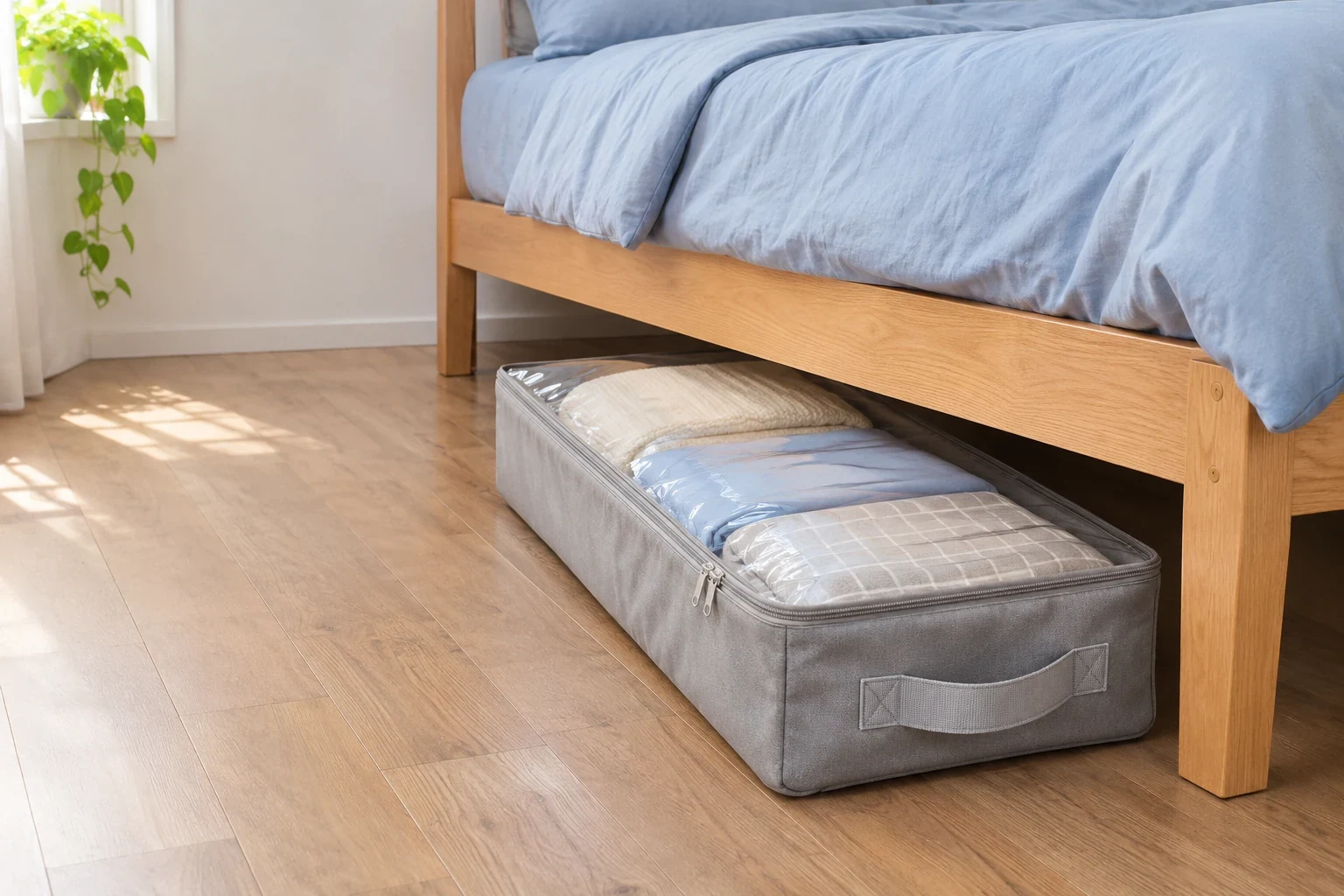
Look beneath the bed with a light before measuring. Identify side rails, crossbars, center supports, adjustable components and anything hanging lower than the frame edge. Measure from the actual floor surface to the lowest obstruction the filled bag must pass. Include the rug if the bag will move over it.
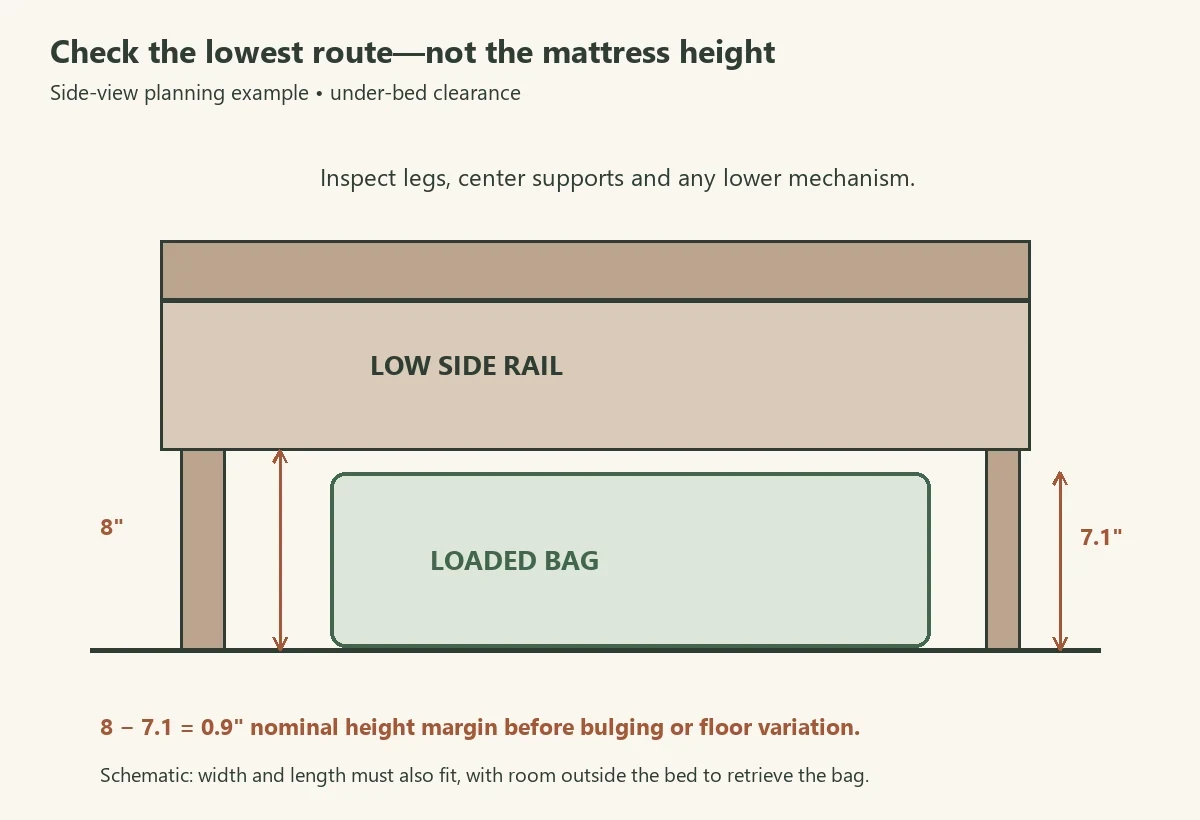
Measure in more than one place. The entrance gap and the space farther under the bed may be different. A thick side rail can make the opening lower than the storage cavity. A central support can divide a promising large rectangle into two narrower usable spaces.
Do not use the height of the mattress platform as the clearance measurement. The bag does not pass through the platform; it passes under the rail and around the supports. If you cannot see the route clearly, inspect it before ordering rather than estimating from a photograph of a similar frame.
Draw the Usable Footprint
On paper, sketch the bed legs and supports as obstacles. Mark the bag's proposed entry side. Then draw a rectangle with the listed length and width of the bag. Rotate that rectangle only if you can actually rotate the loaded bag on the floor and guide it into place.
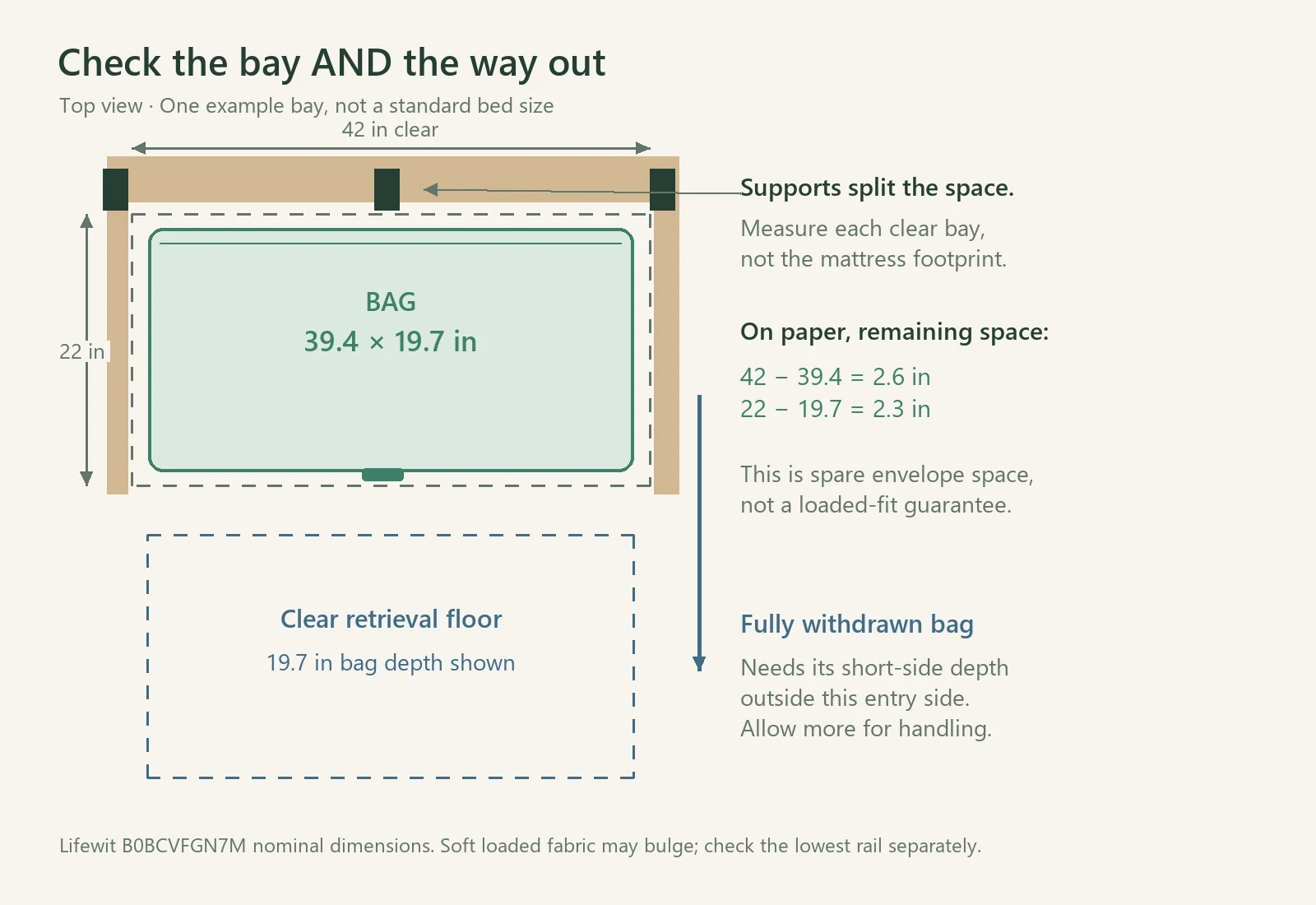
For an example, suppose the usable bay is 42 inches long by 22 inches wide with 8 inches of measured minimum clearance. A listed 39.4-by-19.7-by-7.1-inch bag fits inside that simple rectangular envelope on paper, leaving 2.6 inches along one dimension, 2.3 along the other and 0.9 in height. That is a planning comparison, not a guarantee. Fabric bulging, handles, an uneven fill and the way you pull the bag all need allowance.
If the clearance is exactly the listed bag height, do not assume fabric softness makes the problem disappear. Soft sides help the empty bag fold; they do not make a tightly packed blanket pass through a smaller opening. Leave a workable margin suited to the actual bag and contents, and test loaded size when you have the product.
Make Room to Pull It Out
The bag also needs space outside the bed. Measure to the nearest dresser, wall or other furniture on the retrieval side. Decide whether you will pull it fully out to open the top or access it partially. A handle facing the wall is not useful simply because the bag has several handles.
Try the movement with a lightweight household object of a similar footprint, without forcing it under the frame. Can you kneel or bend where needed? Can you guide the far end around a leg? Is the pull straight, or does the object need to turn into a narrow gap? These are reasons to choose smaller bags, not reasons to pack one large bag more tightly.
Two shorter bags can make separate categories easier to retrieve when a long bag spans both. Conversely, several tiny bags can create extra handles and gaps without improving access. Choose the number from the support layout and the categories you actually use.
Choose the Contents Before the Capacity
Group the intended items on the bed first. Separate a seasonal blanket from spare sheets used every week. If both share a single bag, reaching the sheets may require shifting the blanket each time. Store clean, dry items and follow their care requirements and the bag's instructions; ordinary fabric storage is not a moisture-control system.
Use one category per bag where practical and label the edge you will see when approaching. A clear top is less helpful if it remains completely hidden under the bed. A simple end label can make retrieval more direct than pulling several identical bags out to inspect them.
Keep the loaded bag manageable. A seller's volume claim does not tell you whether you can comfortably pull, lift and replace your particular load. Use the handles as directed and avoid dragging a soft bag over anything sharp beneath the frame.
A Specific Bag to Compare with Your Measurements
The gray Lifewit four-pack, ASIN B0BCVFGN7M, is listed with individual bag dimensions of 39.4 by 19.7 by 7.1 inches. It uses soft fabric sides, a clear top and handles on multiple sides. Those details make it a relevant example for bedding storage, provided the loaded shape and retrieval route work under your bed.
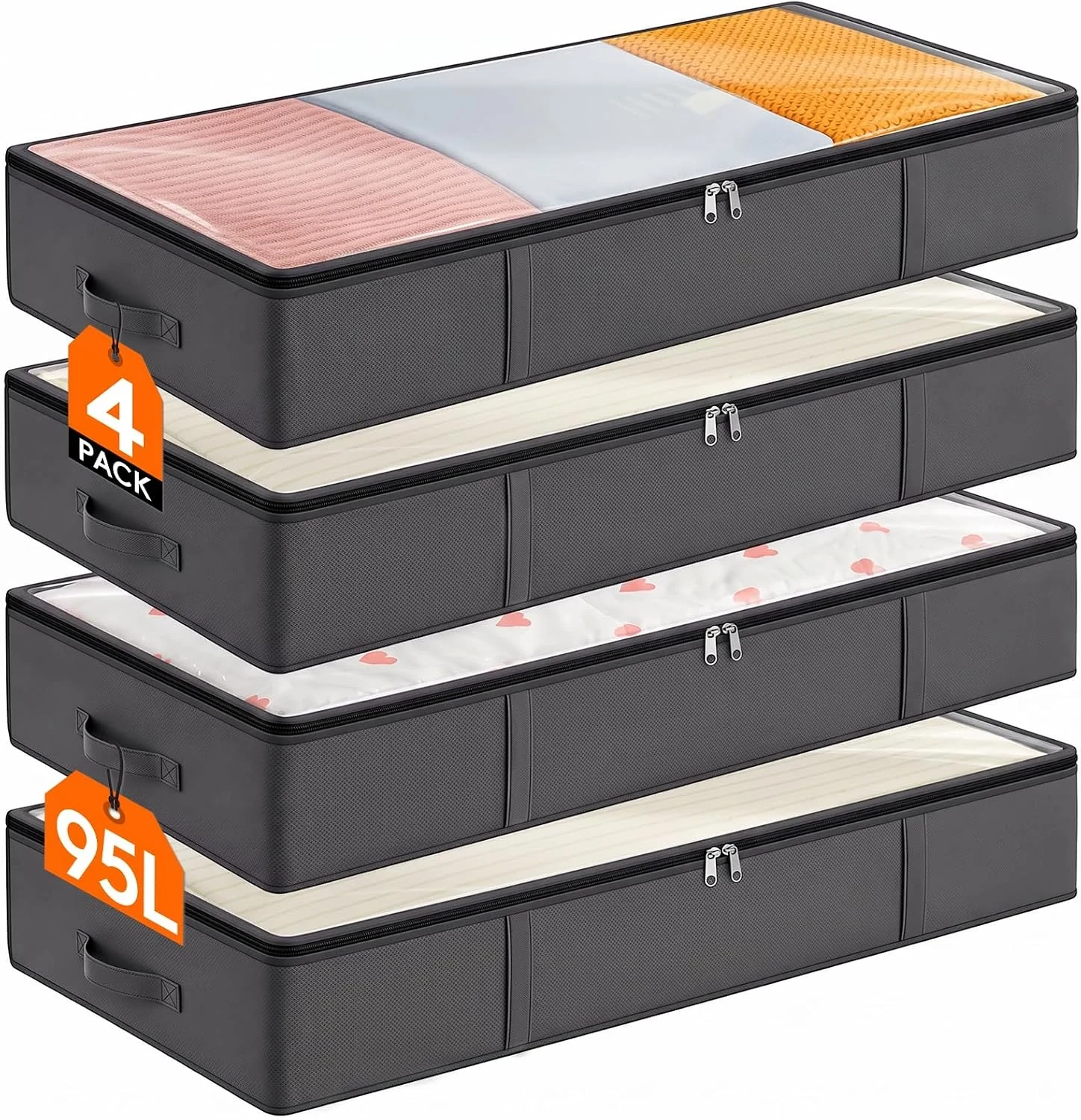
The listing uses inconsistent capacity descriptions in different sections. Choose from the physical dimensions and the current selected variant, rather than using the headline liter figure to calculate how much of your bedding will fit. The four-pack is a purchase quantity, not an indication that four bags will fit beneath every bed.
Before keeping the set, fill one bag with its intended items, close it normally and test the complete journey in and out. Do not use bed risers or alter the frame simply to rescue an unsuitable bag without checking the bed manufacturer's requirements. A shallower container or another storage location may be the cleaner solution.
The useful result is accessible storage, with the bed still functioning as intended. If every retrieval requires moving half the room, the empty space under the mattress is not as available as it first appeared.