Light a shelf from its underside, front edge or a suitable position outside the unit before giving up the space used by books and everyday objects. The right position makes the intended contents visible while leaving room to remove them, operate the light and maintain it. A fitting that occupies no shelf floor can still obstruct the opening above it.
Start with one shelf and one clear purpose. Finding a book spine, showing a small collection and lighting a page held in your lap are different jobs. Solve the shelf task first, then keep the separate room or reading light that the other activities need.
Identify What Needs to Be Lit
Look at the shelf during the time you normally use it. Decide whether the difficulty is finding objects, seeing labels or displaying a particular group. IKEA describes integrated cabinet lighting as useful for finding things and spotlighting objects. That is a more specific brief than making the whole bookcase brighter.
Choose a few ordinary contents for the trial. Keep their usual positions rather than emptying the shelf to create an attractive pool of light. A fitting that works only after the tall books disappear has changed the storage arrangement as well as the lighting.
Observe the shelf from standing and seated positions. A light hidden behind the front board from one viewpoint may be directly visible from the sofa. Try the intended effect with the room's other normal lights operating, rather than judging only a glowing shelf in darkness.
If you mainly need light on a page outside the bookcase, an appropriately positioned reading light may solve that task without adding a shelf fitting. Keep the fixture's actual permitted support, adjustment and surrounding space in mind.
Measure the Opening After Adding the Fitting
Measure the clear opening from the shelf surface to the underside of the board above. Include a front lip, bracket or other projection wherever it limits access. Then find the proposed fitting's complete installed projection, including its mount. A thin-looking light is not dimensionless.
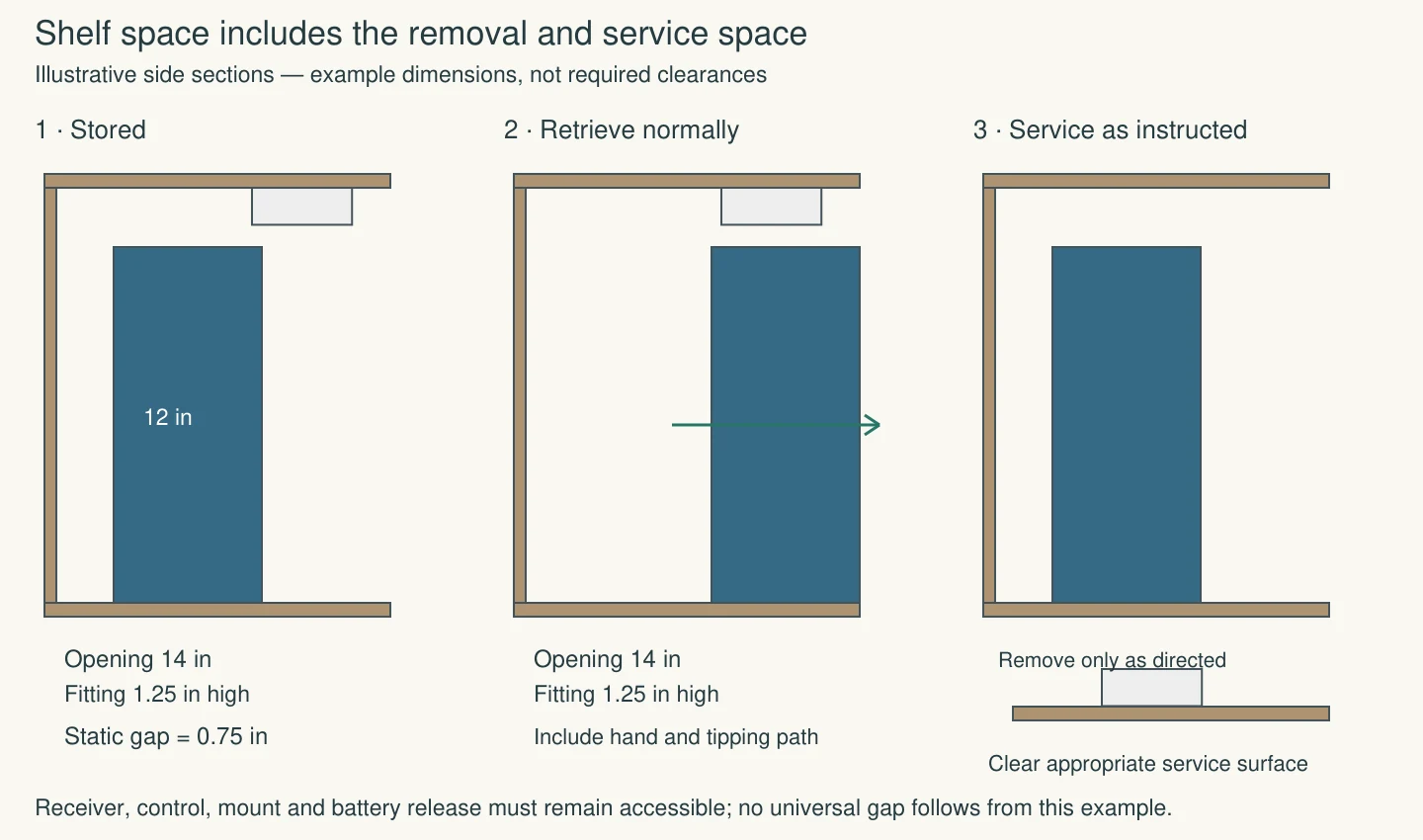
For an illustrative opening 14 inches high, a 1.25-inch fitting leaves 12.75 inches beneath it locally. A 12-inch-tall book has only 0.75 inch of static space below that fitting. These are example dimensions, rather than a recommended allowance for removing a book.
The location matters. A book stored behind the fixture may pass underneath it on the way out. Your hand may need more room than the closed book, and a book that normally tips forward needs a different envelope from one pulled straight ahead. Measure the entire retrieval path instead of checking only the final storage position.
Before attaching anything, use a harmless removable outline or hold a lightweight size reference appropriately while another person checks the movement. Do not balance a working electrical fitting overhead as a mockup. If normal retrieval becomes awkward, choose another permitted location or lighting format before changing the books' homes.
Compare an Underside Position with an Outside Source
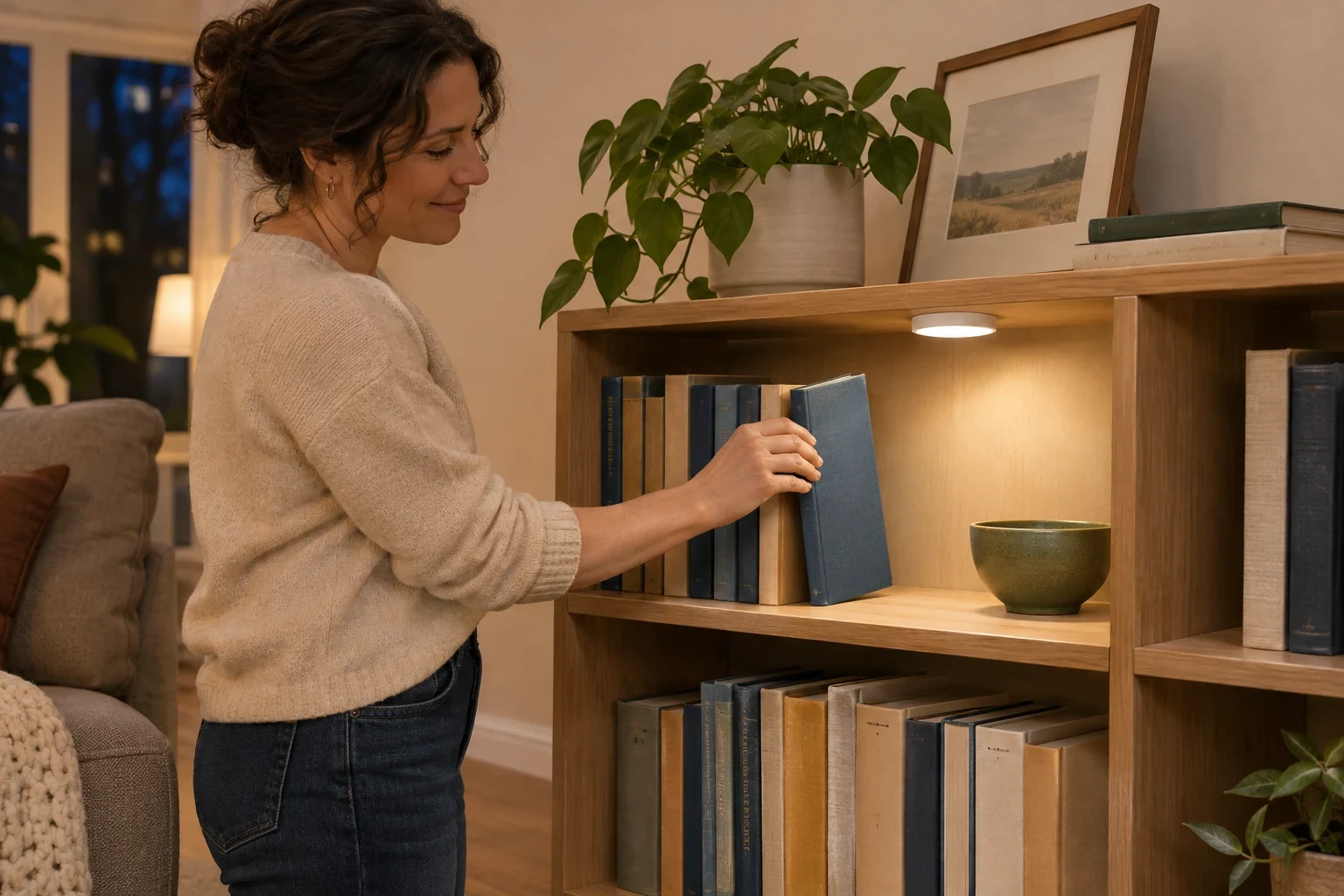
An underside fitting can direct light into the opening while keeping the shelf floor free. Check how it attaches, whether the board is suitable and whether its position leaves both the contents and controls accessible. A shallow strip and a round puck create different obstructions; compare their full installed dimensions.
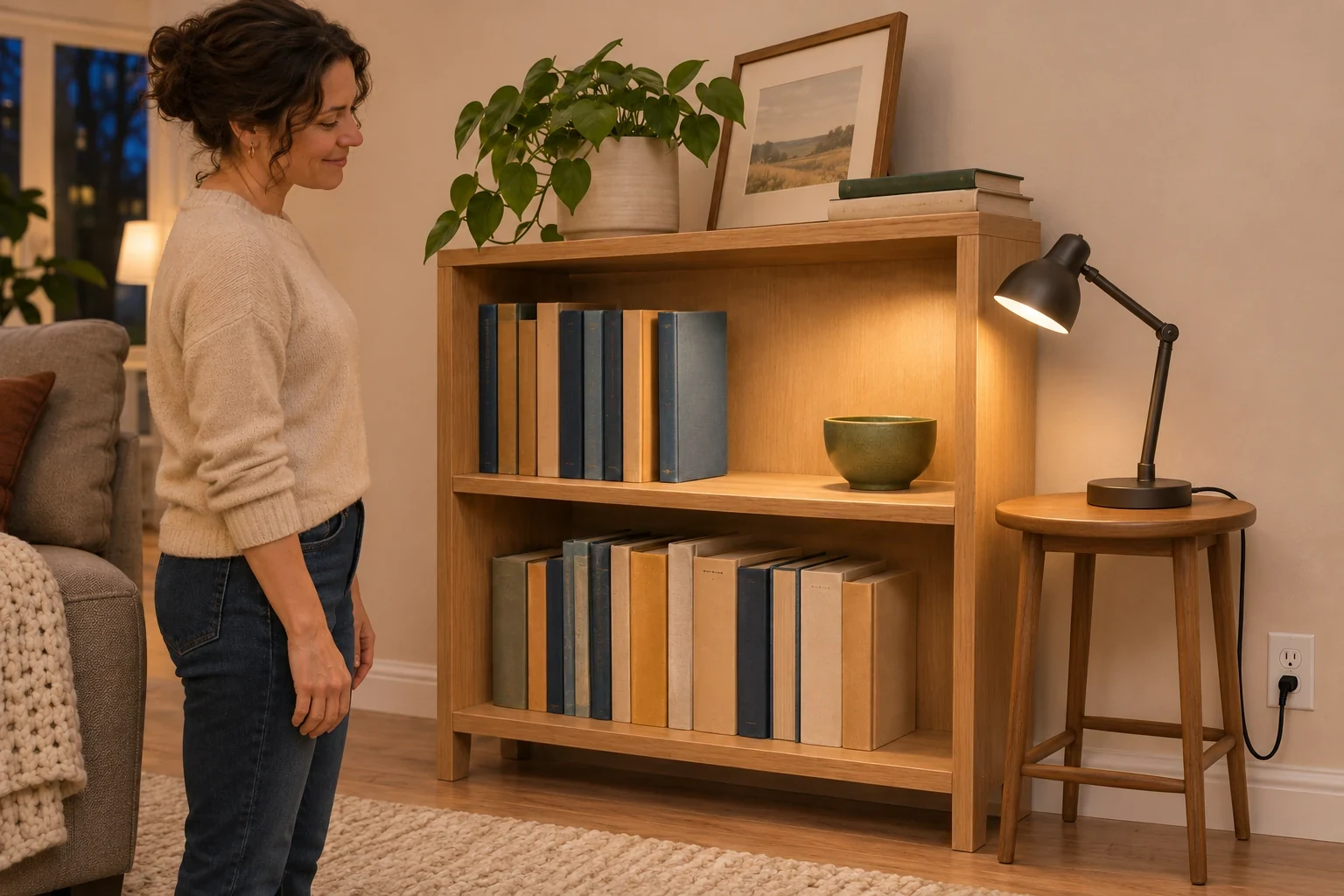
A source outside the opening may preserve more internal height. For example, an existing appropriate lamp on a separate stable surface might be adjustable toward the display within its instructions. Check the source from the seats, the support surface and the route to power before treating that position as available.
Do not assume a clip will suit every shelf edge. Confirm the permitted thickness, grip surface, load and orientation for the actual fixture. Glass, thin decorative boards and shaped edges need their own approved solution. Likewise, do not improvise a mount under a shelf because the light is described as lightweight.
For a corded option, plan the complete cable route without crossing a walking path or interfering with doors and drawers. A battery light avoids that cable but introduces battery access and replacement. A rechargeable model needs its specified charging arrangement; it is not automatically convenient if removing it requires unloading the shelf.
Check Control and Maintenance Access Before Mounting
Operate the control from where you will actually stand or sit. A button hidden behind books may turn a simple lighting task into a repeated unloading job. For a remote-controlled fitting, confirm its particular control method and any requirements for orientation or an unobstructed signal path.
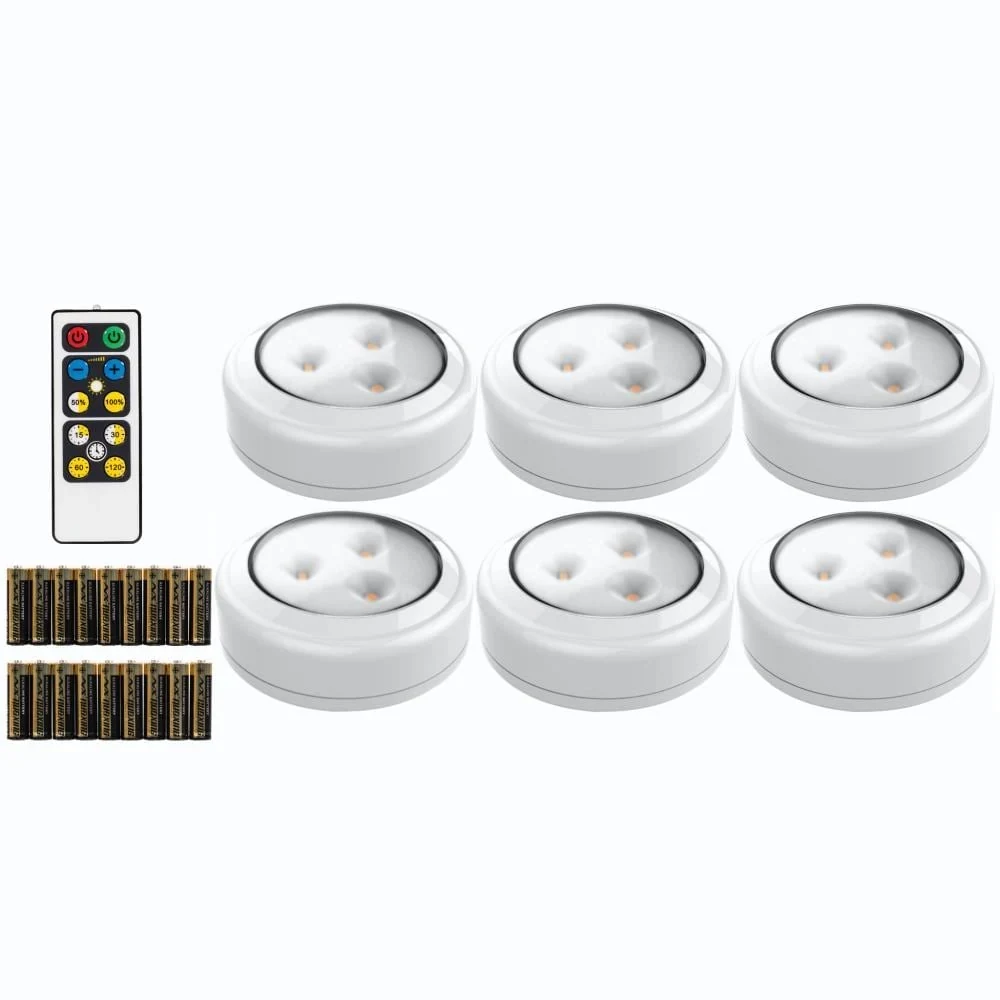
The Brilliant Evolution BRRC135 is one documented puck format. Its original manual gives a diameter of 3⅜ inches and a height of 1¼ inches. It describes lens-tap on/off, remote brightness control and an outward-facing receiver orientation; objects can interfere with the infrared signal. It is a useful example of why fitting size and control access belong in the same plan.
Lowe's identifies a six-light BRRC135 set but currently marks that item as no longer sold on its website. The retailer photograph shows that set, rather than the generic room illustration. Compare any available replacement using its own exact model, contents and instructions.
Follow the selected light's mounting and battery instructions. The BRRC135 manual warns that its adhesive may damage the surface when removed and includes button-battery precautions for the remote. Keep the remote and batteries as directed; adhesive mounting does not automatically make a fitting suitable for every finish or tenancy.
Identify where you can put the detached fitting during service, if removal is part of its instructions. Use a clear appropriate stable surface, handle the specified batteries correctly and restore the light as directed. Check the needed release movement before surrounding it with contents. Keep actual objects away from a maintenance area that needs to remain clear.
Finish with the Contents Back in Normal Use
Return the ordinary books and objects, then remove and replace each one you use regularly. Operate the light and check the shelf from the sofa again. Look for a visible bright source, shadows that hide labels and a fixture that catches a hand or book. Change one permitted position or setting at a time so you can identify what helps.
When comparing lights, lumens describe output and kelvins describe light appearance; neither figure alone tells you whether a particular shelf will be usefully lit. Judge the actual contents and viewpoints rather than choosing the brightest listing or copying a photograph's color.
Keep the arrangement that completes the shelf task with its normal contents in place. If every use requires moving books, reaching behind objects or dismantling the display, reconsider the location. Useful shelf lighting leaves both the stored objects and the light itself accessible.