A lamp can sit neatly beside the television and still appear as a bright shape across the picture. Moving it farther from the screen may help one viewer while leaving a reflection in another seat. The useful test is therefore a view from the places where people actually watch, with the room lighting they need.
Start with the lamp you already own. Identify whether its bulb, shade or illuminated surroundings are appearing on the screen, move one thing at a time, and repeat the check from every regular seat. A successful arrangement keeps useful room light, accessible controls and a workable route through the room as well as a picture you can comfortably follow.
Find the Reflected Source Before Moving Furniture
Sit in your usual position with the television operating normally. Use familiar content that includes a darker scene, then compare it with an ordinary brighter picture. A reflection that disappears into a bright program can become distracting when the picture changes. Keep the television settings unchanged during this first comparison.
Switch the nearby lamps on and off individually using their normal controls. Watch for the particular bright patch that appears or disappears. It might look like a recognizable shade, a small bright bulb, or a broader shape that follows the lamp's position. A shade that conceals the bulb from your eyes can still become a visible reflected object itself.
Also notice daylight, a bright doorway and walls lit by other fixtures. If the unwanted shape remains when the suspected lamp is off, moving that lamp alone will not resolve it. Test the other likely source separately. Do not drape material over a lamp, television or ventilation opening to conduct this check.
Sony's placement guidance for its BRAVIA 6 advises positioning the television where light does not shine directly on the screen. That is a useful starting question for this room test, rather than a placement distance that can be transferred to every television. Your own television instructions still govern its installation and operating clearances.
Use the Seat-to-screen Relationship
A reflection depends on the relationship between the light source, screen and viewer. On an ideal smooth, flat reflecting surface, the incoming and reflected rays make equal angles to the perpendicular at their meeting point. Moving the source or viewer changes that path. OpenStax explains this plane-reflection model and distinguishes it from light scattered by a rougher surface.
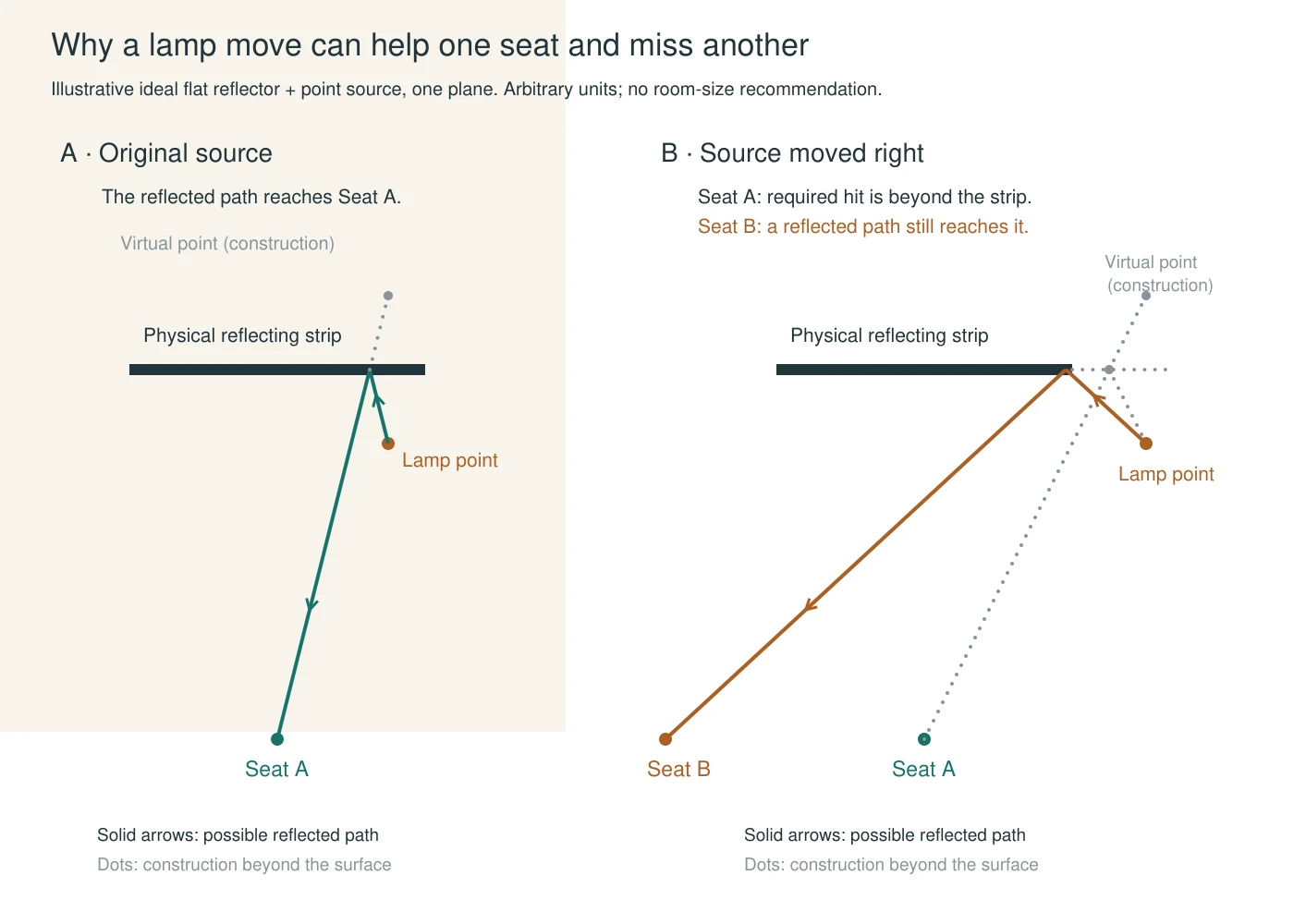
The illustration uses one point of light and a short flat reflecting strip in a single plane. In the first arrangement, a reflected path reaches Seat A. In the second, moving the source means the path required to reach Seat A would meet the extended line beyond the strip. The dotted extension is a construction line: there is no reflecting surface at that point. However, a real path from the moved source can still reach Seat B through the strip's right-hand end.
The practical lesson is to check the other seat after a promising move. The drawing supplies no recommended TV width, lamp height or room distance. A real shade is an extended source, viewers change head position, and television finishes do not all behave like an ideal mirror. Use the model to understand why a move changes the view, then judge the actual picture.
Try a New Lamp Position with the Television Fixed
Leave the television in its original position for the first placement trial. Turn off and handle the lamp as its instructions require before moving it, allowing it to cool if necessary. Choose another stable, appropriate surface that supports its entire base and keeps it clear of curtains, objects and equipment as required by the lamp and television instructions.
A position farther to one side is worth testing if the room can accommodate it. It is a candidate, not a rule that every lamp belongs beyond a particular screen edge. Avoid balancing the base on a narrow console corner or putting the fixture onto the television or its mount.
Return to the original seat, restore the same lamp setting and television content, and compare the reflected shape. Then check the other seats before moving the lamp again. If you change both the lamp's position and brightness at once, you may lose track of which change made the difference.
Keep a short note such as “right table, normal lamp setting: clear from sofa left, shade visible from chair.” It is more useful than declaring the whole room reflection-free after one glance. If a move makes no useful difference, return to a known workable arrangement before trying another location.
Check Every Seat and the Lighting You Actually Use
Repeat the check from the middle and ends of the sofa and any separate chair used for watching. Sit at your ordinary height and posture. Include a reclined position if that is how the room is used, without treating one fixed eye point as everyone else's view.
Use both the darker and brighter picture again. Then try the normal combination of room lights. A lamp that passes alone can illuminate a wall or object that becomes conspicuous when other lights are added. Likewise, the preferred evening arrangement may need a separate daylight check when a window is bright.
Ask whether the room still works with this lighting state. Can someone find the remote, read a label when needed and walk to the doorway? Can the lamp be switched on without reaching behind the television? Does its cord remain clear of the walking route and the furniture's moving parts? A better picture does not make an unstable table or awkward control acceptable.
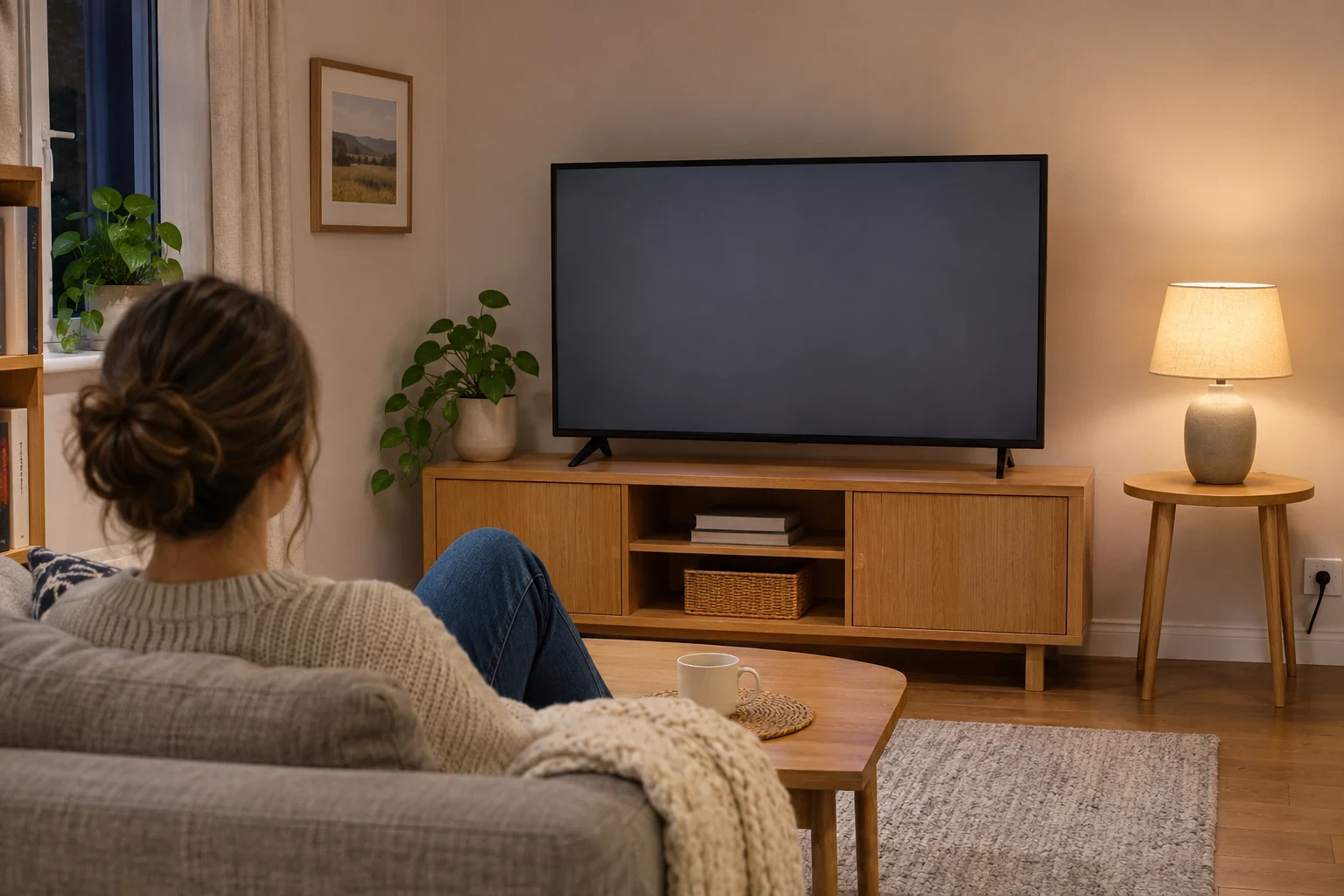
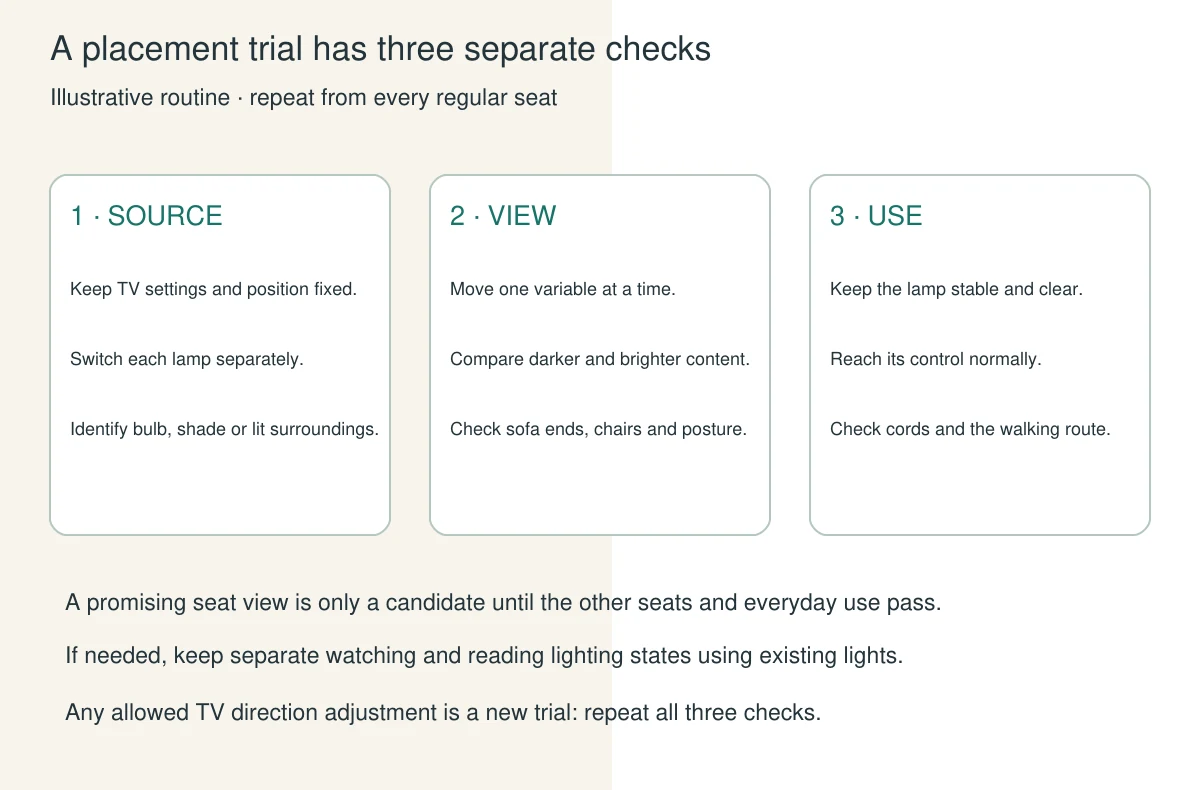
The checklist illustration separates three decisions: identify the source, test the view, and check everyday use. Complete all three before treating a location as the room's normal setup. The illustrative room photograph shows a candidate arrangement; it does not establish how your screen will reflect a real lamp.
Consider the Television’s Direction Only When Permitted
If no suitable lamp position works, a change in screen direction may alter the reflection. Make that a separate trial. Only use adjustment that the television's stand or mount is designed to permit, following its instructions and any handling requirements. Do not try to swivel a fixed installation or loosen mounting hardware to improvise an angle.
Keep the lamp in one tested position while checking an allowed screen adjustment. Recheck the picture from every regular seat, along with the television's support, cables and required clearances. The adjustment that improves one seat may shift the reflected source toward another viewer or make the picture harder to see from the side.
If an adjustment is impractical or does not help, retain the supported installation and choose a different lighting arrangement. The aim is a usable room, not a particular screen angle.
Keep Separate Watching and Reading States If Needed
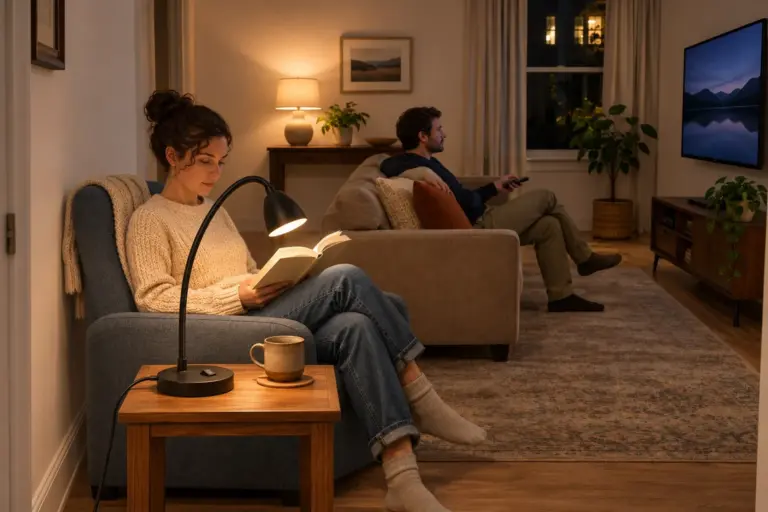
Some rooms work best with different existing lights for different activities. You might use a less conspicuous room light while watching, then switch the nearby reading lamp back on for a book. Test the watching state in use rather than assuming that the darkest possible room is the answer.
Keep the controls and the change between activities simple enough for the people who share the room. Recheck after moving the sofa, replacing a shade or changing the television position. Those changes can alter the view even when the original lamp is unchanged.
Finish with a specific result: a lamp position and lighting state that have been checked from the actual seats, plus an alternative when reading needs more light. If no candidate arrangement passes those checks, preserve useful room lighting and reconsider the placement with the equipment's instructions. A new bulb, strip light or television is not an automatic solution to a reflection you have not yet identified.