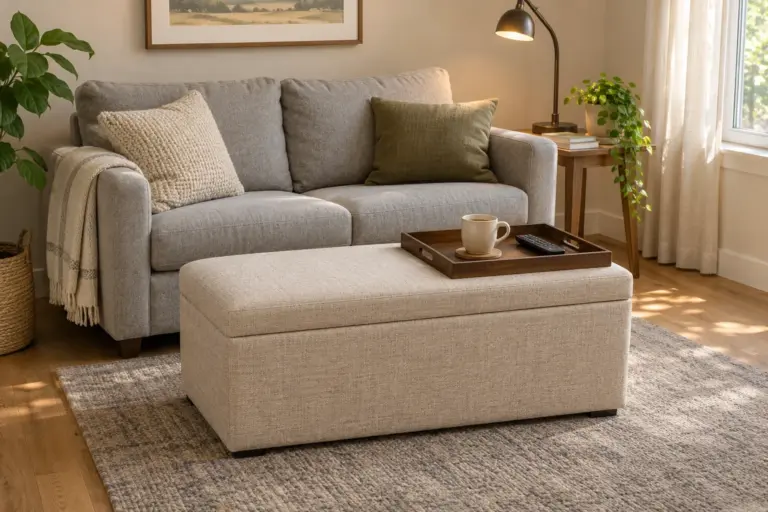
A reading corner can begin at the end of the sofa or with a chair you already use. What makes it a reading place is the relationship between the seat, useful light, a reachable landing surface and enough room to settle in. Adding another armchair can be unnecessary when the existing seat is comfortable and the room's spare corner is mainly needed for movement.
Start with the seat where you naturally choose to read. Build the supporting arrangement around that habit instead of creating a beautiful corner you rarely occupy.
Use the End of the Sofa as a Complete Seat
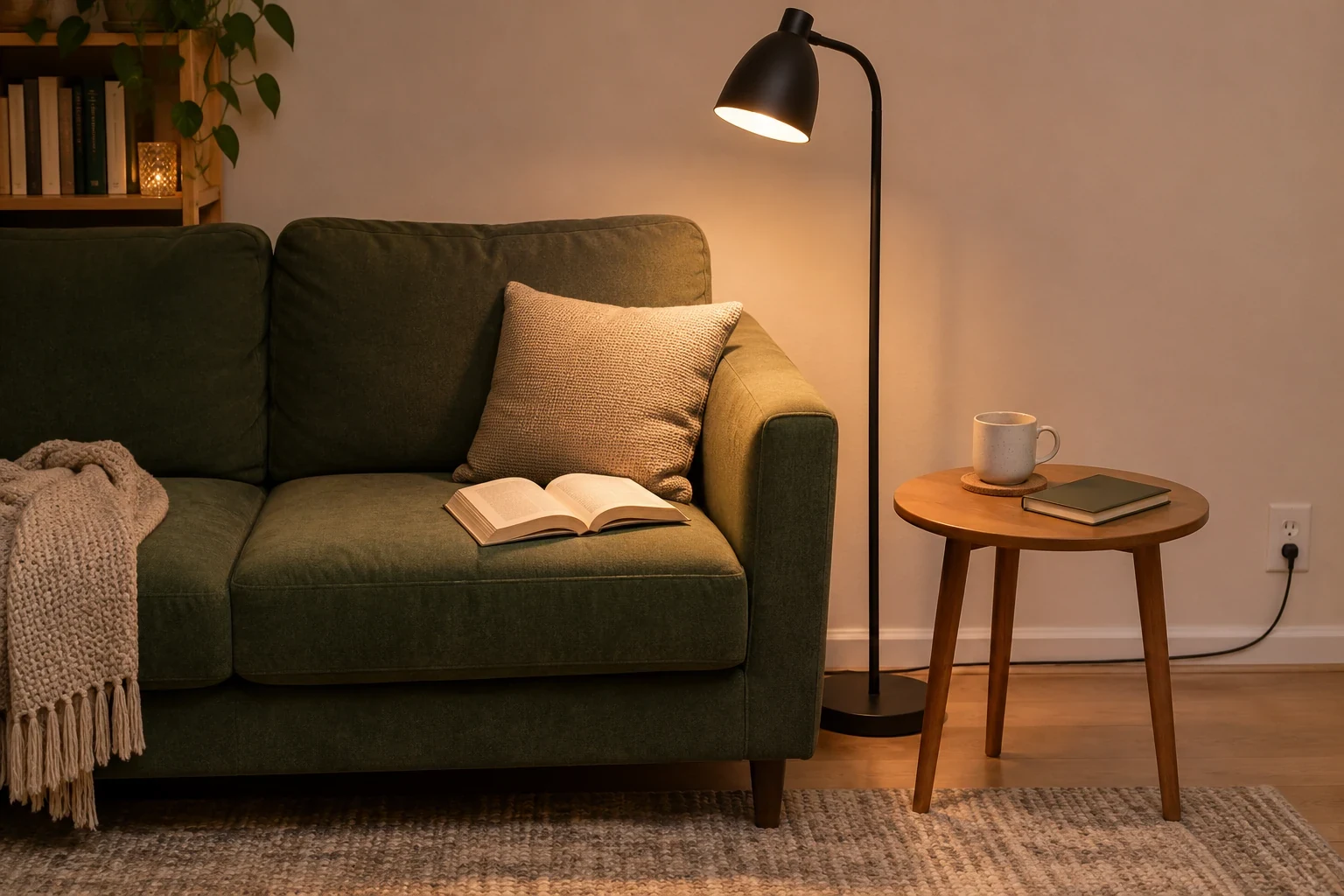
Choose the end with a workable lamp location and a useful side for a small surface. Sit with the cushion and blanket you normally use. Hold an open book and notice where your elbows, feet and drink need to go. This occupied shape is the starting point for the corner.
In the sofa-end arrangement, the light comes from behind the arm while a small table sits beside the front half of the seat. That keeps the book area and drink area distinct. The lamp's base stays clear of the approach, and its cable follows the wall toward the outlet.
Try the view from the rest of the sofa as well. A lamp that is pleasant for the reader can expose the bulb to the next person. Adjust the shade or position within the fixture's permitted movement rather than treating the reader's viewpoint as the only one that matters.
Borrow an Occasional Chair Only If You Want to Sit There
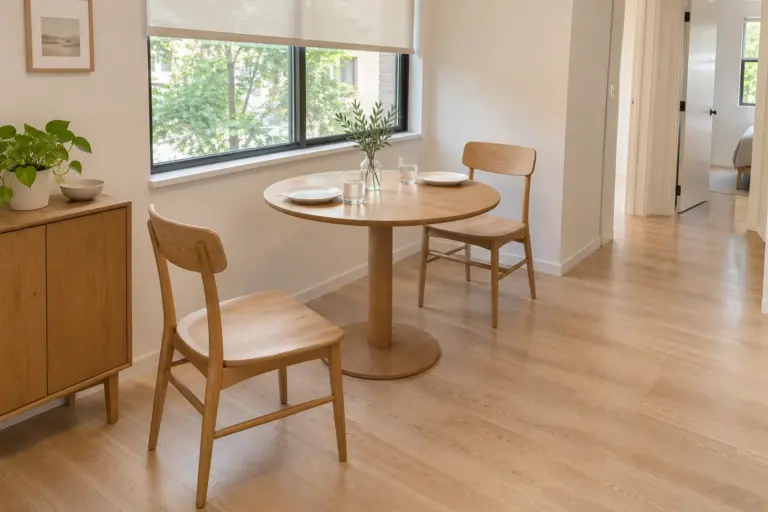
A dining or occasional chair can support a short reading session if it is comfortable for you. Place it where the room still works when someone is seated, not tucked so tightly into a corner that reaching it requires moving a table.
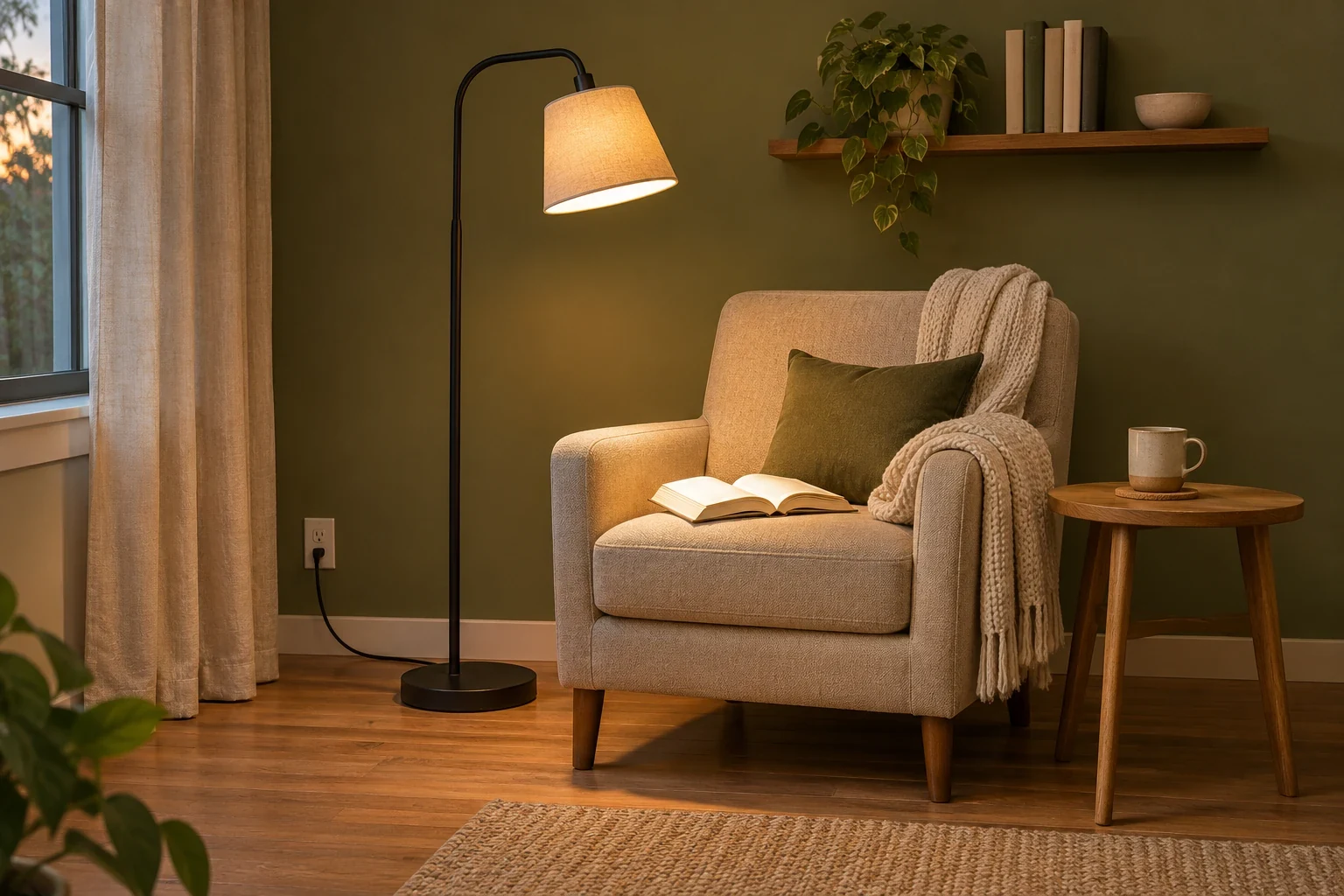
Give it a real light source and a place for the book or cup. A plant stand or unstable decorative stool is not automatically a suitable drinks table. Use furniture intended for the load and activity, and keep the surface close enough that you do not need to stand for every small object.
If the chair normally belongs at the dining table, include its return in the plan. A temporary reading spot can be useful precisely because it does not occupy another permanent furniture footprint. It becomes less useful if every setup requires moving several heavy pieces.
Let the Landing Surface Stay Modest
The surface only needs to hold the objects used in the session. A large pile of books, a lamp with a broad base and decorative objects can leave no room for the cup that justified the table. Keep the immediate surface available and put the reading queue on an existing shelf.
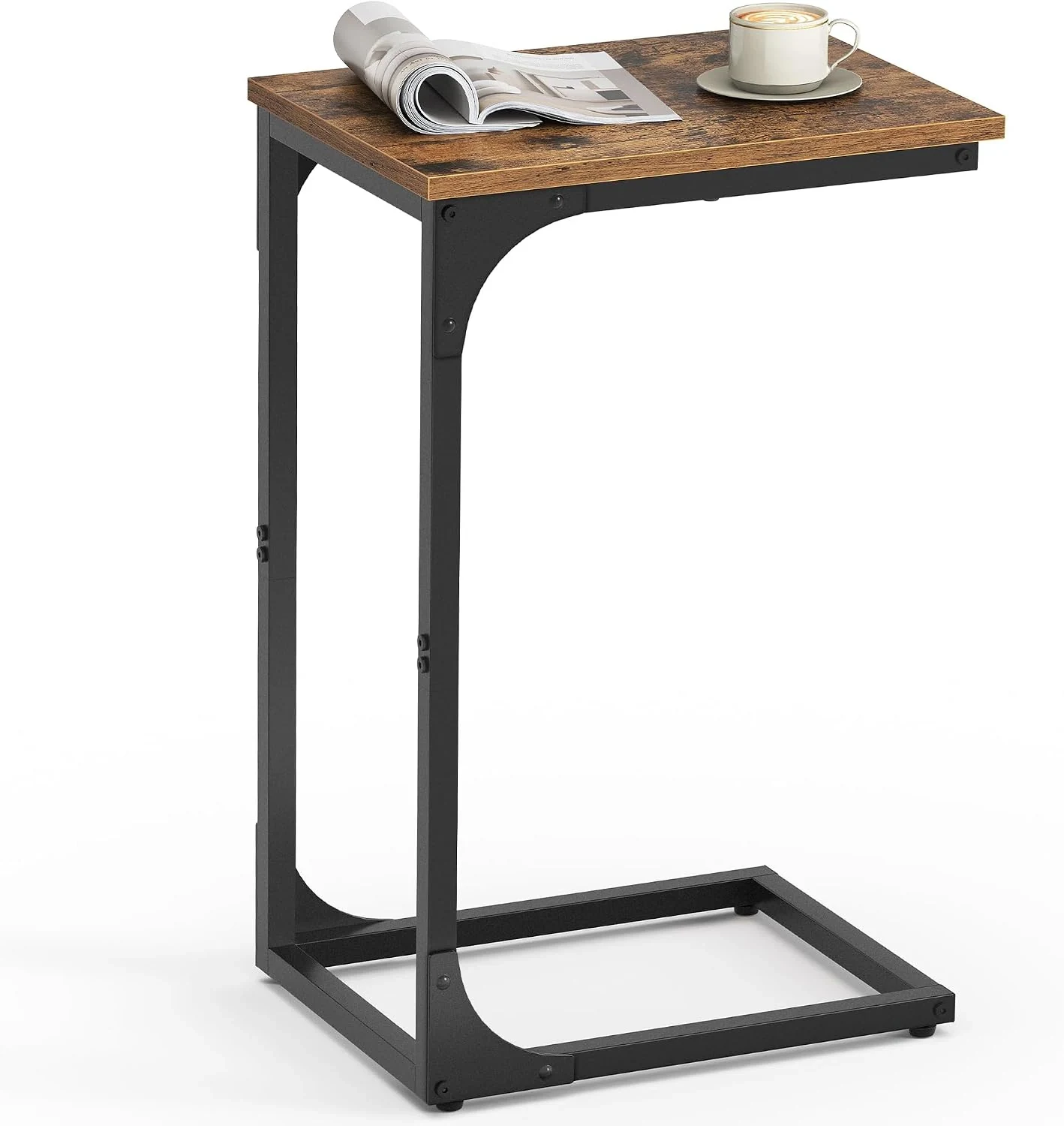
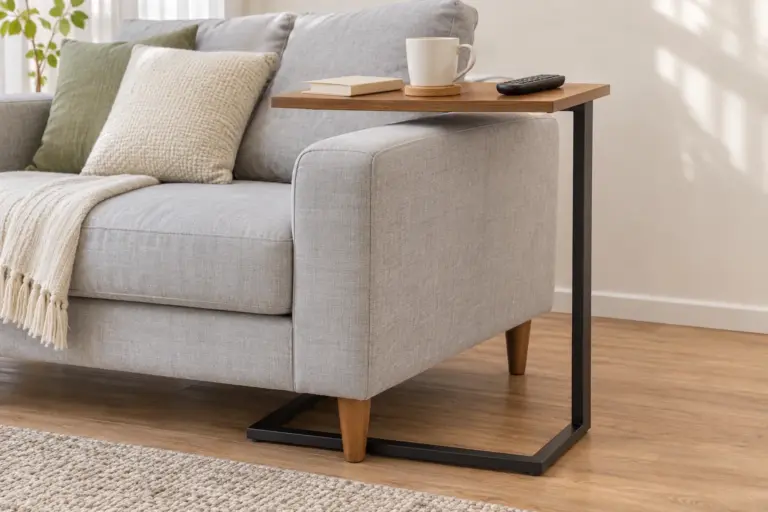
A C-shaped table is one possible format when its geometry fits the seat. The VASAGLE example, ASIN B08VDQN8H5, has a listed top footprint of 11.8 by 15.7 inches and an overall height of 24.4 inches. Check the internal opening and base route before assuming it slides over your sofa arm.
An ordinary side table may be simpler when there is enough room beside the arm. Choose the format from reach, stability and movement rather than expecting the same compact table to suit every seat.
Use the Corner in Its Normal Light
Test the seat when you actually read. Daytime window light can make a corner feel ready while leaving it poorly supported in the evening. Position the reading light for the page and check the bulb's view from the seat. Compare compatible bulbs by brightness and light appearance rather than wattage alone.
Keep the route into the seat clear, including the position of a blanket hanging over an arm and any table base on the floor. Put the book down and stand up as part of the check.
If the existing seat remains uncomfortable after these changes, another chair may deserve consideration. But first establish whether the missing piece is actually the seat, or simply the light and surface that make it pleasant to use.