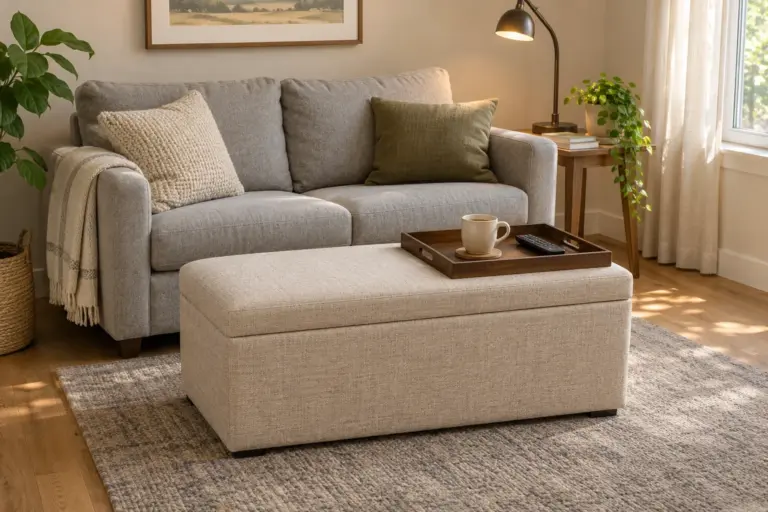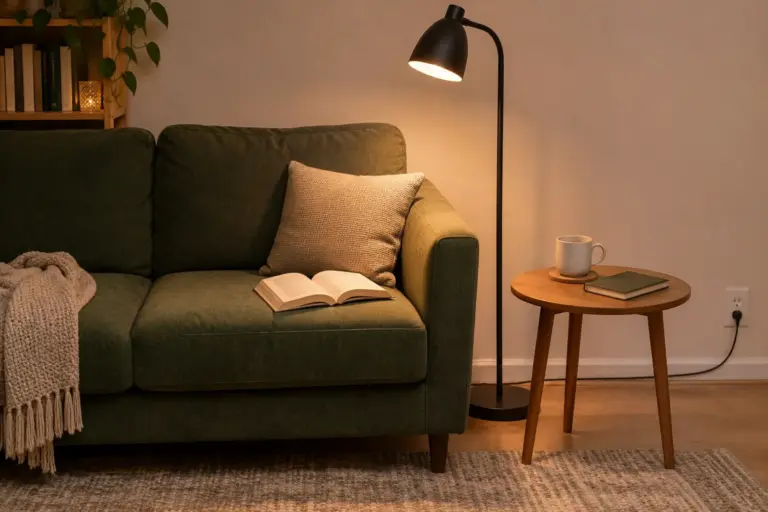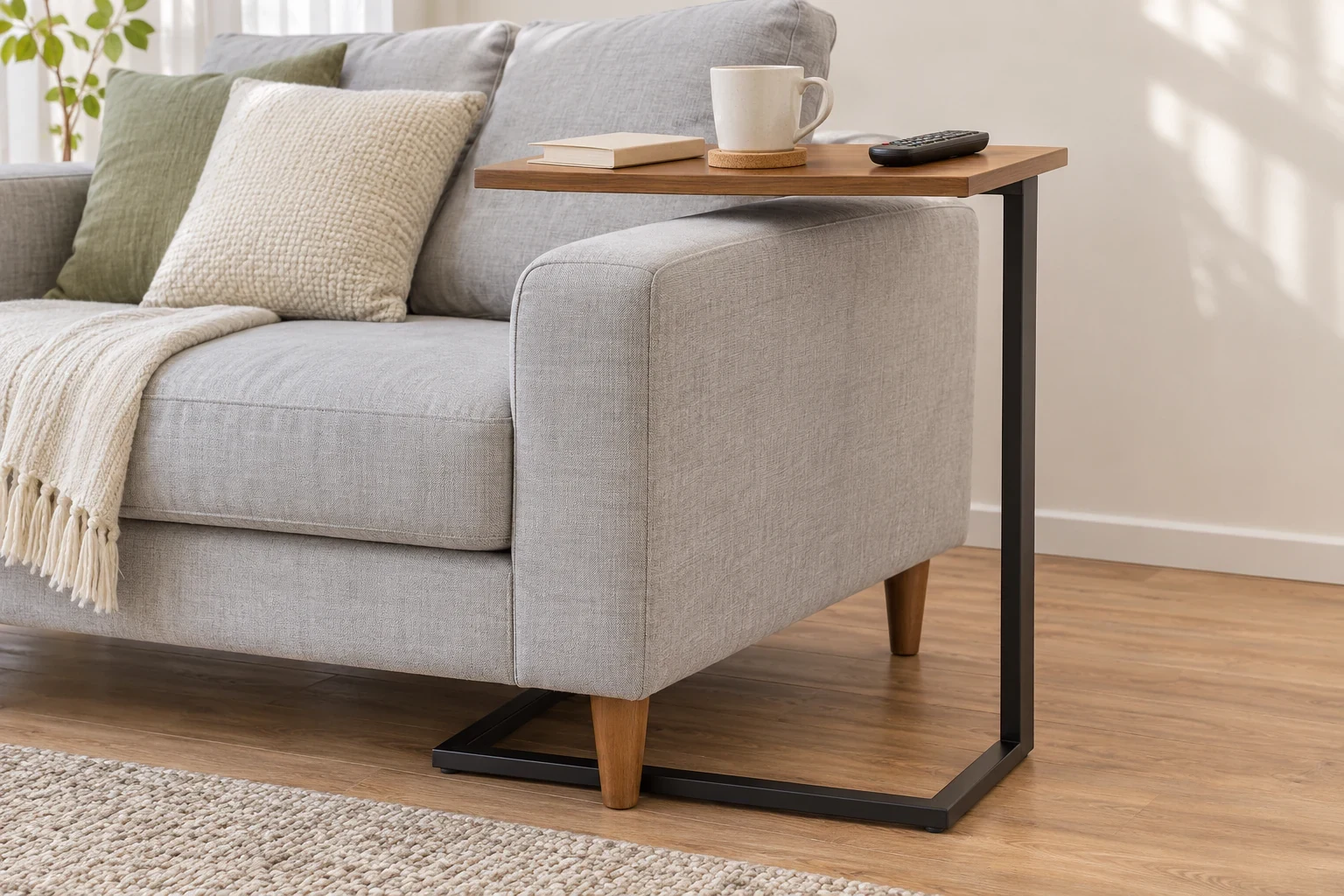
A useful sofa-side surface holds the objects you put down during a session without making it harder to enter or leave the seat. Begin with the cup, current book and remote, then choose the surface and position. Decorative objects can come later if there is genuinely room left.
The arrangement shown here keeps a modest table beside one sofa arm. The open floor in front is intentional. The table serves the person in that seat rather than trying to replace every surface in the room.
Place the Cup from the Seated Reach
Sit in the position you actually use, with the normal cushion behind you. Reach to the proposed surface without a drink in your hand first. You should be able to place an object fully on the top without leaning across a sharp corner, behind your shoulder or over another person's space.
The useful height depends on your arm, posture and sofa. A table flush with one sofa arm can be inconvenient beside a different seat. Try an existing stable surface as a reference, or safely mark the proposed top position, rather than choosing by the table's height in a room photograph.
Keep the cup away from the edge and leave a clear place to put it down. A lamp base and a tall vase can turn a nominally generous top into a narrow strip. If the lamp needs that surface, compare a smaller lamp format or a separate light position.
Give the Book an Open and Closed Position
An open book occupies more width than a closed one. Decide whether the surface is only a place to pause the current book or also a place to read it flat. Those are different tasks. If the book stays in your hands, the side table can remain modest.
A lower shelf can hold the current reading queue if you can reach it comfortably and the books fit the opening. Avoid a tall unstable stack that must be moved each time you want the bottom title. Put occasional reading elsewhere and preserve the nearby space for the session in progress.
Keep water and paper in separate patches where possible. The arrangement does not need a full organizer for three objects; it needs enough unoccupied top for them to coexist.
Keep the Base Out of the Exit
Check the table from the floor up. A wide foot or projecting frame can occupy the route even when the top looks tucked neatly beside the arm. Include the rug edge, sofa feet and the place your own feet land when standing.
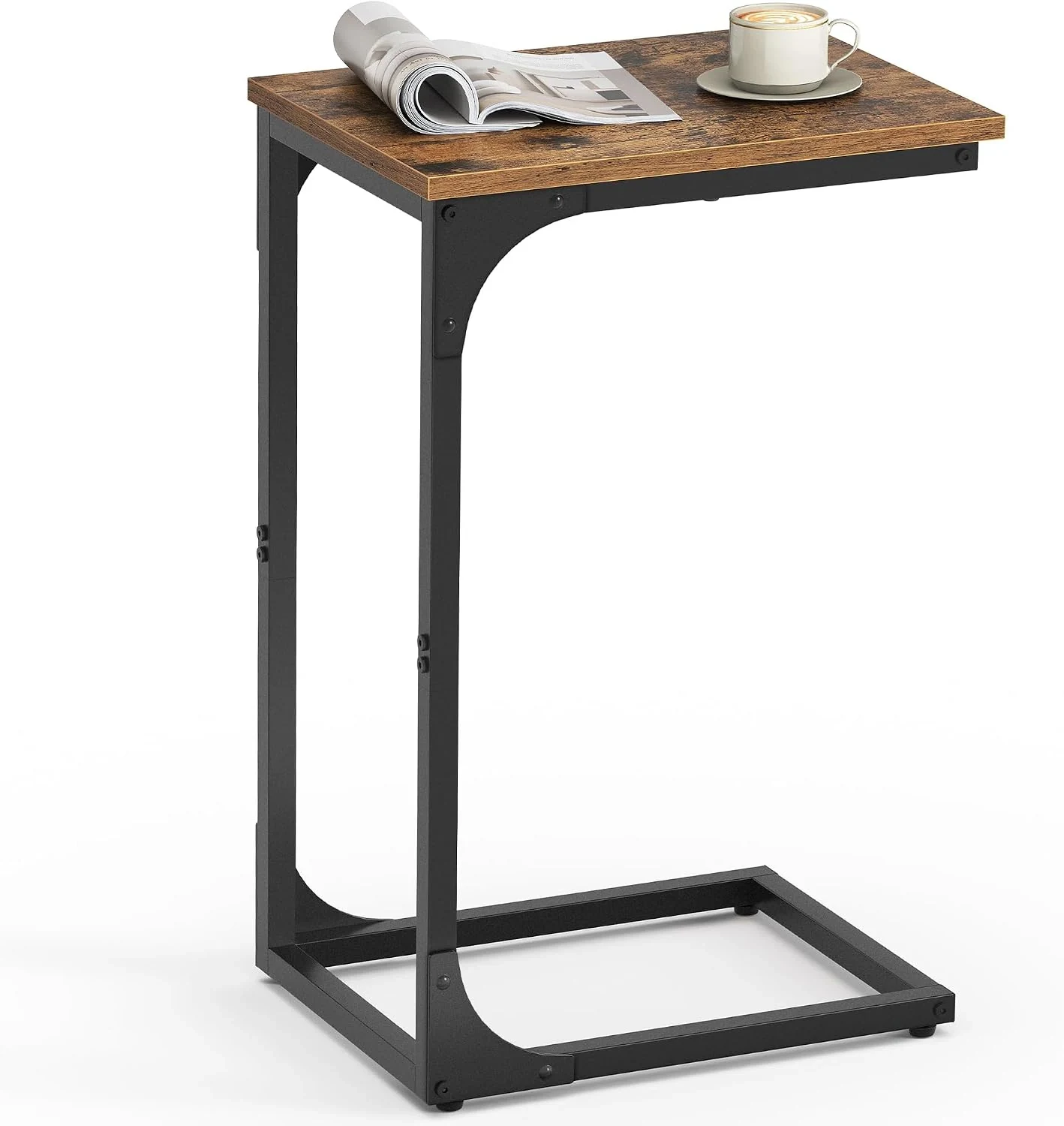
For a C-shaped format, verify both the base route beneath the sofa and the top's internal clearance before planning an overlap. The selected VASAGLE C-shaped table, ASIN B08VDQN8H5, has published outside dimensions of 11.8 by 15.7 by 24.4 inches. Those dimensions screen the broad footprint; they do not confirm the opening around your sofa arm.
Use a conventional side position if that makes the approach easier. A table does not have to slide over the seat to be a good sofa partner. Do not lean on a small table as a support when rising.
Put the Remote Where It Is Easy to Return
Choose one visible patch on the surface or a small suitable tray. Keep it clear of the book's normal landing area, otherwise the remote disappears under the first object you put down. A basket on a lower shelf may be useful for occasional accessories, but it is less direct for something used repeatedly throughout the evening.
Do not build a charging station into the setup unless charging is one of the actual jobs. If a cable is needed, route it outside the walking path and moving furniture, with the connection accessible. A cable draped across the seat to an outlet on the far side is a reason to reconsider the position.
Finish by using the seat as you normally would: pick up the cup, put down the book, find the remote and stand. The right landing spot stays useful through that small sequence, without requiring a tidy-up between every action.