A C-shaped side table needs two clearances at once: the base must pass beneath the sofa, and the underside of the tabletop must clear the part of the sofa it overlaps. Then the top needs to reach a useful position without putting the upright frame against your leg. Overall height and width alone cannot confirm that fit.
Start by deciding how you want to use it. Holding a cup beside the seat is a different arrangement from bringing a laptop over your lap. You may not need to slide the base under the sofa at all for a simple side surface. The closer, over-seat position makes the missing measurements much more important.
Trace the C Before Measuring
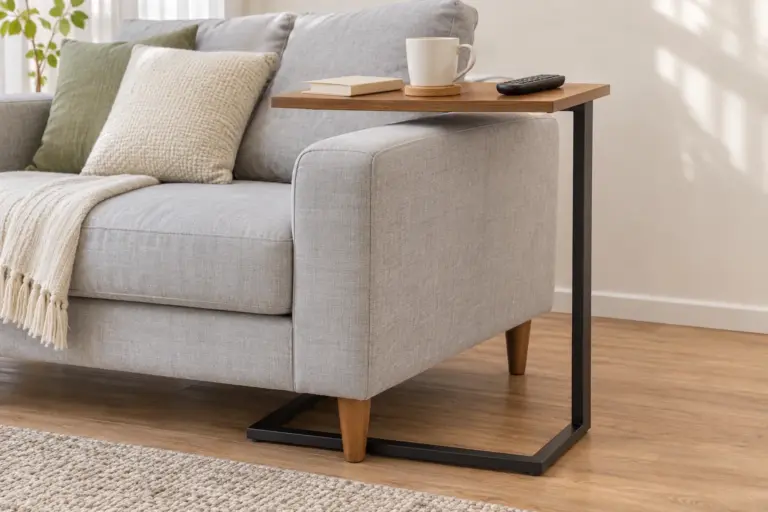
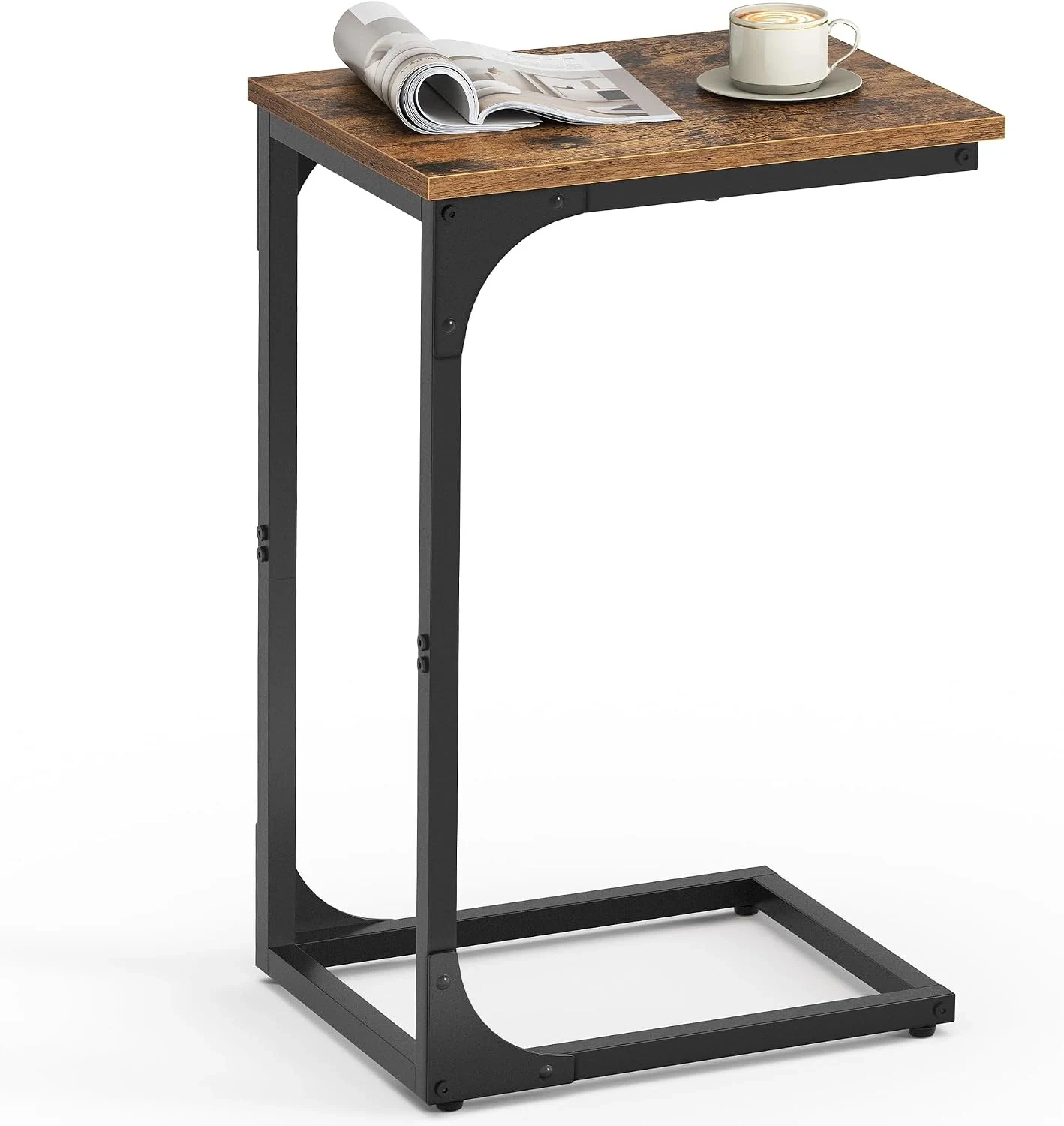
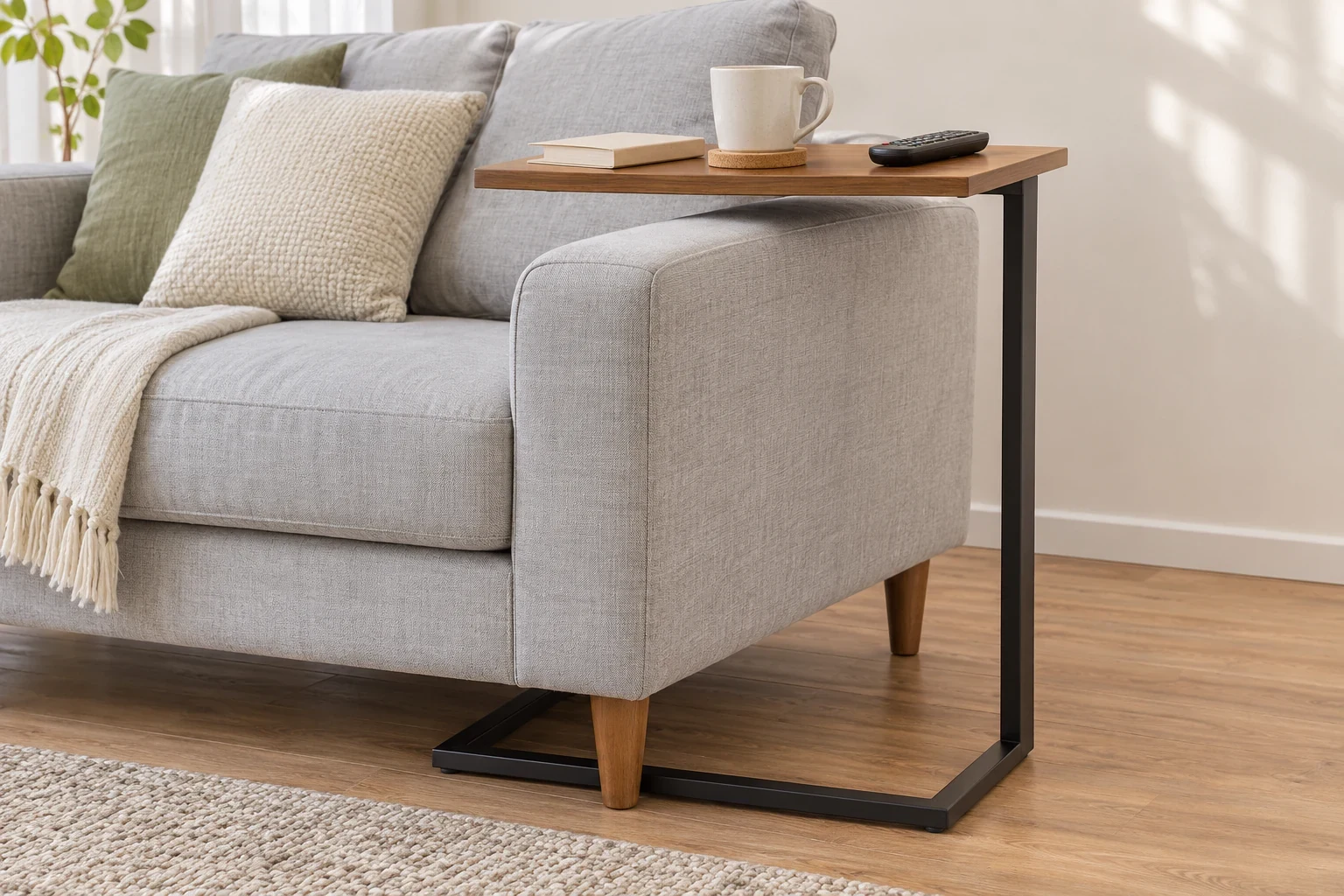
Picture the table in side view. The lower horizontal member goes along the floor, the upright stays outside the sofa and the top projects inward. Follow that shape with your finger on the product photograph. Identify exactly which part will meet the sofa first.
Look for a dimensional drawing that separates the outside dimensions from the open space inside the C. Overall height includes the top and base. Overall depth includes the upright and any projections. Neither number directly gives the opening available for your sofa arm or the reach of the tabletop above the seat.
If those internal dimensions are not supplied, ask the seller for them. Do not subtract an estimated board thickness from a photograph and call the result a product specification. You can still shortlist the table for an ordinary beside-the-sofa position, but keep an over-arm fit unconfirmed.
Check the Floor-level Entrance
Measure the lowest point under the sofa along the route where the table base will enter. A high sofa leg does not guarantee the same clearance under the front apron, fabric underside or reclining mechanism. Look far enough inward to include the full inserted portion of the base.
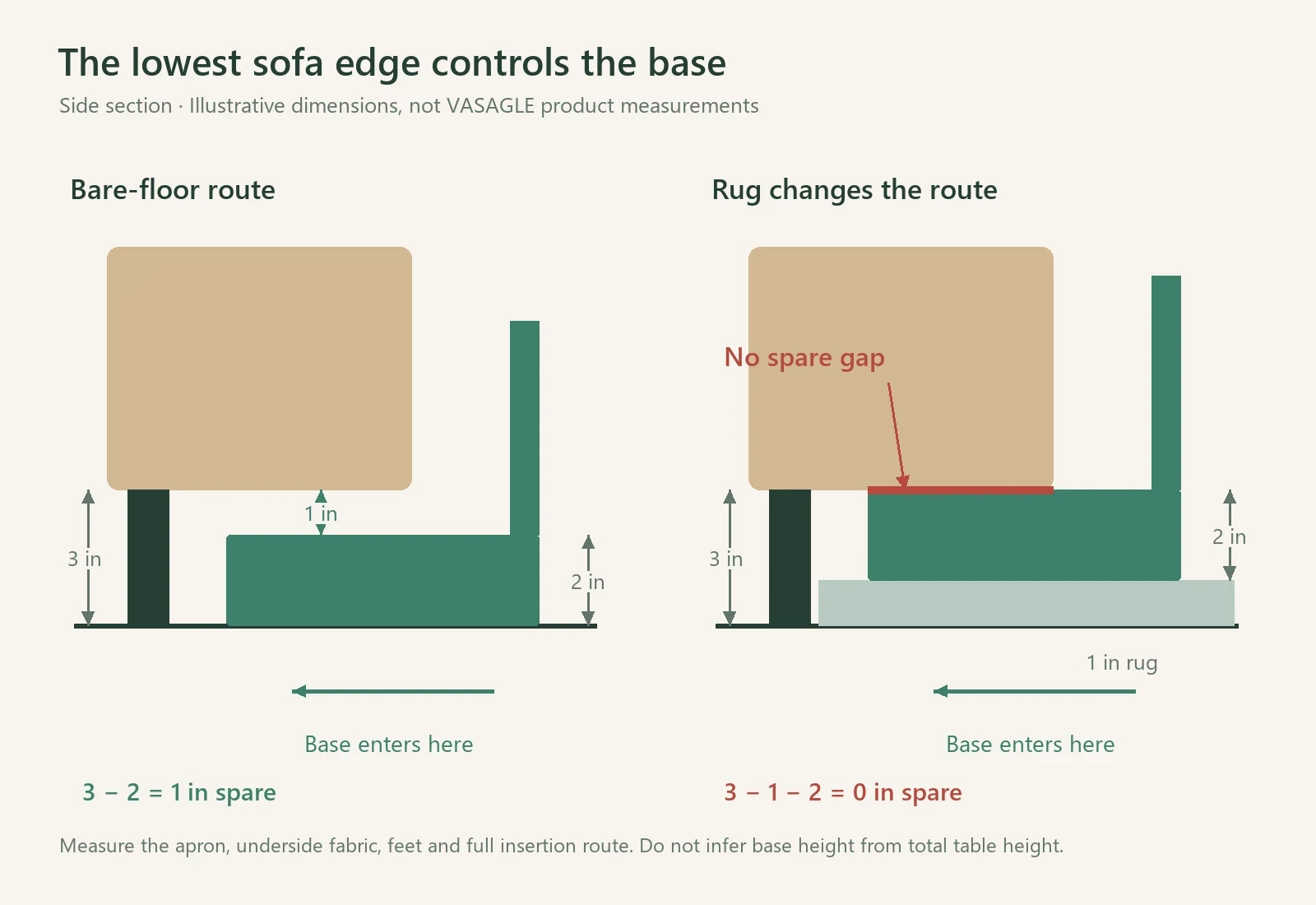
Compare that measured clearance with the height of the table base, including feet, pads and any crossmember that must enter. If the floor has a rug, measure from its surface, and consider the transition onto it. A base that slides on bare floor may not follow the same path across a thick rug edge.
Check for sofa legs or center supports in the insertion route. The base might need to sit farther to the side than expected, which changes the useful reach of the top. Avoid placing a table within the movement area of a recliner or sleeper mechanism unless the furniture instructions allow it and the whole movement stays clear.
Check What the Tabletop Overlaps
For a table that passes over an arm, measure from the floor to the top of that arm at the overlap point. Include a permanent cushion or cover if it changes the height. Compare this with the table's underside clearance, not just its advertised total height.
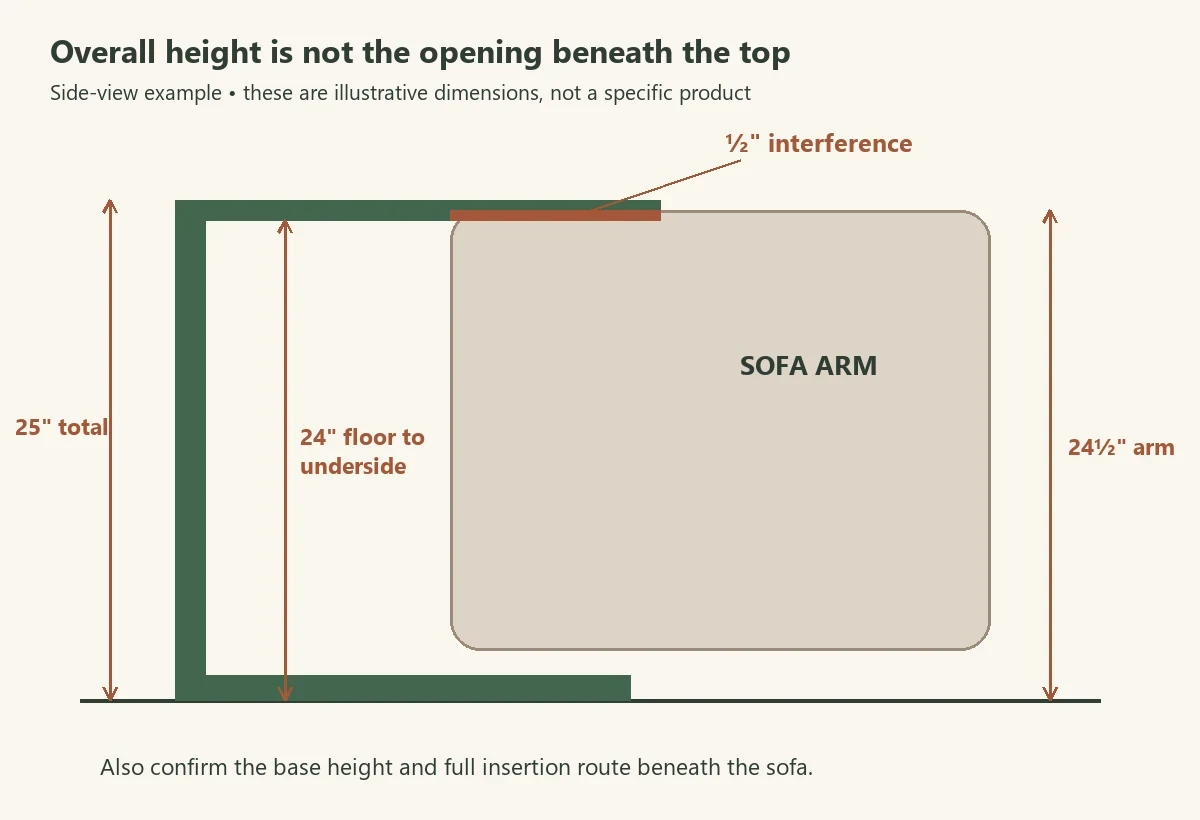
An illustrative example shows why this matters: a table can be 25 inches tall overall but have only 24 inches beneath its top. It will not pass over a 24½-inch-high arm in that arrangement. The same table might still work beside the arm without overlapping it. These numbers explain the check; they are not dimensions of the purchasing example below.
If you want the top over your lap instead, sit down and measure the space with your legs in their normal position. Check knee room, the upright's position and how you will get out. A top close enough for a cup is not automatically an ergonomic desk surface for prolonged work.
Rehearse the Reach and the Exit
Mark the proposed tabletop outline on paper and hold it at the intended position with safe support from another person, or compare it with an existing stable surface. Do not balance a drink on a cardboard mockup. You are checking reach and body space.
Can you put down a cup without leaning awkwardly? Can the book and cup coexist without one sitting on an edge? Does the table need to move every time you stand? If so, is there a nearby parking position that keeps its base out of the route?
Try your normal activities rather than a single posed reach. Open the book, retrieve the remote and turn toward the next seat. Keep the table stable on its intended surface, follow its load instructions and do not lean on it to stand up. A narrow mobile-feeling shape should not be treated as a support rail.
A Purchasing Example with an Important Limit
The rustic-brown-and-black VASAGLE C-shaped table, ASIN B08VDQN8H5, is listed as 11.8 inches deep, 15.7 inches wide and 24.4 inches high. Its selected product description identifies a steel frame and particleboard top. Those outside dimensions help you judge the tabletop area and the broad space beside a sofa.
They do not establish the internal base height or underside opening for your sofa. Confirm those measurements before buying specifically to slide the table over an arm or beneath a low frame. Similar-looking VASAGLE tables in the listing's comparison section have different dimensions; use the selected ASIN and variant.
If the needed internal measurement cannot be confirmed, keep the choice open. A small conventional side table may provide the same reachable surface without relying on a close interlocking fit. The C shape is useful when its geometry works with your sofa, rather than merely when it looks compact in a photograph.