When one person wants to read and another wants to watch television, one shared light switch can become a negotiation. Give the reading position a useful local source, keep appropriate background light available, and make the controls usable by the people who need them. Then try both activities together after dark. Separate switches offer choices; they do not guarantee that the light stays within an invisible boundary around each seat.
Start with lamps you already own. The useful change may be a different position or control arrangement rather than an extra fixture. The plan works when both people can continue their activities and change or finish them without unexpectedly leaving the other person in the dark.
Name the Two Activities and Their Viewpoints
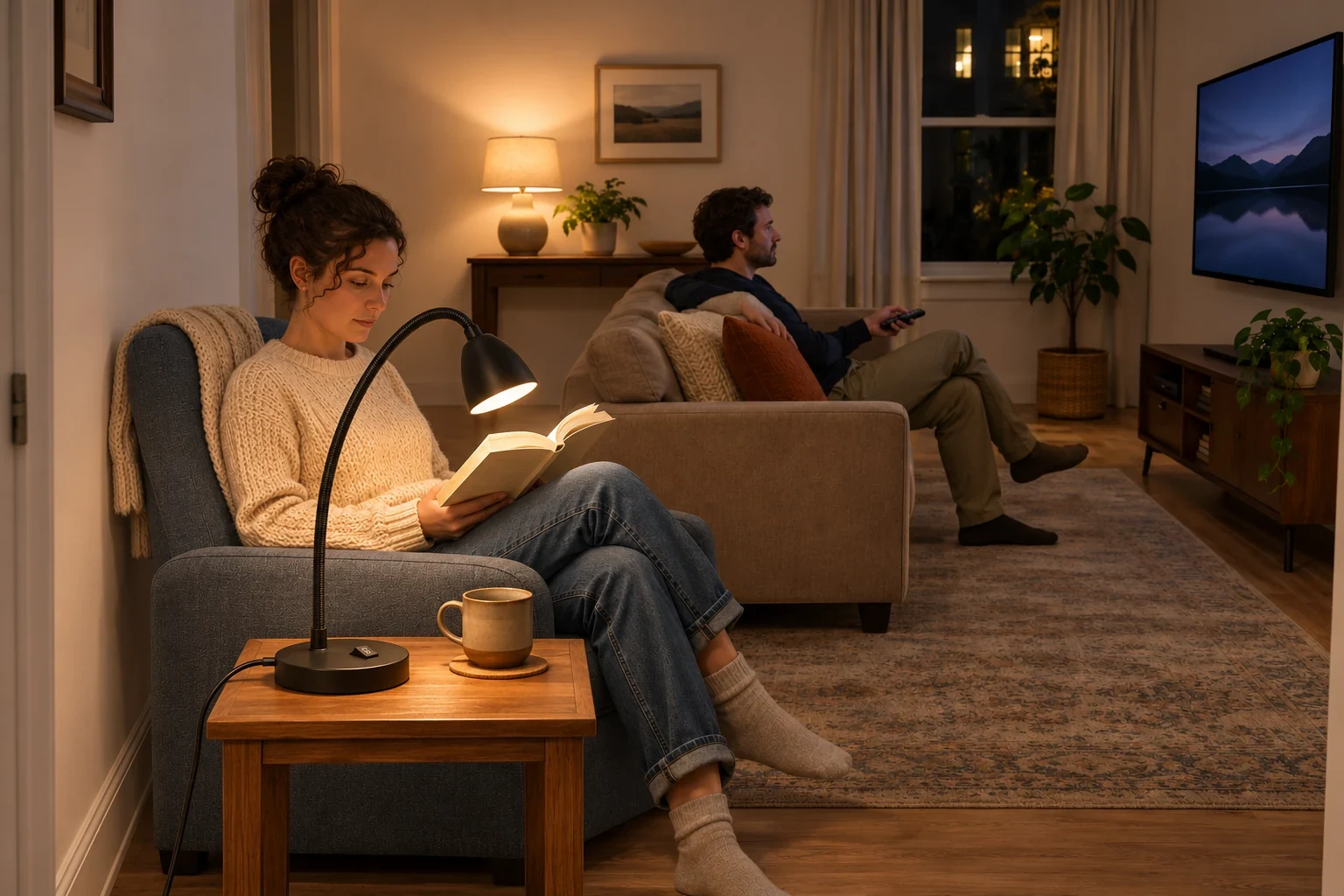
In an illustrative shared room, Alex reads a paper book in the left armchair while Sam watches television from the right sofa. An existing shaded lamp on a rear console provides background light. A separately switched task lamp stands on a suitable table beside Alex's chair.
Mark those positions, the television, existing outlets and the route to the door on a sketch. Include where each person actually looks. Alex looks down at pages but also lifts their head to speak. Sam looks toward the screen and may turn toward Alex. A lamp concealed from one viewpoint can expose its bright opening to the other.
IKEA's living-room lighting guide distinguishes concentrated task light from wider general and mood lighting. Use those roles to preserve useful surrounding light while directing the reading source toward the task. This does not require matching fixtures or a prescribed number of lamps.
Let the Reader Control the Page Light
Place the reading lamp on an appropriate stable support where the reader can use its control without reaching over another person. Check the whole lamp's adjusted position, not just the base. The shade and moving arm need their permitted space around the furniture, curtains and textiles.
Sit in the usual reading position with an ordinary book. Adjust the lamp within its instructions and check whether the page is useful to read without your shoulder or chair back blocking it. Look up as well: an arrangement that lights the page while putting a bright source directly in your view still needs adjustment.
Keep the supporting table useful for its other intended jobs. Do not crowd a cup against the base or put the switch where a sofa cushion covers it. Trace the cord to its outlet outside the walking route and away from moving furniture, following the fixture instructions. A convenient head position does not justify a cord across the doorway.
Check the Other Person’s Seat Before Settling
With the task lamp on, Sam should sit in the actual watching position and check direct views of the source and its reflection in the television. Try normal content, including dark scenes where an unwanted lamp image may be more noticeable. Sony's placement guidance advises keeping light from shining directly onto the screen; the actual room still needs a viewpoint check.
If the lamp bothers Sam, change one thing at a time: its supported position, permitted head direction or the seating arrangement. Then have Alex check the page again. Moving a lamp to fix a screen reflection is only useful if it continues to serve the reader and leaves its support, control and cable appropriate.
A shade can limit some views of the source, but its illuminated surface can also appear in a screen. Do not assume a warmer bulb, a dimmer or the label “reading lamp” proves that the other seat will be comfortable. If no arrangement works for both activities, agree on another seat or activity time instead of repeatedly making the reader choose between glare and an unusable page.
Keep Background Light and Transitions Independent
Test the background lamp together with the reading source. Agree who can reach its control and what happens when either person leaves. In the example, the rear console lamp keeps an agreed background setting while Alex controls the task lamp at the chair. Neither person turns off the shared background light simply because their own activity has ended.
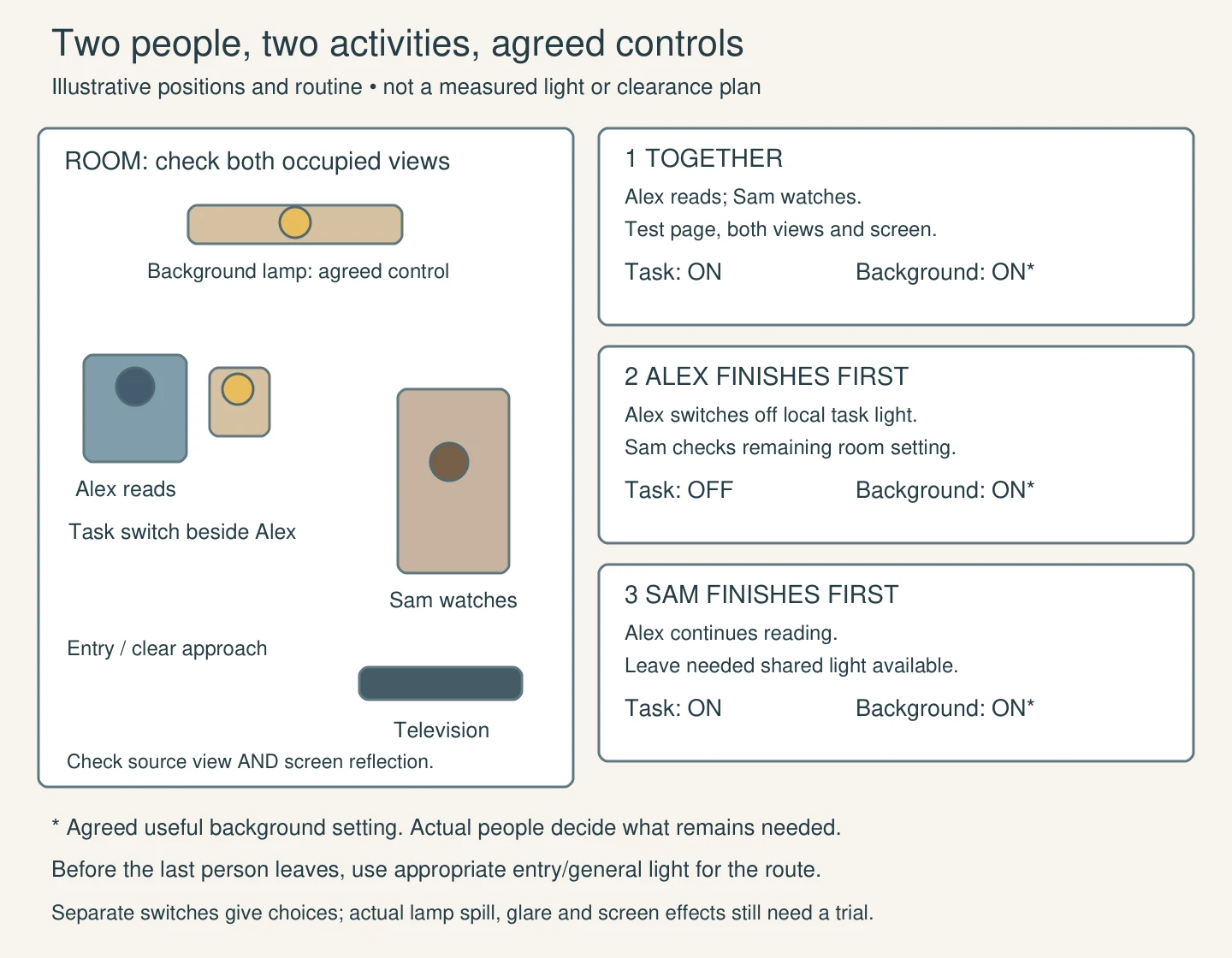
Now try a transition. Alex closes the book and switches off the task lamp. Sam checks whether the remaining setting still works for watching and getting up. Before Sam leaves, use the room's appropriate entry or general light as needed for the route rather than assuming the screen provides enough light to cross the room.
Test the reverse order too: Sam leaves while Alex continues reading. The reading position and its surroundings must remain usable. If the shared background source needs to stay on, leave it on by agreement. Controls should support the people who remain, not automatically follow the first person to finish.
Compare a Local Lamp Only If You Need One
If the existing lamps cannot provide an independently controlled reading position, one format to compare is the Sandy Black LEPOWER UT2032 tabletop lamp, ASIN B078W61H9P. Its listing identifies a flexible arm, E26 fitting and on/off switch on the base. It lists nominal overall dimensions of 6.69 inches deep by 5.7 wide by 14.17 high, with a 5.7-inch base diameter. Check its actual adjusted reach on your intended table.
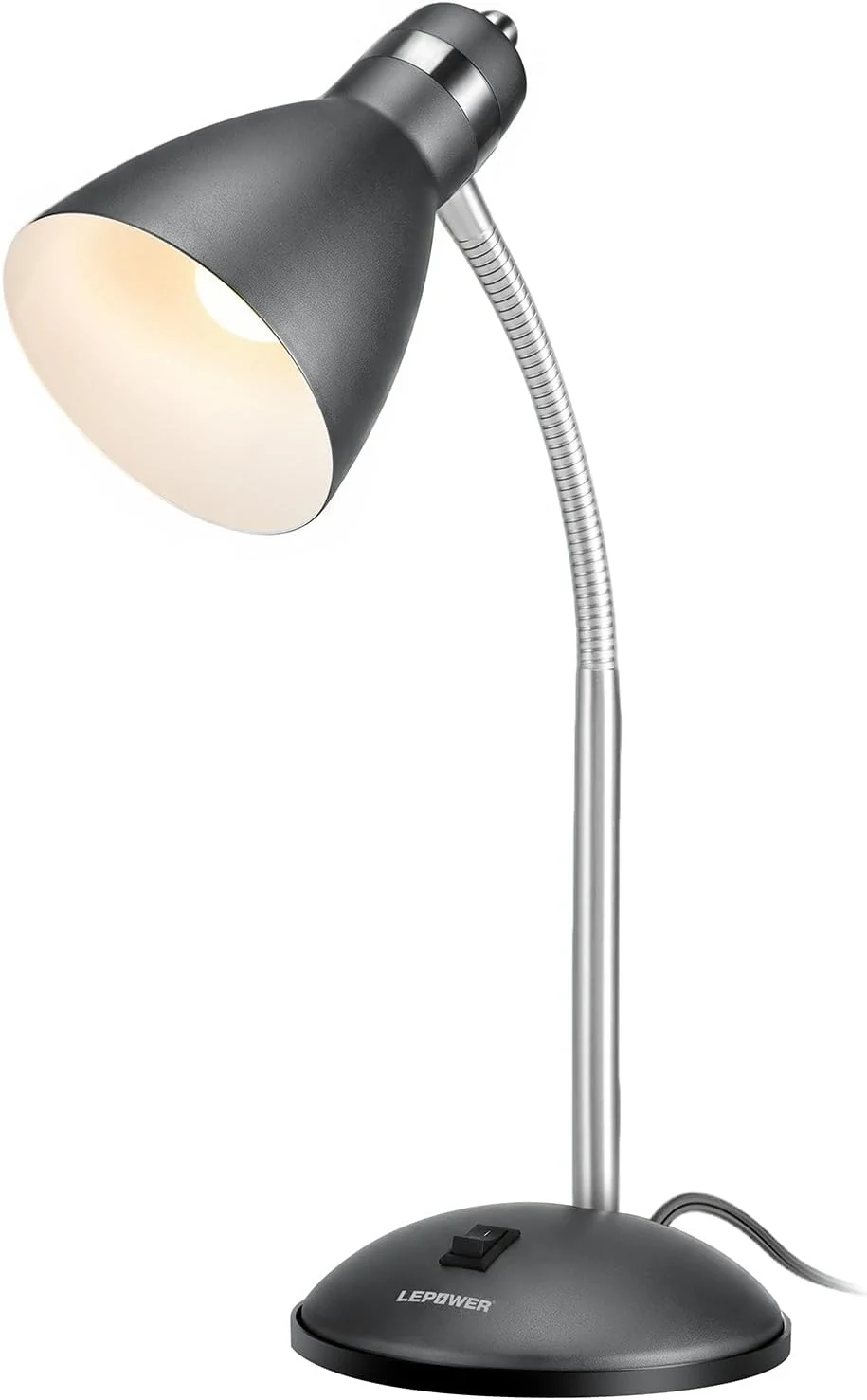
This is one lamp, not a two-person room-lighting kit. Confirm the permitted bulb, wattage and supplied components before ordering. Do not assume dimming, touch control or USB charging from inconsistent generic listing fields. The base switch provides local on/off control; it does not establish a compatible dimming system.
Disclosure: As an Amazon Associate, Livable Corners earns from qualifying purchases.
Compare the Sandy Black LEPOWER UT2032 tabletop lamp on Amazon.
The product photograph shows the named lamp. The room illustration uses generic fixtures and does not demonstrate this model's reach, beam or effect on a television. Keep a working existing lamp if it passes the same two-person trial.
Finish with both people in their normal seats. Read, watch, talk, stand up and finish each activity in both orders. Keep the arrangement only when the page, screen, surrounding room, controls and exit routine work together.