A return basket gives a few things that belong elsewhere one temporary stopping place before you take them home. Its job ends when those objects are returned and the empty basket is back in its own place. It works differently from a basket that permanently stores throws, games or reading material beside the sofa.
Try the routine with a suitable container you already own. Keep the group small, identify each destination before adding the item, and complete one ordinary return trip. If the basket becomes another place to search for things, simplify the routine before adding more storage.
Give the Basket One Temporary Job
Decide what qualifies: an item left in the living room that has a known home elsewhere and can be handled appropriately during this trip. A book from a bedroom shelf might qualify. The remote you use every evening belongs in its normal living-room home, so sending it around the house adds work.
IKEA's living-room storage material organizes storage around the room's different activities and types of belongings. This return routine applies that distinction to a small temporary group. It is a method to try in your household, rather than a promise that a particular basket will keep every surface clear.
Do not use the basket to postpone a different decision. Unopened paperwork that needs action, an object with no agreed home and something awaiting repair each need a separate next step. Putting them in the return basket hides the unresolved job among things that are ready to move.
Agree the boundary with other people using the room. If an object belongs to someone else and its destination is unclear, ask them or use an agreed pending spot outside the route. Do not quietly relocate it to a guessed drawer or dispose of it to empty the container.
Choose an Existing Container You Can Use Appropriately
Look for a container that holds the small trial group without squeezing or hiding the contents. Check the inside, opening, handles and condition against the objects and intended use. Follow any applicable container limits. A decorative basket is not automatically suitable for carrying a load just because it has a loop on each side.
Keep the load manageable for the person handling it. If the container is intended to stay on a shelf or does not have suitable carrying support, leave it there and transfer the appropriate objects separately. The routine can still work without carrying the bin itself.
Put the container on an existing suitable surface or shelf where its whole base is supported and it can be reached. Keep the floor route, doors and frequently used furniture available. A basket placed across the way out is a reminder that creates an obstruction.
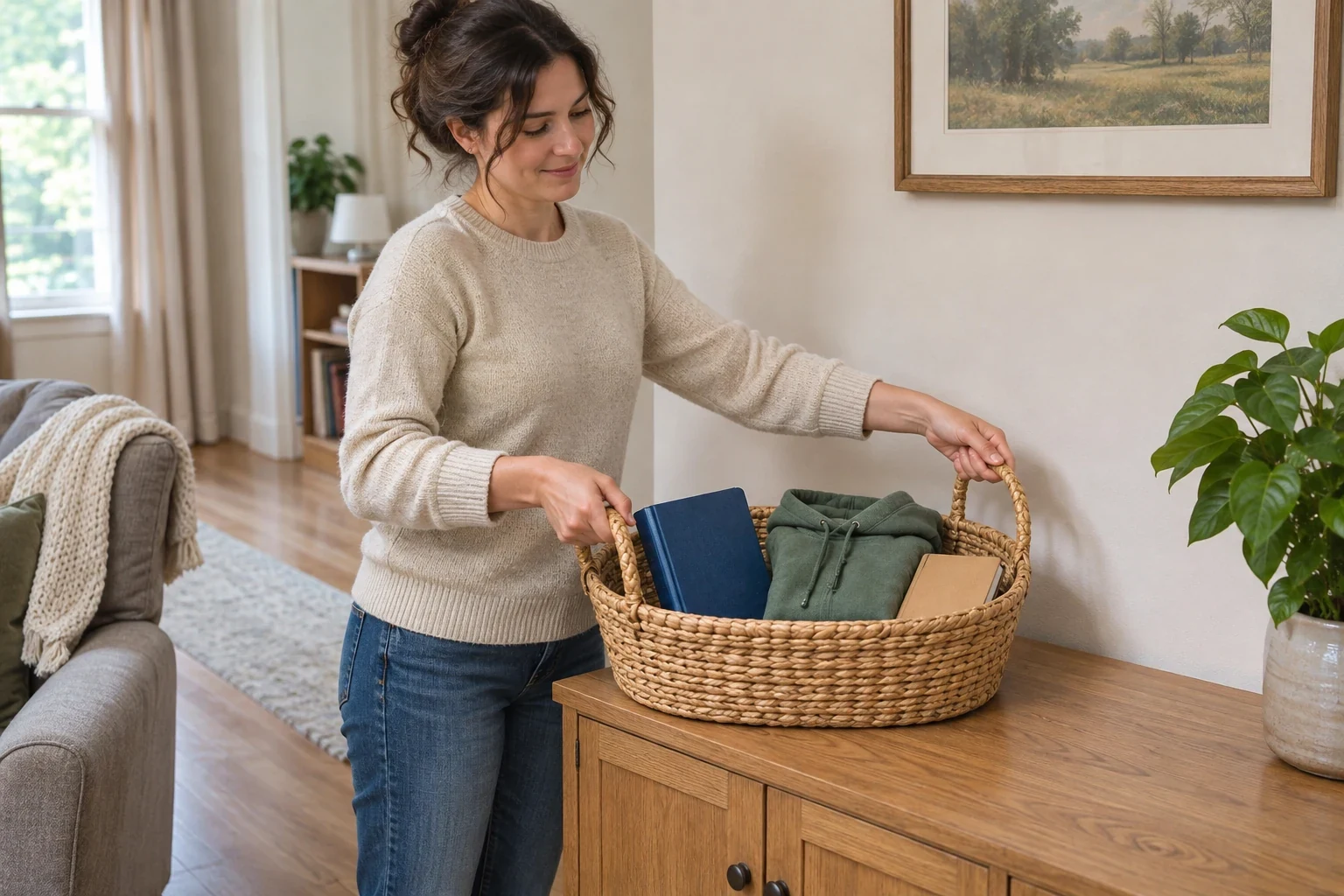
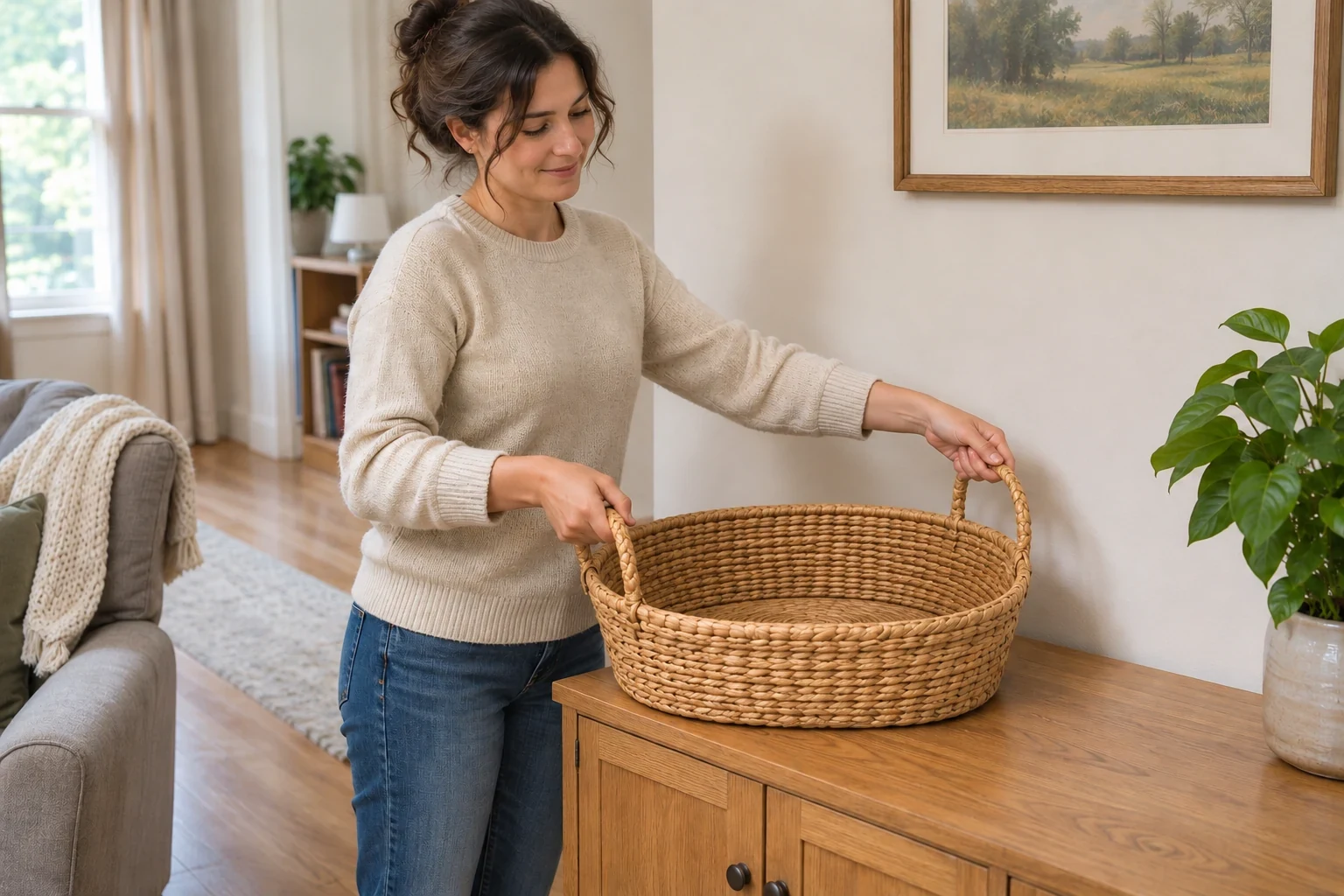
The room illustrations use one modest handled basket on a low cabinet. They show a possible container home and the before-and-after states. Keep that home accessible for the person returning the basket.
Start with Three Objects and Exact Destinations
The example uses a closed blue hardback book, a clean folded green hoodie and a closed tan notebook. The book belongs on a bedroom bookshelf, the hoodie in that bedroom's wardrobe, and the notebook in a study work drawer. These are example homes, chosen to make the complete trip visible.
Name destinations that are ready to receive the items. “Bedroom” is less useful than “the book's space on the bedroom shelf.” If the shelf is full, returning the book has a storage decision attached to it. Resolve that destination rather than leaving a new pile on the bedroom floor.
Check whether the objects can share the container appropriately. Keep anything that needs different care or handling separate. Do not use this small household example as a reason to combine liquids, waste or objects that require their own protective storage. The return basket is a transport aid, not a general treatment or protection system.
Keep identities visible enough to check the list. You should be able to see that all three intended objects are there without emptying a deep mixed pile. If a fourth item arrives with no clear destination, pause and decide its next step before adding it.
Complete the Trip to the Real Homes
Choose an ordinary moment when the destinations are available, such as finishing the evening in the living room. Use an event you recognize instead of promising that the trip must take a particular number of minutes. If another room is occupied or its storage is inaccessible, choose a workable time to complete the return.
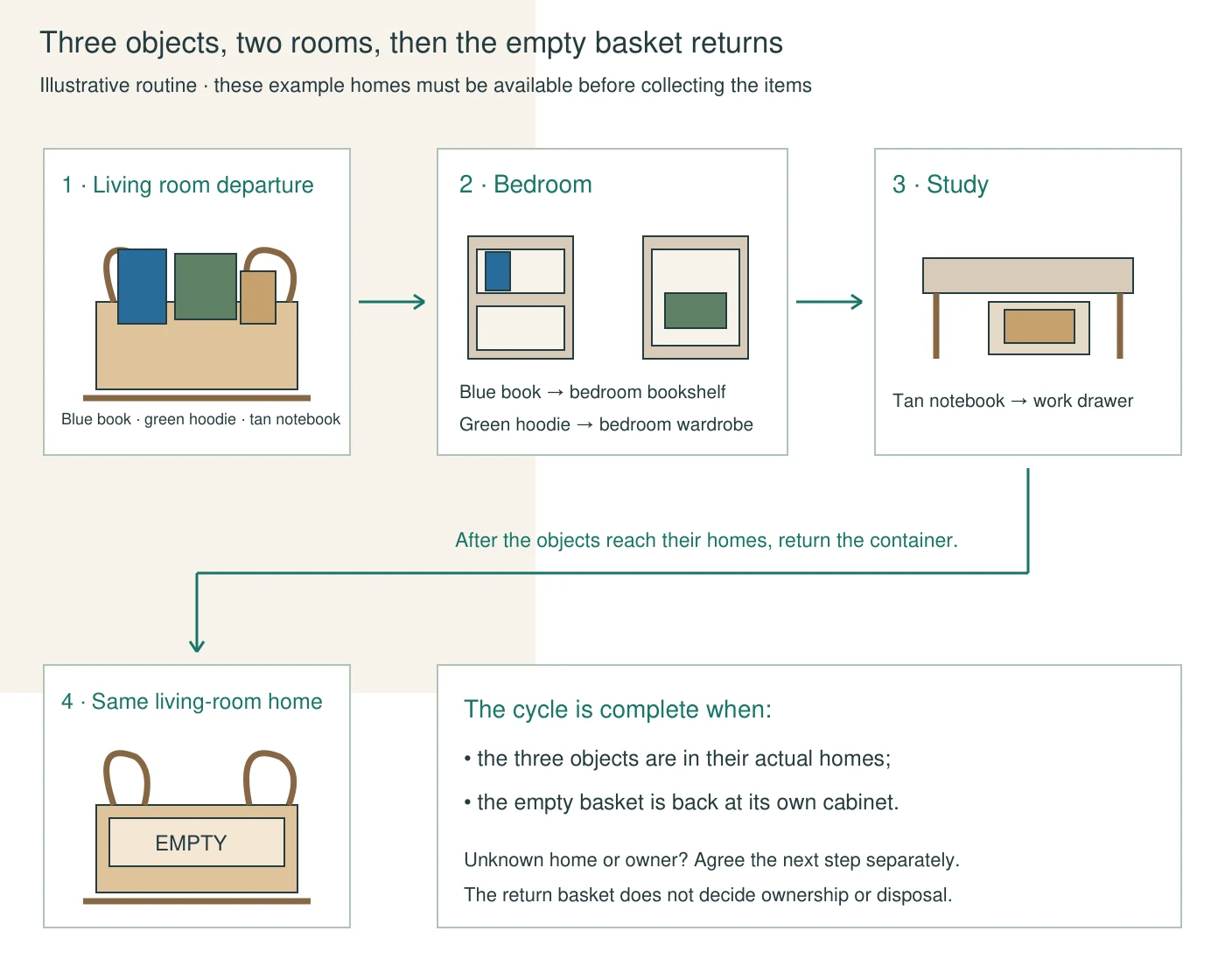
In the example, take the suitable, manageable group to the bedroom first. Put the blue book back on its shelf and the green hoodie into its wardrobe home. Then take the remaining tan notebook to the study and return it to the work drawer. The destination diagram follows those same objects through the sequence.
Carry and handle the objects appropriately for the actual route. Include doors, other people and any changes of level in your own assessment. Do not take a load that prevents you seeing or using the route normally. Make separate trips when that is the appropriate way to move the group.
Putting the basket down in the bedroom is not the same as returning its contents. Complete the small placement tasks rather than transferring the whole mixed group to another room. Equally, do not use a return trip as a reason to open and rearrange someone else's storage without agreement.
Bring the Empty Basket Back to Its Own Place
Check that the intended objects have actually reached their homes. Return the empty container to the same living-room cabinet or shelf so that it is available for the next cycle. The empty-basket illustration keeps that home visible after the trip.
This last step prevents the container itself becoming an object left in another room. It also makes the status easy to understand: an empty basket is ready; a basket with items still in it has an unfinished return job.
If an object could not be returned, identify why. Its home may be blocked, its owner may need to decide, or it may not have qualified for the basket in the first place. Give it the appropriate agreed next step. Do not call the routine complete by hiding that object behind the container or underneath another item.
Adjust the Routine Before Enlarging the Basket
After a few normal uses, notice what repeatedly lands here. If the same item returns to the living room every day, it may need a useful home there. If the basket stays full because the other rooms cannot receive the contents, a larger container will not resolve that problem.
If a trip feels too complicated, reduce the group or handle one destination at a time. Keep a method that the people using the room can complete, including returning the empty container. Do not begin collecting another unrelated load simply to cover an unfinished one.
Finish the trial by checking the places where the objects originally accumulated. The useful result is three belongings back in their real homes and the empty basket ready at its own—not simply a clearer coffee table with the same pile moved into a container.