To light a dark living-room corner, first decide what should become easier to see: a book, the wall behind the sofa, a displayed object or the approach to a doorway. Put light in a position that reaches that target without making the lamp itself uncomfortable to look at. The brightest fixture in the shop will not correct a chair back that blocks its light.
Start after dark, with the room arranged as you normally use it. Keep the existing room lighting on at its usual setting. A corner that looks gloomy from the entrance may already work well from the sofa, while a cheerful-looking lamp can leave the actual reading page in shadow.
Name the Target and Find What Blocks It
Stand at the entrance, then sit in the nearest normal seat. Describe the problem concretely: “the book is dark,” “the back wall disappears” or “I cannot see the shelf contents.” These are different targets. “This corner needs a floor lamp” names a purchase before explaining its job.
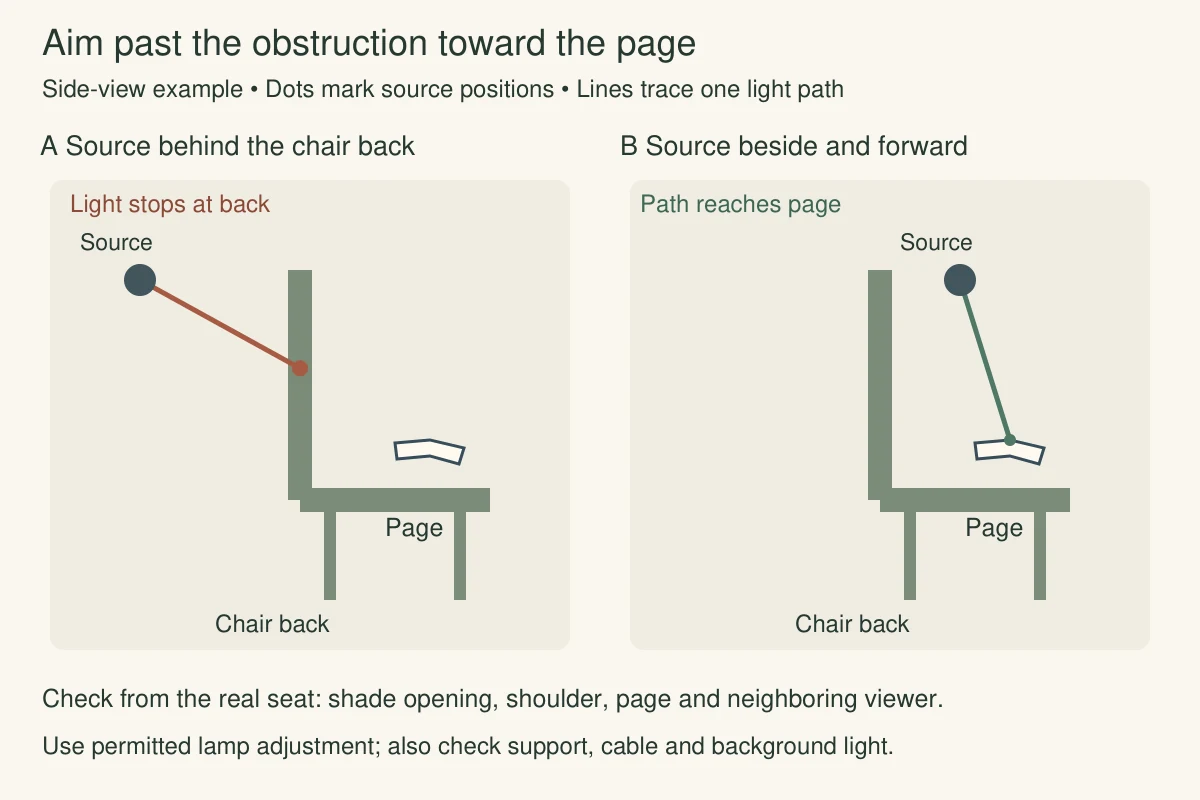
Look between a possible light source and the target. A tall chair back, sofa arm, deep shelf or overhanging cabinet panel may interrupt that path. Also look from the target toward the lamp: would the uncovered bulb or bright opening face the reader or another seated person?
Next identify a legitimate support and power route. A stable existing surface may make a table lamp practical. A narrow passage may rule out another floor base. A socket behind the sofa is useful only if the cord can reach it according to the lamp's instructions without crossing a route or interfering with moving furniture.
IKEA's lighting guidance distinguishes concentrated task light from general and mood lighting, and describes integrated cabinet lighting for finding or displaying things. Use those roles to diagnose the corner rather than treating every dark patch alike.
For Reading, Move the Source Past the Obstruction
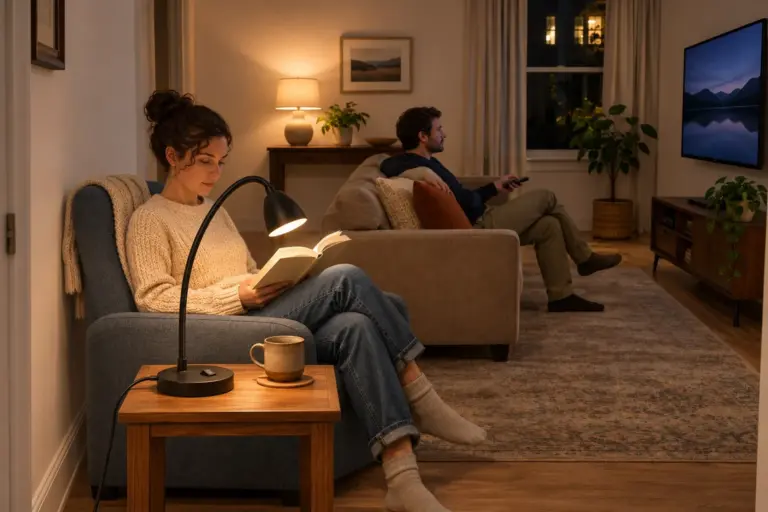
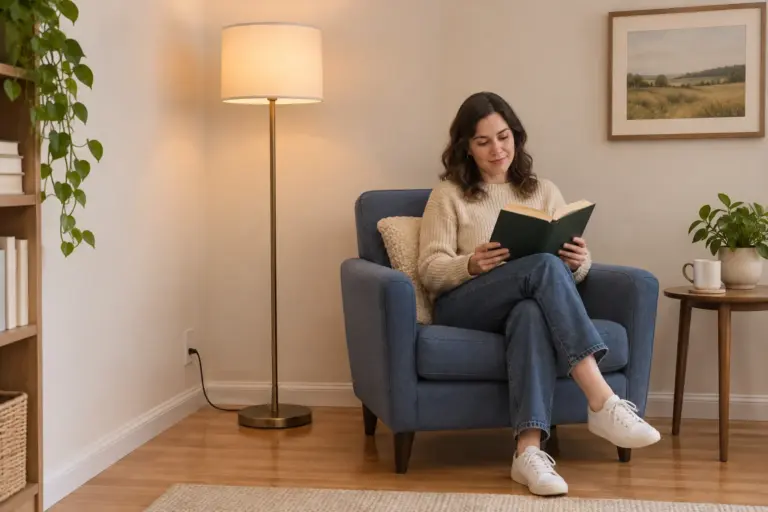
A lamp behind a high-backed chair can brighten the wall while the chair intercepts the light intended for the page. Try a source beside the seat, with its head positioned so the chair and your shoulder do not stand between it and the book. The useful adjustment depends on the actual chair, reader and lamp reach.
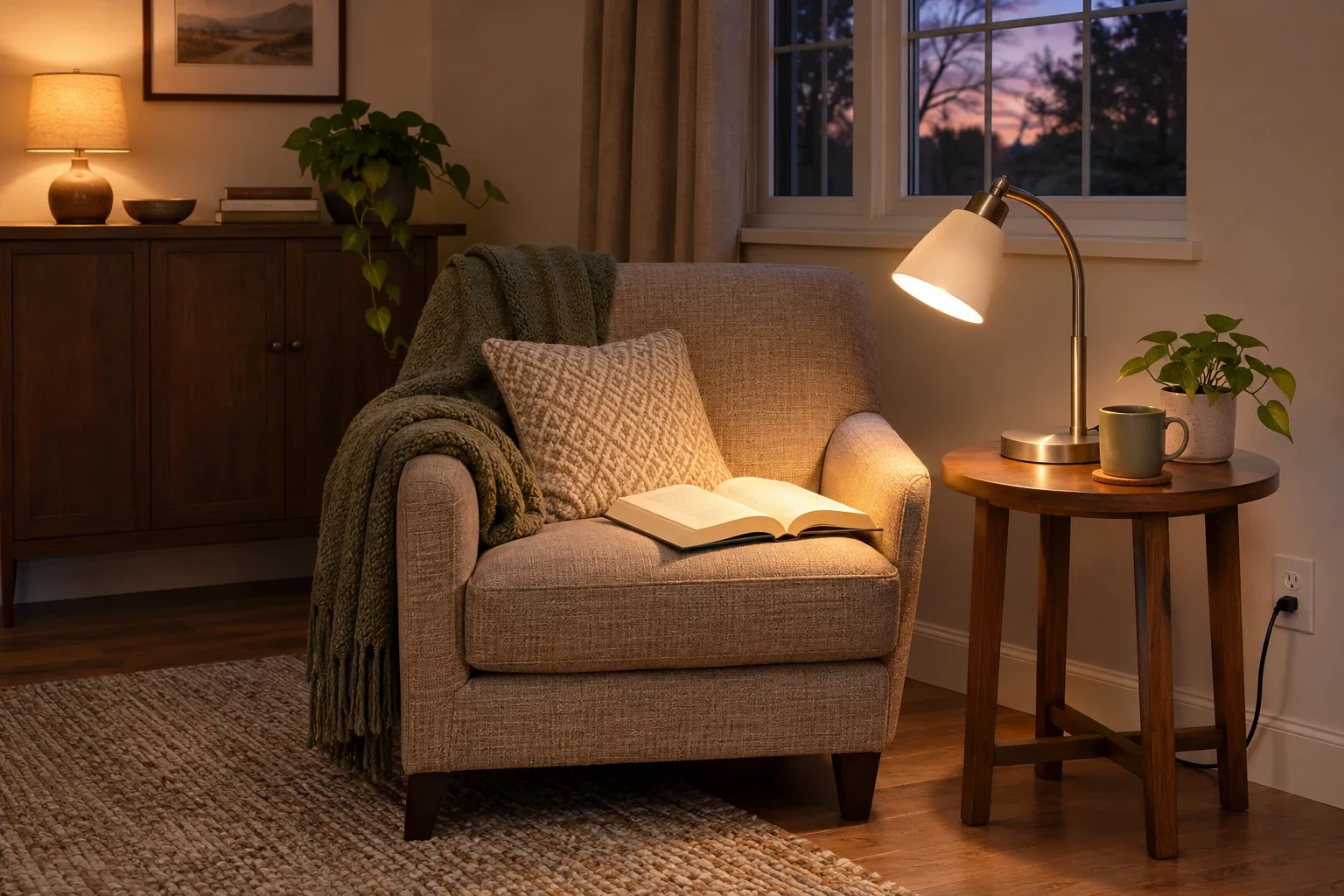
In the reading scene, a small task lamp sits on a stable table beside the chair. Its head aims inward toward the book area from beside and forward of the back. The room still has some background light; the page is not a bright island in an otherwise black room.
Sit normally with the book at its real height. Adjust the permitted parts of the lamp and turn a page. Check the whole spread, not just its center. If the light remains behind your shoulder, move the support or choose a different lamp format instead of repeatedly increasing output.
Then lean back and look up. Check the shade opening from your seat and the next seat, and check any nearby screen for a reflection. A position that lights the book but exposes a glaring source to the person beside you needs another adjustment. Leave the chair's approach and any reclining or swiveling movement available.
For an Empty Sofa Corner, Light the Visible Wall
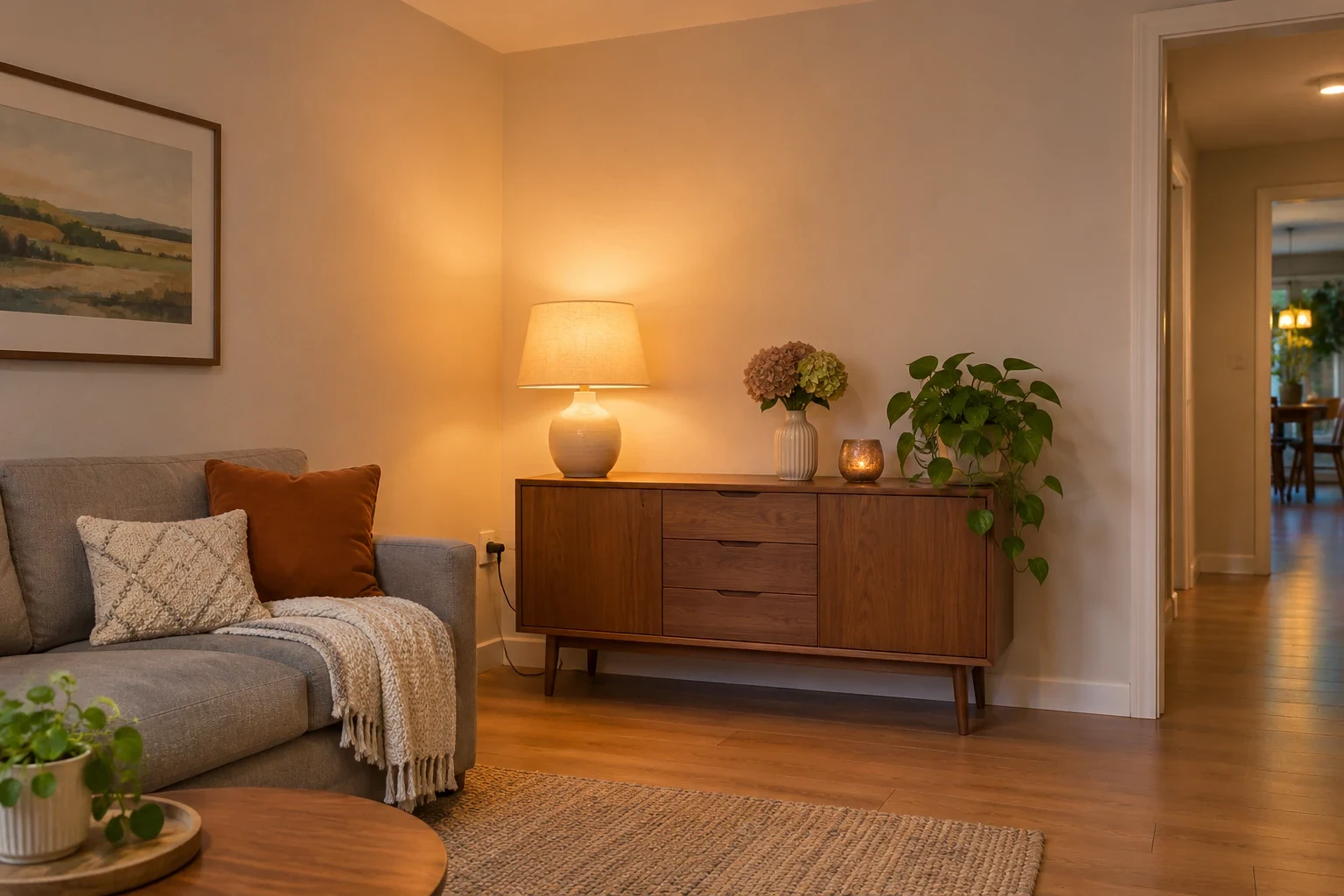
When the corner has no reading or work task, its useful target may be the wall that forms the room's background. The opening scene uses a shaded lamp on an existing sideboard behind the sofa end. It brings that area into the evening room without adding a floor-standing object to the approach.
Keep the fixture on a support that fits its whole base and works with its instructions. Allow the required space around the shade and nearby materials. A lamp squeezed between a curtain and a sofa back is not a successful arrangement simply because the camera sees an attractive glow.
Look from the sofa as well as from the door. If the wall becomes visible but the bare source shines into your eyes, change the fixture position or shade relationship. If the sofa hides almost all the useful light, try the source nearer the visible end of the furniture rather than leaving it buried behind the back.
Do not expect this arrangement to serve a book on the opposite side of the sofa. A pleasant background and a useful reading position can coexist, but their targets are different. Keep whichever existing light already does each job well.
For a Display Corner, Aim at the Objects
A floor lamp glowing beside a bookcase may leave the shelves themselves dark. The display example instead puts a small shelf light beneath the upper panel so light reaches the objects below. The fixture's position follows the shelf geometry; it is not selected merely to occupy the empty floor beside the cabinet.
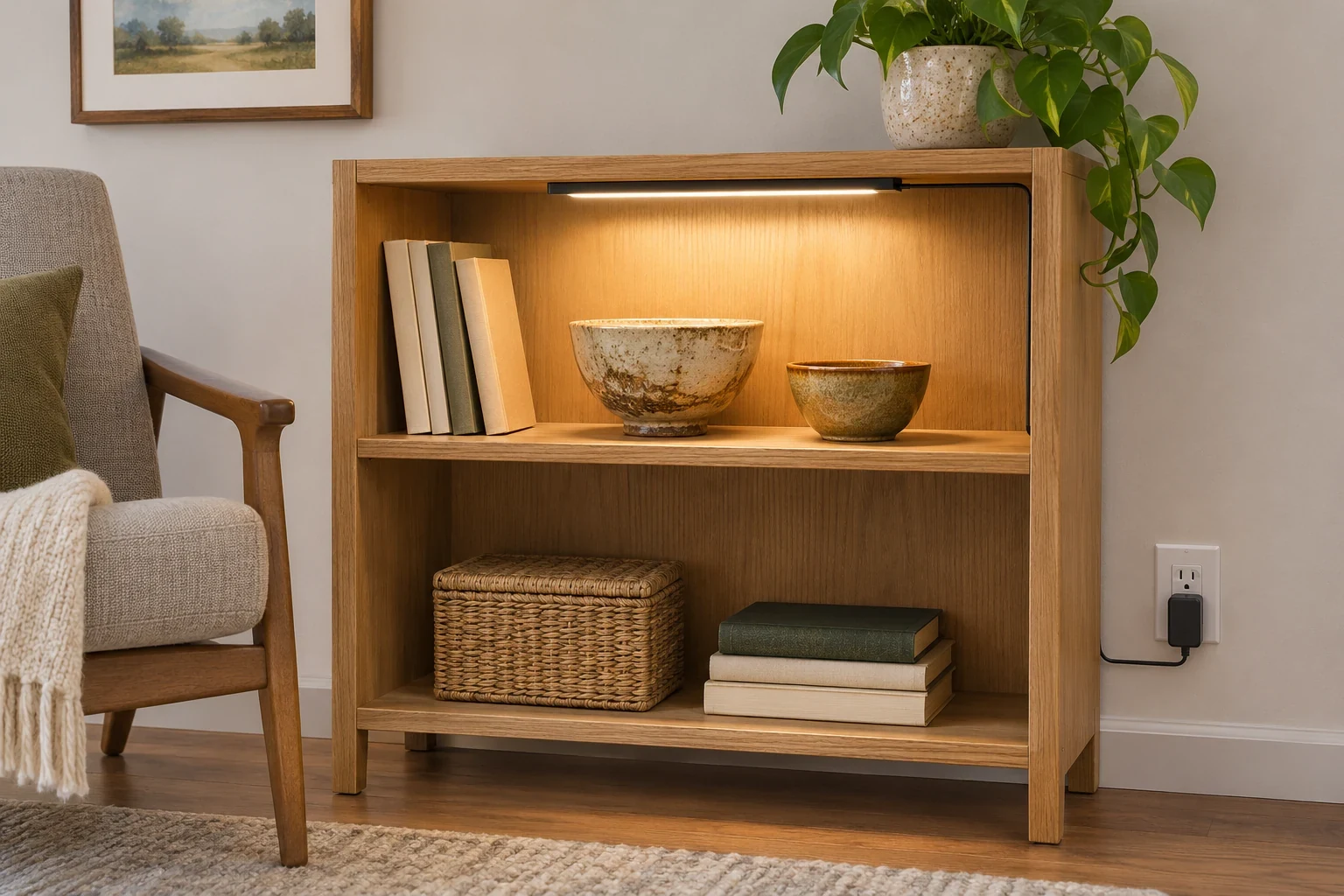
Check the object you actually want to see from the normal seat. Is the upper shelf casting a shadow over it? Does a bright strip face outward instead of toward the collection? If there is glass, look for reflections from the seated viewpoint before assuming more output will improve the display.
Use a system suitable for the actual furniture and follow its mounting, spacing and cable instructions. Keep the supply and controls accessible. Do not improvise a recess, cover heat-dissipating parts or modify the cabinet structure to hide a fixture. A complete installation includes its support and cable route, not just a glowing line.
IKEA presents integrated lighting as a way to help find things and highlight decorative objects. That does not mean every shelf needs a light, or that a display fixture provides the room's reading light. Start with the shelf and objects that matter.
Beside a Passage, Protect the Route and the First Control
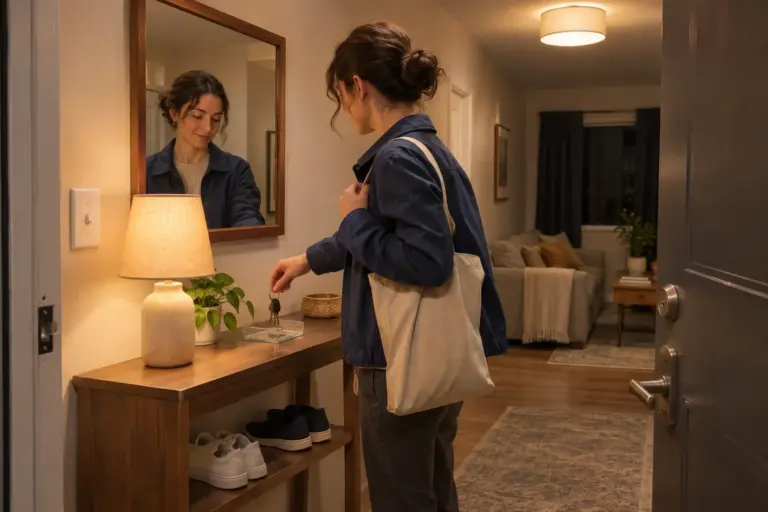
A corner beside a doorway can be dark because there is little space for furniture. Adding a wide floor-lamp base may make the route worse. Check whether an existing suitable surface can support a lamp without narrowing the approach or interfering with the door.
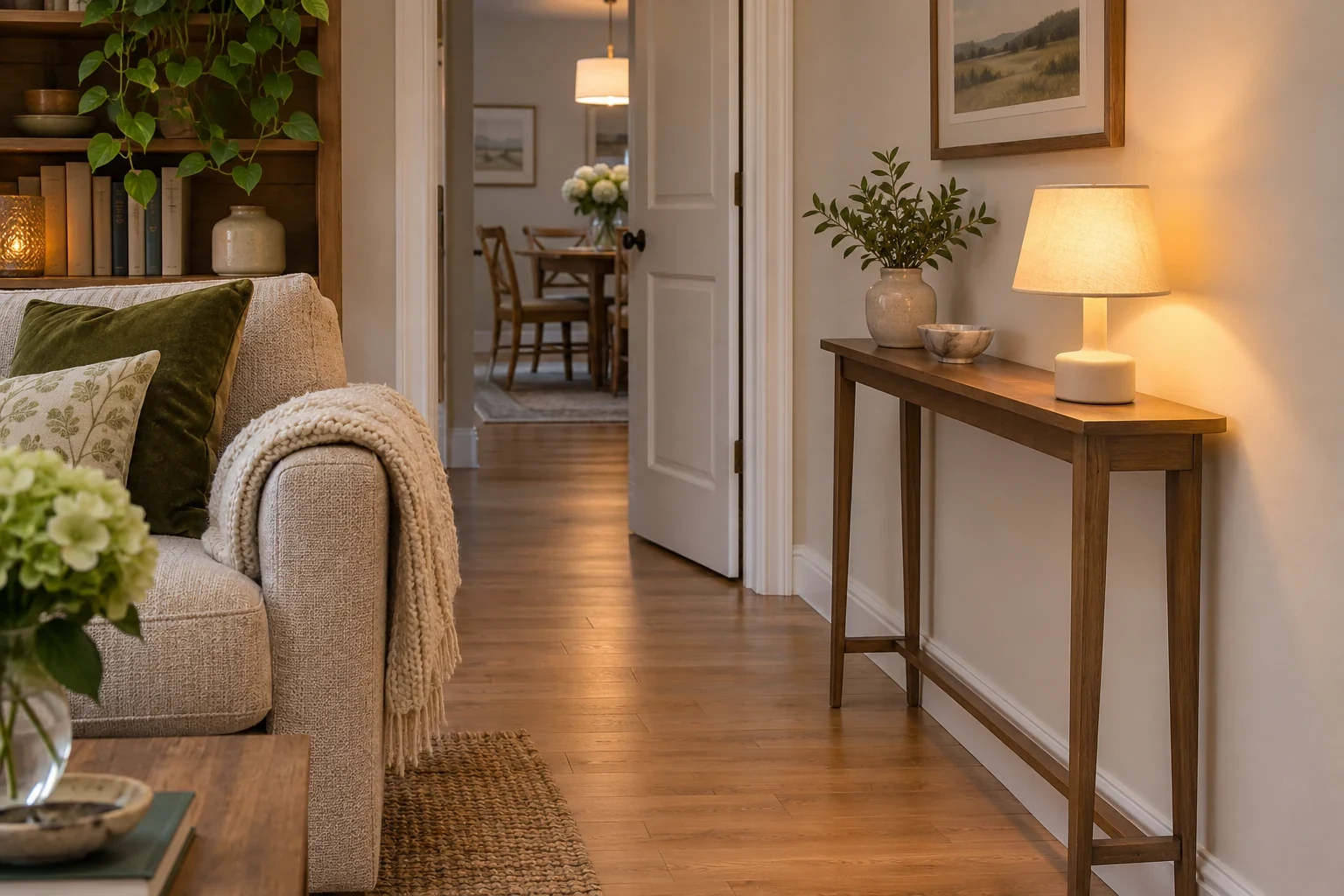
The passage scene uses a cordless table-lamp format on an existing console, leaving the floor route open. It shows one possible relationship, not a promise that any portable lamp will illuminate the whole approach. Check the real lamp's output, runtime, stability and instructions for the intended use.
Plan charging as part of the routine. A rechargeable lamp that is absent every evening when needed has not solved the problem. Keep its charging lead out of the passage, too. Battery operation removes the operating cord from that position; it does not remove the need for power and maintenance.
Enter the room as you normally would. Can you reach the appropriate control before crossing the area you cannot see? Retain useful existing switched lighting, or choose compatible controls and a different lamp position. Do not rely on a decorative lamp as a substitute for lighting or access required in your home.
Match the Bulb and Fixture to the Chosen Position
For a replaceable-bulb fixture, confirm the exact fitting, permitted bulb and wattage first. Compare output in lumens; watts describe power use. A warm-looking light and a bright light are not the same specification. A wider beam spreads light differently from a narrow directed beam, so compare the beam with the chosen target.
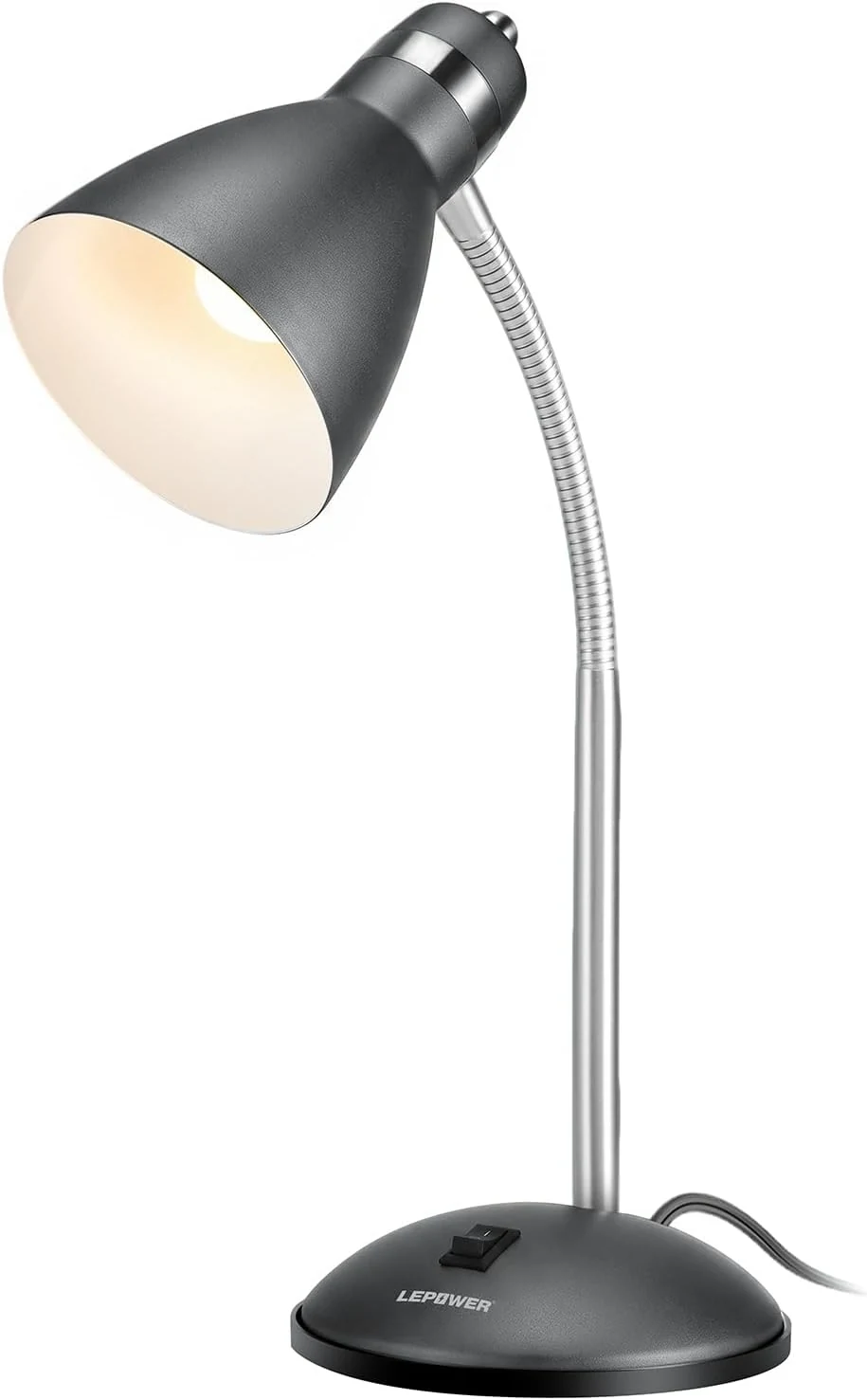
One optional format for the existing-table reading case is the LEPOWER UT2032 Metal Desk Lamp, ASIN B078W61H9P, in Sandy Black. The listing identifies one corded tabletop lamp with an E26 fitting, base switch and adjustable gooseneck. Its nominal overall dimensions are 6.69 inches deep, 5.7 inches wide and 14.17 inches high; the listed base diameter is 5.7 inches. Adjusting the neck changes the working relationship, so those numbers alone do not prove it reaches your page.
As an Amazon Associate I earn from qualifying purchases.
Check the LEPOWER tabletop lamp on Amazon
Compare the selected lamp's current bulb instructions and what is included before ordering. The real product photograph identifies this tabletop format; the room scenes show generic arrangements. It is an option when an existing table puts the head where it is needed, rather than a recommendation for every dark corner.
Run One Evening Trial Before Buying More Light
Use a suitable existing lamp to test a candidate position when practical, following its instructions. Change one thing at a time: position, permitted aiming or the combination of lights already in the room. That makes it easier to see whether the problem is an obstruction, the visible source or insufficient useful light at the target.
Repeat the actual action. Read and turn pages, find an object on the shelf, sit through a normal conversation or enter through the doorway. Check the adjacent seat and the occupied route. The photographs are arrangement examples; judge the actual result in your room rather than comparing their photographed brightness.
Write the purchasing requirement only after that trial: the support available, necessary adjustment or mounting, target, outlet relationship and reachable control. A corner works when its intended job becomes comfortable and practical, whether that takes a relocated lamp, one well-chosen addition or no new purchase.