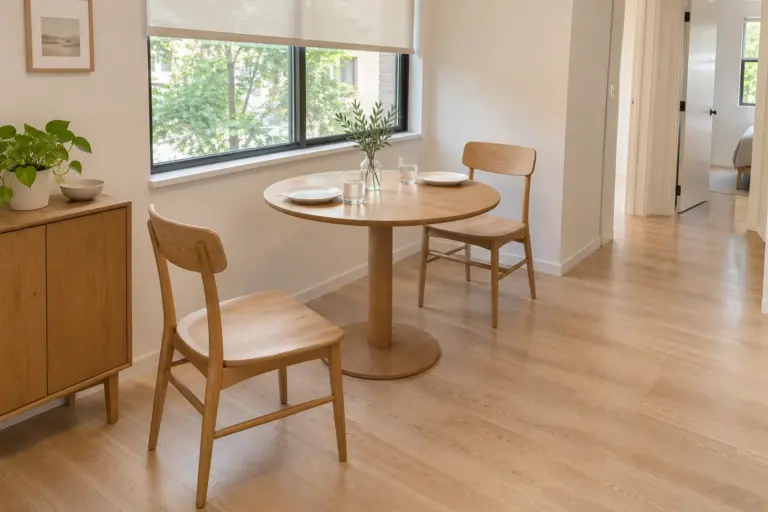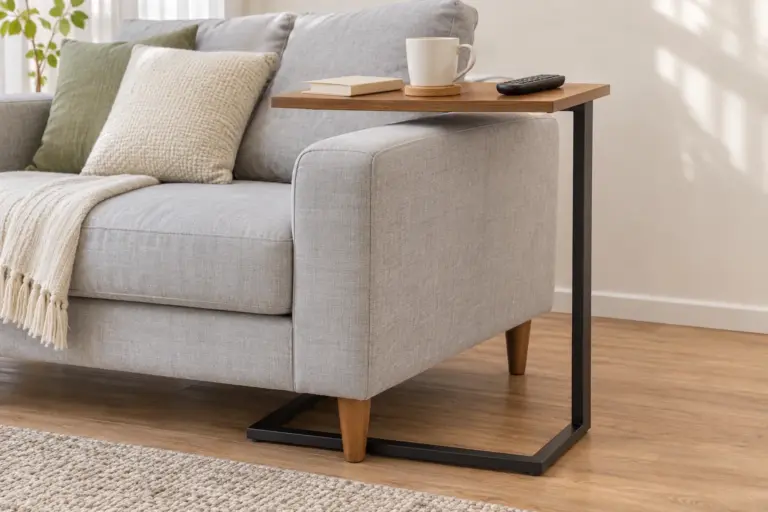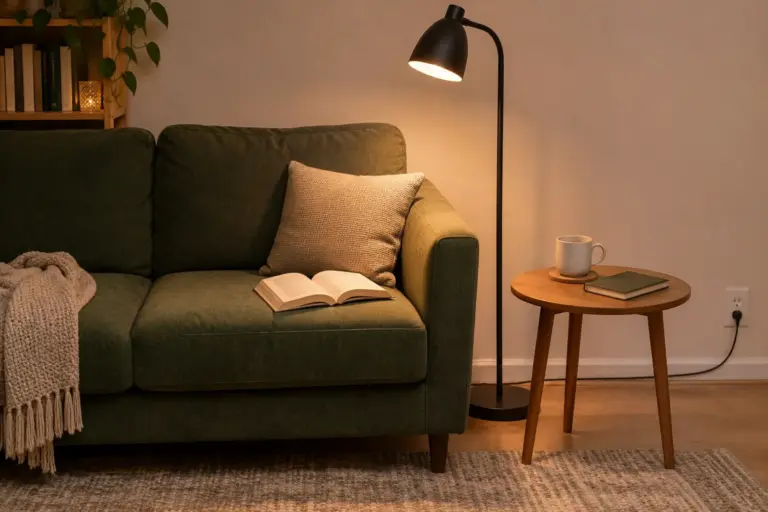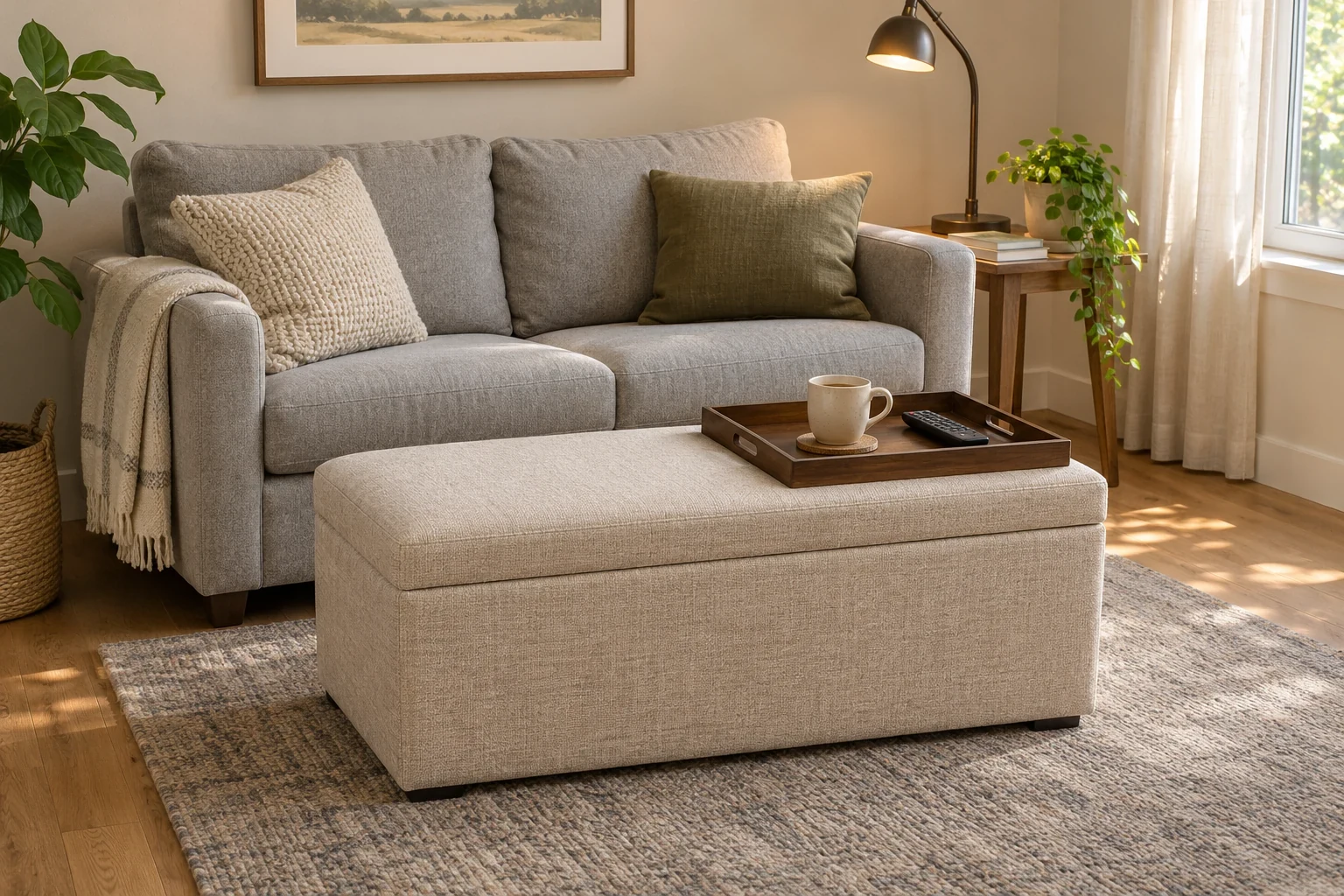
Choose a storage ottoman when foot support and hidden soft-item storage are the jobs you need most. Choose a coffee table when you regularly want a firm surface for drinks, games, food or work. In a small living room, the deciding question is what has to move before you can use the object for its second job.
An ottoman with a tray can do more than one thing, but it cannot do everything at once. The tray must go somewhere before your feet use that patch of cushion, and the top must be cleared before a removable lid opens. A table offers less hidden volume but may make ordinary evening activities simpler. Compare the full routine rather than counting functions in the product description.
Start with the Activity That Happens Most Often
Imagine a normal evening on your sofa. Do you put your feet up, rest a mug, unfold a board game, eat a meal or spread out a craft project? Name the two most frequent activities and the items involved. Then choose the central piece around the activity that is hardest to accommodate elsewhere.
If putting your feet up is important and a small side table already holds your drink, a storage ottoman has a clear role. It provides a softer central object and a place for a throw or spare cushion. If the central surface holds two drinks, a puzzle and snacks every night, regularly moving a tray may be an unnecessary complication.
Keep the people using the room in mind. One person can choose to move their own cup before lifting a lid. A shared room needs somewhere for everyone's objects while the contents are retrieved. A versatile object can be useful without being the best shared surface.
Tape Out the Piece and the Occupied Sofa
Mark the proposed footprint on the floor, then sit on the sofa normally. Include legs extended toward an ottoman and the space needed to stand. Try entering the seating area from the doorway rather than stepping around the tape from whichever direction is easiest.
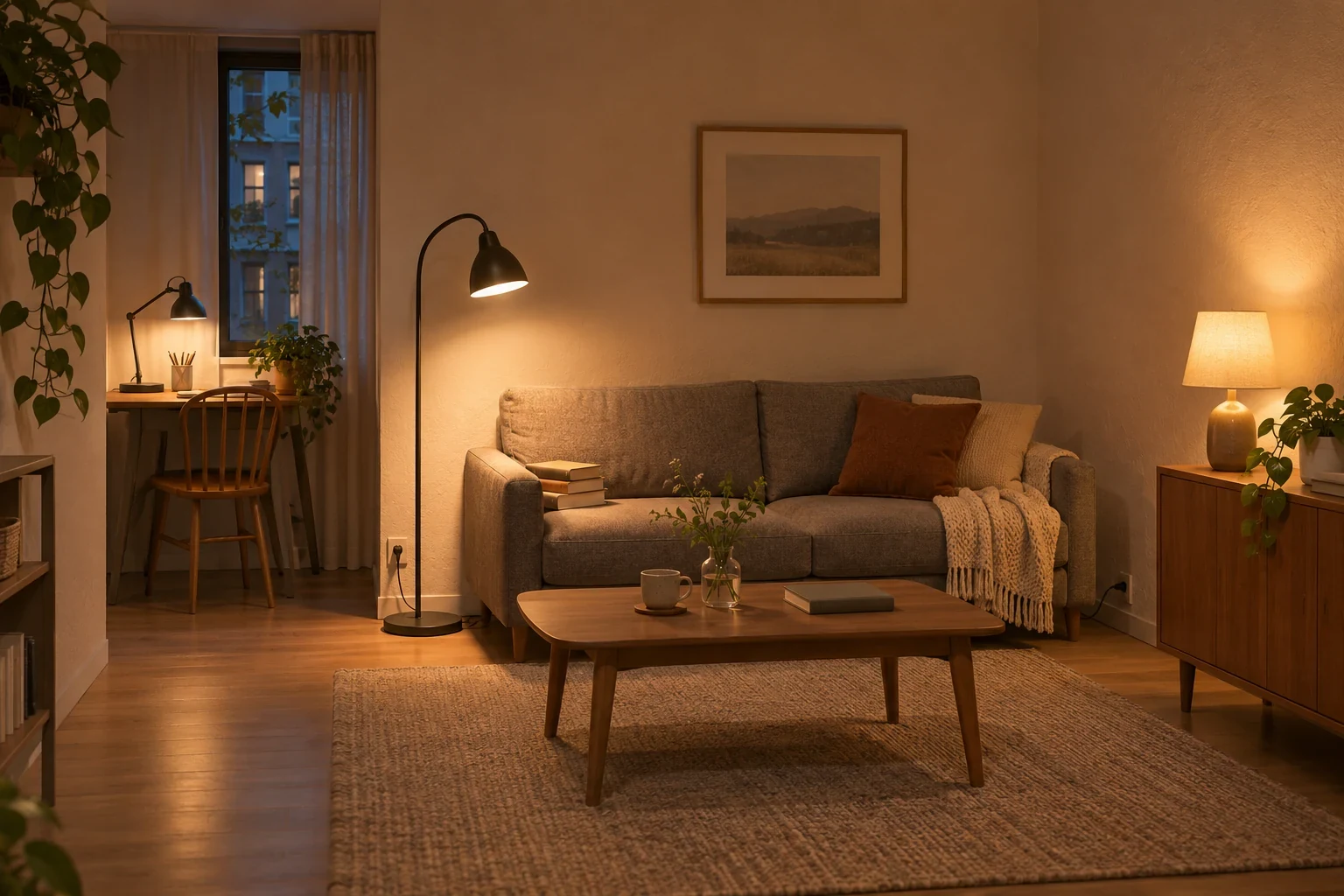
A rectangular piece may fit the length of a sofa but narrow a cross-room route at one end. A smaller square ottoman might suit a single seat while leaving an awkward reach from the other end. A round table removes corners, but it still occupies floor and may offer less usable surface for a rectangular game board.
There is no benefit in choosing a compact central piece if you then add two large side tables to replace the surface it lacks. Sketch the complete group: sofa, central object, side surfaces, lamp bases and the path through the room. Compare the combined arrangement.
Rehearse Opening the Storage
For a removable lid, decide where the lid goes. It needs a stable landing point that is not also the route out of the seat. If a tray is on top, it needs a separate place too. An upholstered lid propped against the sofa may be acceptable for occasional seasonal access and irritating for a blanket you retrieve every evening.
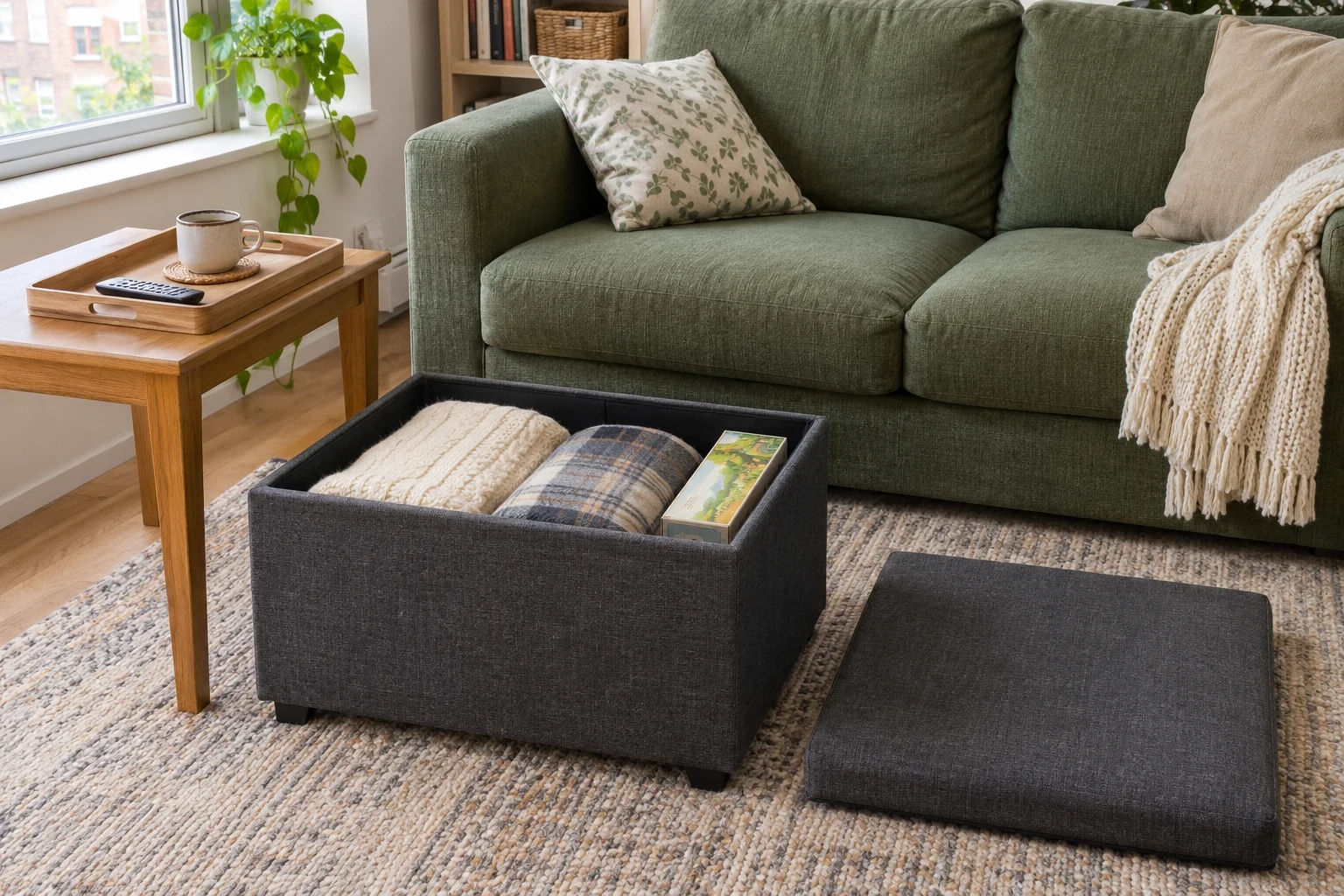
For a hinged lid, check the full opening sweep against the sofa and nearby furniture. The hinge format changes access, but it does not remove the need to clear loose objects. Follow the manufacturer's lid and seating instructions; do not assume a partially opened or unsecured top remains suitable for sitting.
In the open-lid arrangement shown here, the storage is easy to see because the cover has been moved to a separate clear patch of floor. That is part of the required space. It is a different room example from the closed ottoman scene, rather than a before-and-after claim about the same product.
Store items that match the access frequency. A folded throw or spare pillow suits occasional opening better than a remote needed throughout the evening. Small loose objects can become hard to find in a deep compartment. If you need a divider, check the internal measurements and the selected model's included parts.
Be Realistic About a Tray on Upholstery
A tray creates a defined surface, but the support beneath it remains upholstery. Check that the tray sits securely on the specific top, keep it away from edges and do not assume the arrangement is equivalent to a solid table. Follow product instructions about liquids, heat and surface care.
For frequent hot drinks, a stable side table may be the simpler partner to an ottoman. Put it within a comfortable reach of the actual seat. If it is across the room or behind your shoulder, the plan relies on inconvenience to protect the central surface.
Also consider what happens when guests arrive. Can someone sit without moving a drink? Can you put down a plate while retrieving a blanket? The strongest arrangement assigns the most common tasks to surfaces that stay available.
Compare a Specific Storage Example
The gray SONGMICS ULSF16GYZ ottoman, ASIN B07Z4STNMT, is a rectangular foldable storage model with a removable lid and short feet. The selected Amazon listing gives a 15-by-30-inch footprint and instructs users to cover the ottoman fully with the lid before sitting and to avoid oversized contents. Those are useful access and use conditions for this choice.
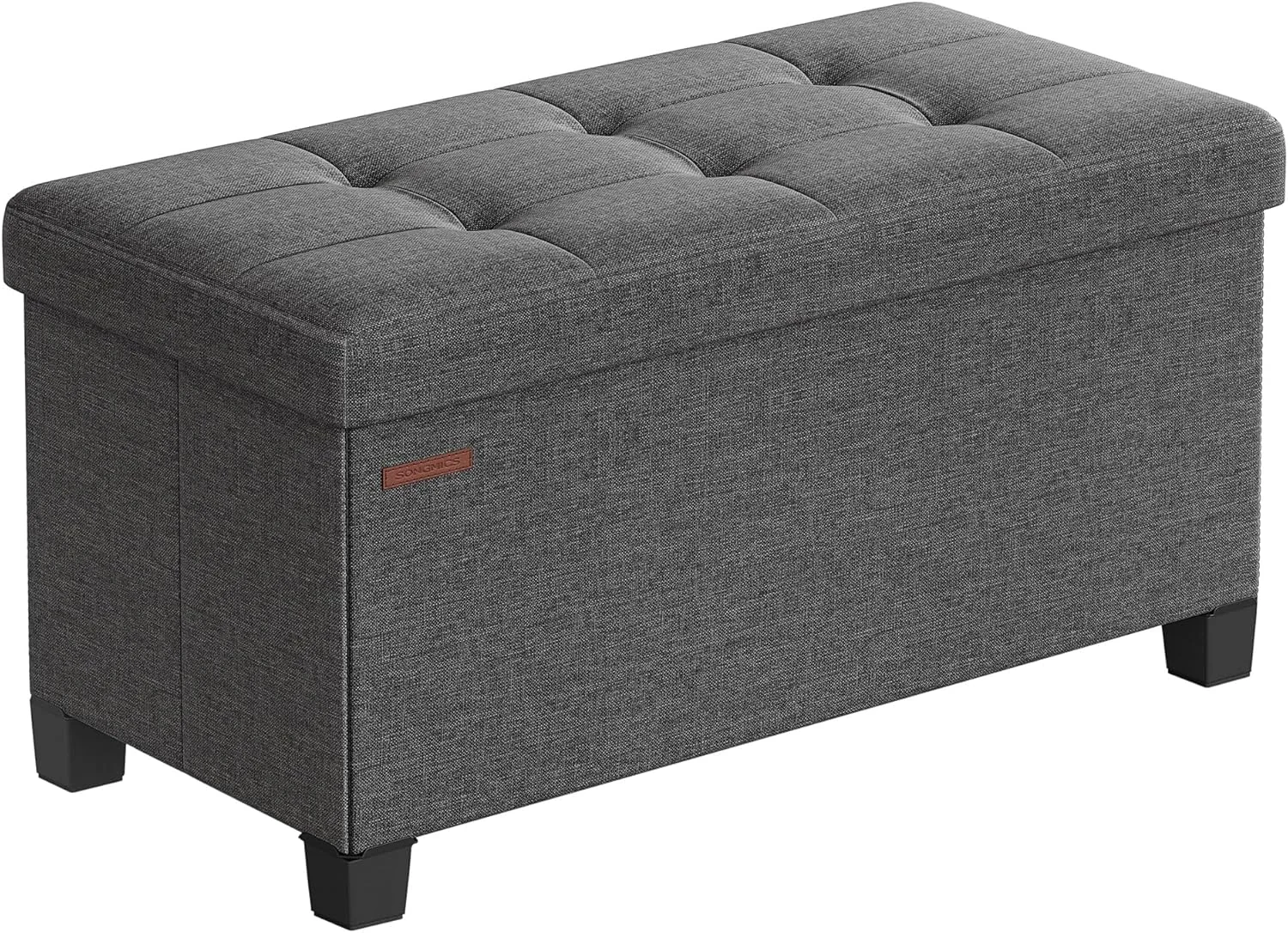
Height descriptions differ between this listing and related manufacturer material. Do not select it for an exact seat-height match or a tight under-table fit without confirming the current variant. The purchasing example illustrates a storage format; the original room scenes do not establish its upholstery appearance or tested comfort.
If stable surface use wins your comparison, start by testing a coffee-table outline of the size your activities require. You do not need a larger table just because it is conventional. Conversely, do not pick an ottoman only to hide items that could live more conveniently in an existing cupboard.
Make the Choice with a Two-minute Reset
Finish the exercise by simulating the change between your two main uses. Move the drink surface, open the storage, retrieve the throw, close the lid and settle back into the seat. Use safe lightweight substitutes rather than balancing real drinks during the mockup.
If the reset needs several unrelated objects to move, reconsider which function belongs in the center. An ottoman plus a modest side surface can be a useful combination. So can a simple coffee table with blankets stored elsewhere. Choose the arrangement that makes your actual evening easier to start, use and put away.