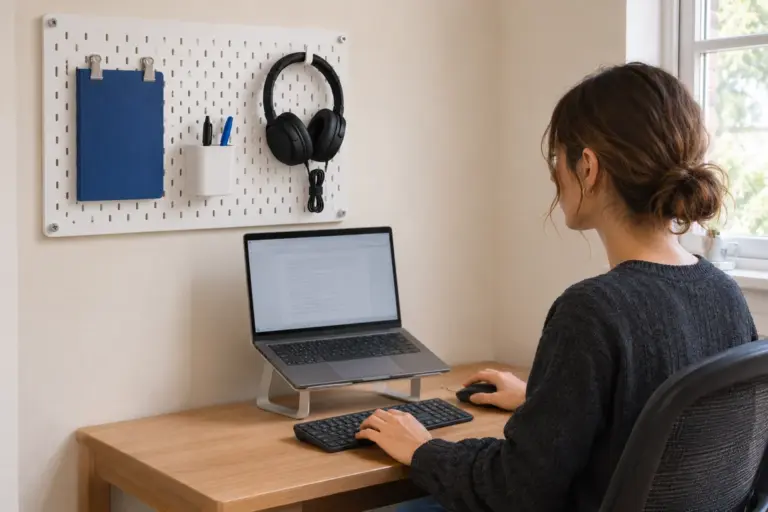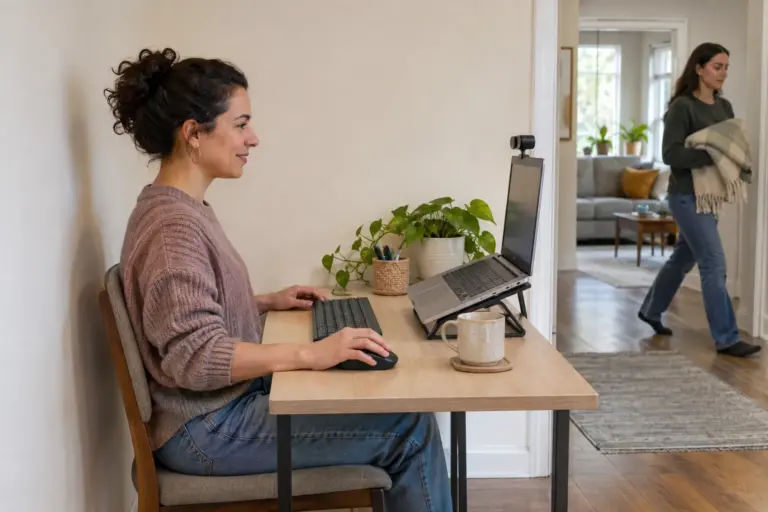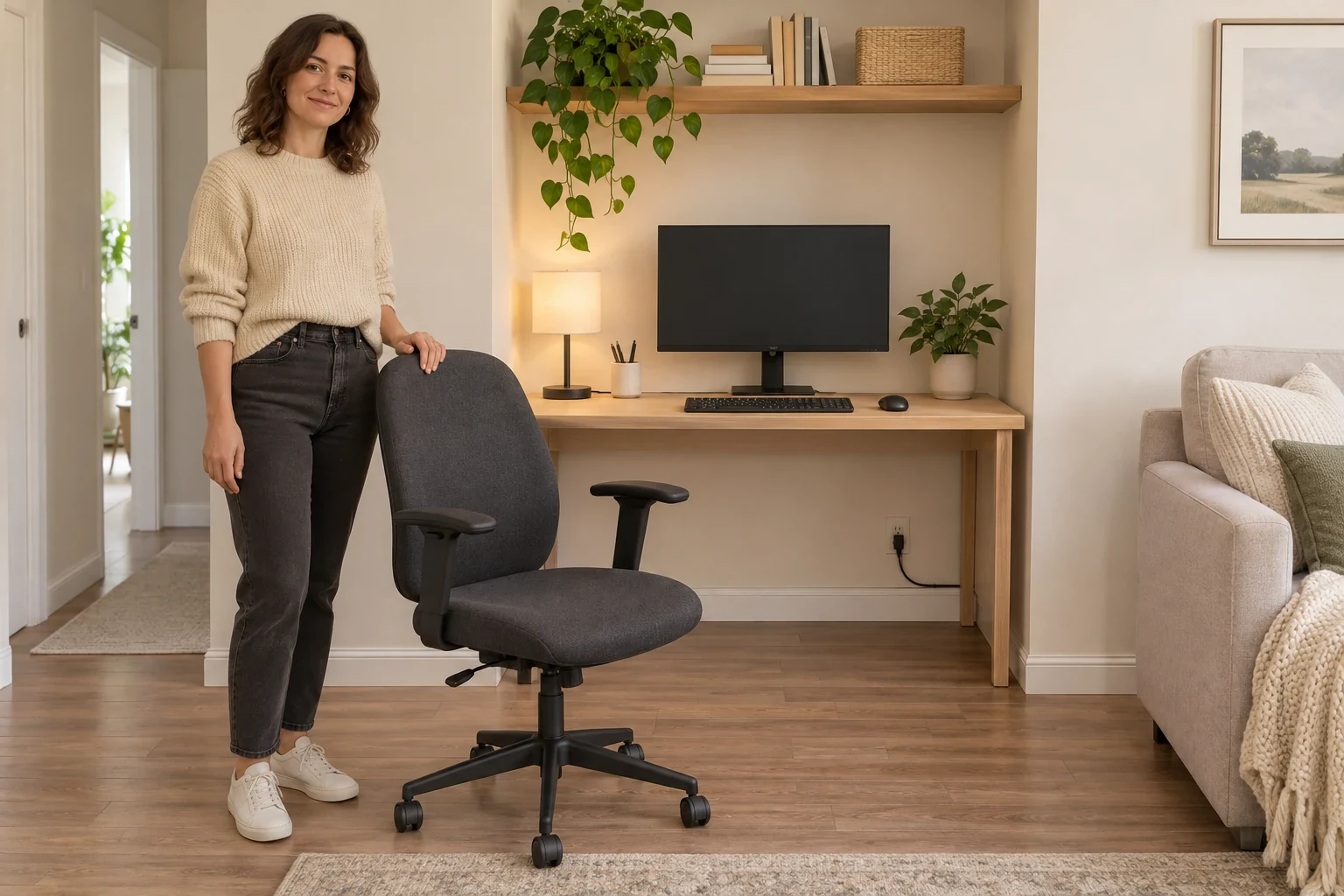
Check a nook desk with the chair moving and its user getting up, rather than judging the fit with everything tucked away. A desktop can sit neatly inside a recess while the working chair needs much of the room outside it. Include that space before assigning the nook to everyday work.
Begin with the desk, complete chair and equipment you already use. Follow one ordinary cycle: approach, sit, work, move back, stand, leave and return the chair. The useful result is a workstation you can enter and exit naturally while the rest of the room remains usable.
Measure the Opening as Well as the Back Wall
Record the nook's usable width at the back, along its sides and at its mouth. Include wall returns, baseboards, shelves and other projections. The narrowest opening may control the chair's movement even when the back wall looks generous enough for the desk.
Measure the recess depth and note where the desktop's front will sit. Then mark the room outside the nook: furniture fronts, doors, storage access and the routes people actually use. Treat the opening as a connection to that room, rather than a boundary beyond which the workstation stops taking space.
IKEA's small-office ideas include work areas within rooms that also serve other purposes. Use that perspective for this check. A living-room sofa or bedroom storage cannot simply disappear from the plan whenever the chair is pulled out.
Keep the desk's delivery and assembly in the same assessment. A top fitting across the wider back of a recess does not establish that the whole assembled desk can pass through a narrower opening. Follow the actual furniture's permitted installation and avoid assuming a wall or fitted component can be removed.
Check the Complete Chair and Space Under the Desk
Measure the chair's full base, back and arms in the actual positions permitted for use. Record what changes when it rotates, adjusts or moves back. The diameter of a caster base is only one part of the chair; a wider arm or back can encounter the nook's sides first.
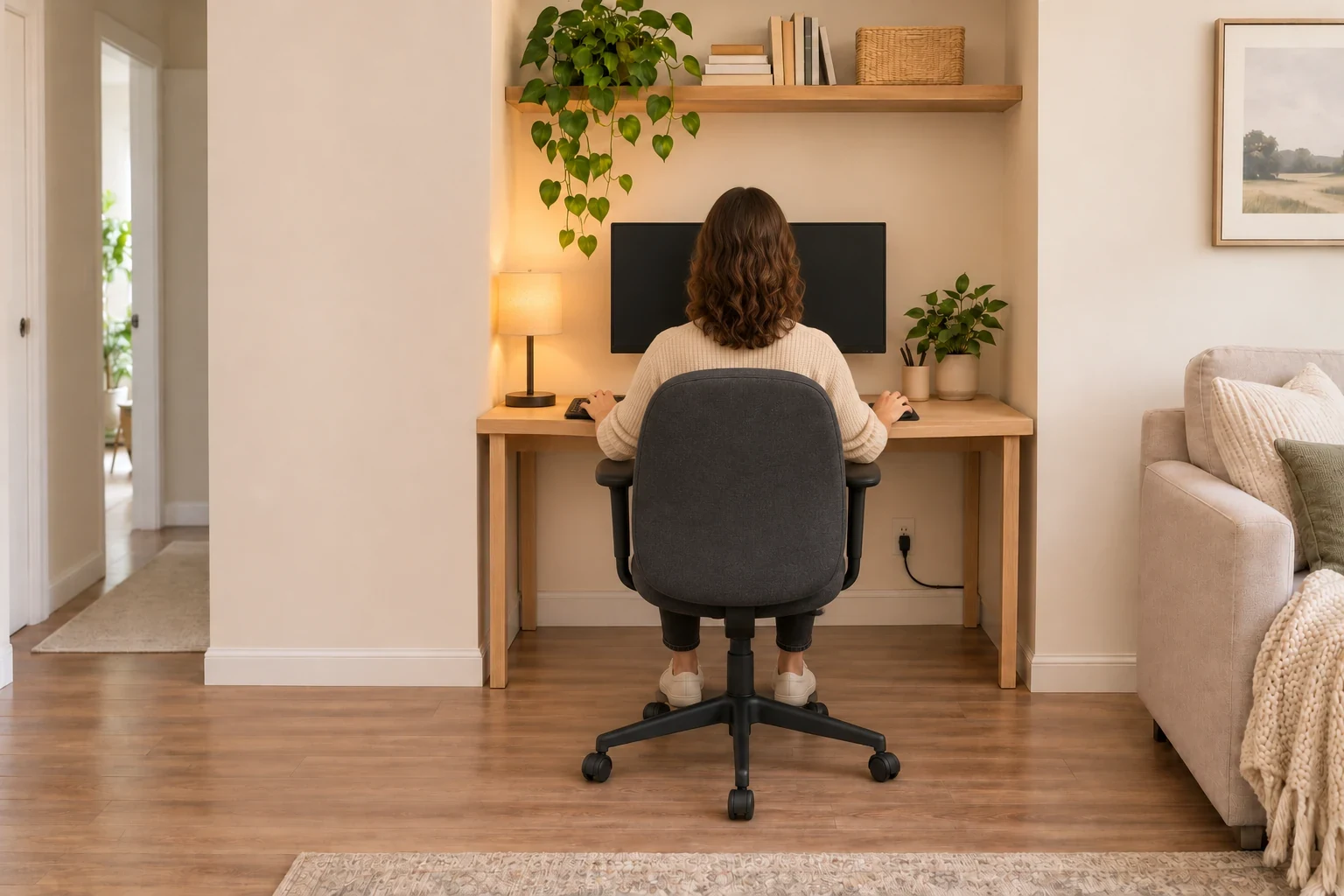
Check the space beneath the desk with the actual person seated. Include supports, drawers, cable equipment and anything already stored below. OSHA's desk guidance calls for clear leg and foot space and appropriate placement of frequently used components. A convenient storage box does not belong where it prevents the working position you need.
Try the actual keyboard, pointer and display positions before moving the chair farther under the surface. Pulling in tightly to make the room look clear is not a solution if it prevents reaching the controls appropriately. Keep the person's usable setup in the decision throughout.
Only use chair adjustments and desk arrangements permitted by their instructions. Do not remove necessary arms, supports or drawer components to make the shapes fit. If the complete furniture cannot provide the required movement, reassess the use of the nook instead of forcing the chair into it.
Draw the Space Beyond the Recess
The illustrative nook is 36 inches wide and 26 inches deep, with a 30-inch opening between its front returns. A generic desk is 28 inches wide and 20 inches deep. Its position leaves the opening and the desk front available for the chair trial.
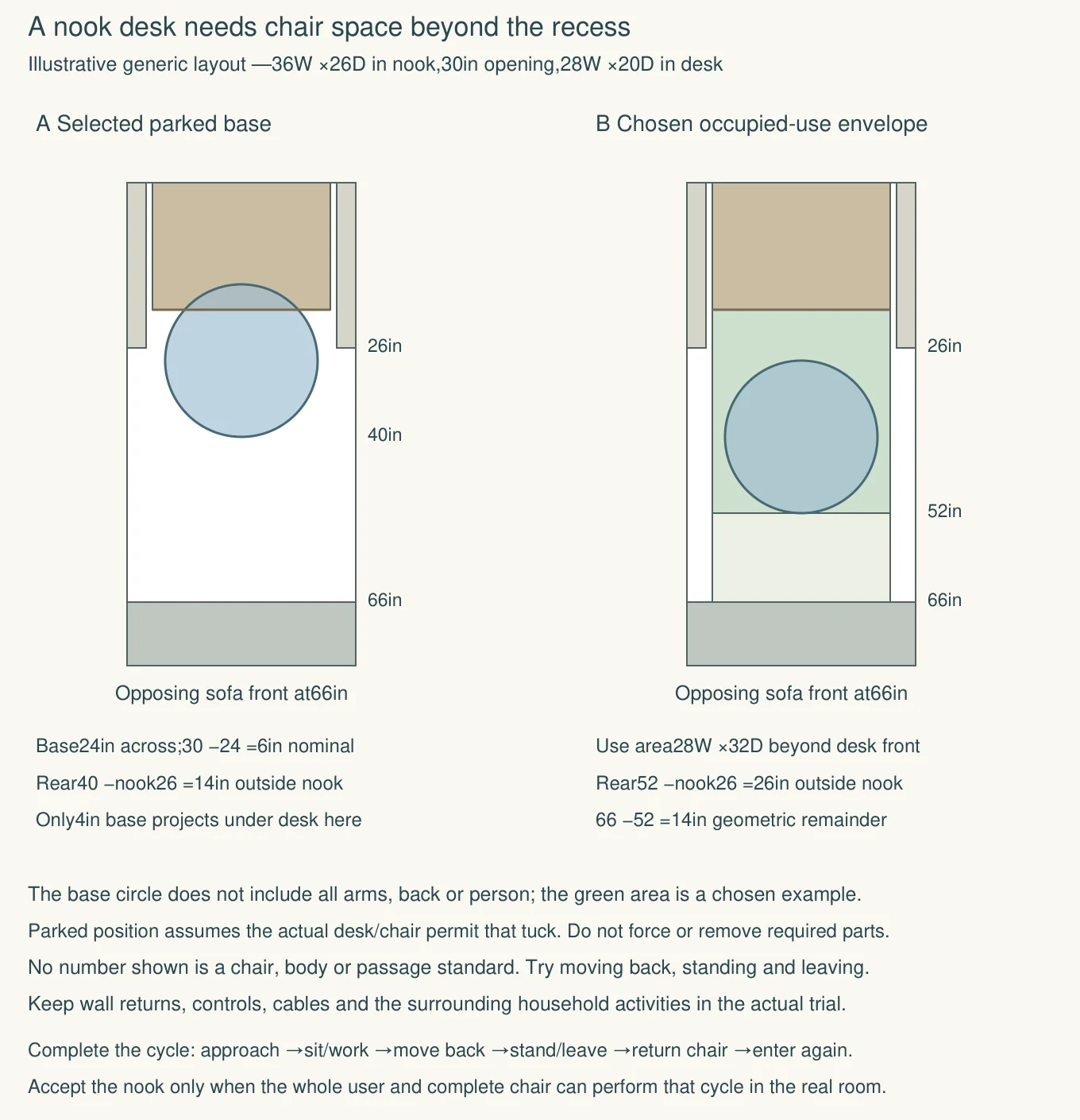
The example chair base is 24 inches wide and 24 inches deep. In a selected parked position permitted by the hypothetical setup, 4 inches of its depth lie under the desk. Its rear edge reaches 40 inches from the back wall, extending 14 inches beyond the 26-inch recess.
That parked base leaves 6 inches of nominal width within the 30-inch opening. This is not a claim that the complete chair, its arms or a person's movement fit through that opening. Measure and try the whole actual combination rather than approving it from the base's width alone.
For use, the second plan draws a chosen 28-inch-wide envelope extending 32 inches beyond the desk front. It ends at 52 inches from the back wall, or 26 inches outside the recess. With an opposing sofa front at 66 inches, a 14-inch geometric remainder stays behind that envelope.
Neither the chosen envelope nor the remainder is a chair, body or passage standard. The picture shows why the room outside the nook belongs in the assessment. Standing, turning and leaving still need the actual user and furniture, not just a favorable subtraction.
Try Leaving While the Room Is in Normal Use
Start from the person's usual working position. Move the chair back as intended, stand and follow the actual exit direction into the room. Check whether the chair back reaches a sofa, the arms catch a wall return or the person has to squeeze around a desk corner.
Ask another household member to use the room normally during the trial when that reflects your situation. Can they reach their seat or storage without taking over the chair's movement area? A workable desk must include those shared activities if they need to happen at the same time.
Trace the equipment cables through the actual movement. Keep them appropriately routed clear of casters, moving furniture and the user's exit. IKEA's office guidance includes assigning work materials and managing cables within the setup. Check those relationships after the desk and chair have moved, too.
If the nook has a door, include its complete permitted movement and the way it is used during work. A door that closes over a parked station does not establish that it can remain in that position with someone seated. Resolve the actual conflict rather than relying on the tidy closed view.
Return the Chair Without Losing the Next Entry
Finish by restoring ordinary work materials and moving the chair to its appropriate parked position. Keep the next person's approach available instead of using it to store bags, chargers or a spare stool. Try entering the station again to confirm the full cycle repeats.
Keep the nook as a workspace when its opening, under-desk space, outside movement and surrounding room all support normal use. If it fails, revise the room arrangement or assign the recess another suitable function. Buying a narrower desktop alone will not resolve a chair or user whose complete exit remains blocked.