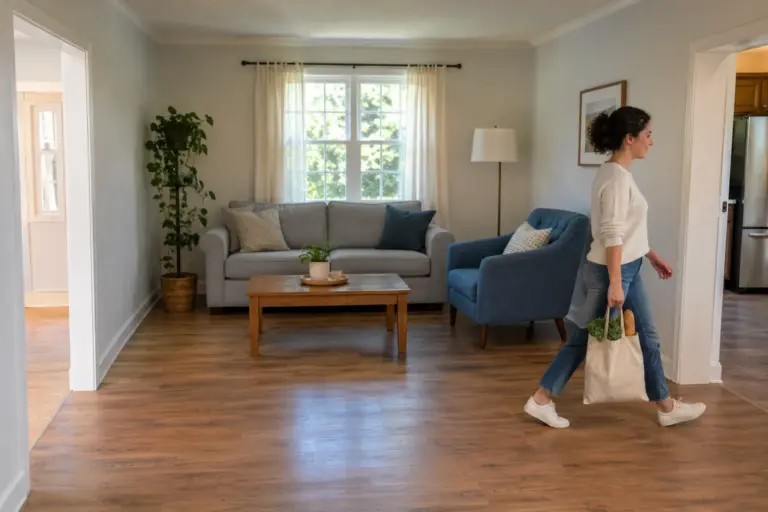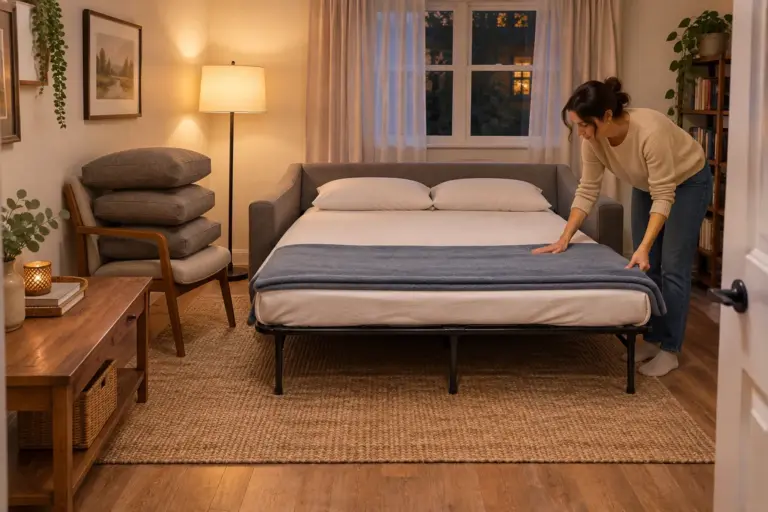
Choose occasional guest seating by following it from its storage place to an occupied position and back again. A folding chair earns its place in a small living room when you can retrieve it, use it appropriately and put it away without disrupting the room's everyday functions.
Begin with the number of additional seats you actually need. Two occasional visitors do not automatically justify a four-chair purchase. Check whether appropriate chairs you already own can serve the gathering, including where they will return afterward. The useful outcome is a workable visit and a restored room.
Count the Seats and the People Using the Room
Write down who normally sits where and how many visitors need additional seats. Keep the main seating in that count. A photograph with two spare chairs beside an empty sofa does not show whether everyone can sit, stand and move through the room together.
Decide what the visit involves. Conversation, a meal and a board game make different demands on seat height, support and the relationship to a surface. A folding dining chair is not automatically an appropriate substitute for the particular seat a visitor needs.
IKEA's small-room planning material considers flexible furniture alongside the room's other functions. Apply that idea to a specific visit instead of filling every available patch of floor. Keep the entrance, household storage and ordinary access available with the extra people present.
If you will borrow chairs, agree their collection and return. If you already have a suitable chair at a desk, include what happens to that workspace during the visit. Count the complete arrangement rather than finding a nominal extra seat by making another necessary part of the home unusable.
Measure the Actual Folded Object
Record the chair's complete folded height, width and thickness in the orientation intended for storage. Include projecting feet, hinges and handles. Measure the actual pair together if they will share a place; do not assume two chairs nest neatly or that their combined depth equals a convenient catalogue number.
Measure the usable storage opening and space behind it. A shelf lip, door hinge or projecting handle can reduce the opening through which the chair must pass. Check the permitted storage arrangement and appropriate support for the actual furniture and chairs, including how each will remain secure when one is removed.
The illustrative exercise uses an appropriate existing storage bay with 24 inches of clear width, 10 inches of depth and 38 inches of height. Each generic folded chair has an 18-by-3-by-36-inch envelope. Suppose the observed front-to-back arrangement of the pair occupies 6 inches of depth.
That leaves 6 inches of width, 4 inches of depth and 2 inches of height in this selected example. Those arithmetic remainders describe only the illustrated envelopes. They do not establish that a real chair can be inserted, supported, retrieved or stored in that orientation.
Try Retrieval Before Calling the Chairs Stored
Identify the clear place needed to stand and grasp the chair appropriately. Open the storage door fully and retrieve the nearer chair, then the second. Include any intervening items that would otherwise have to be moved before every gathering.
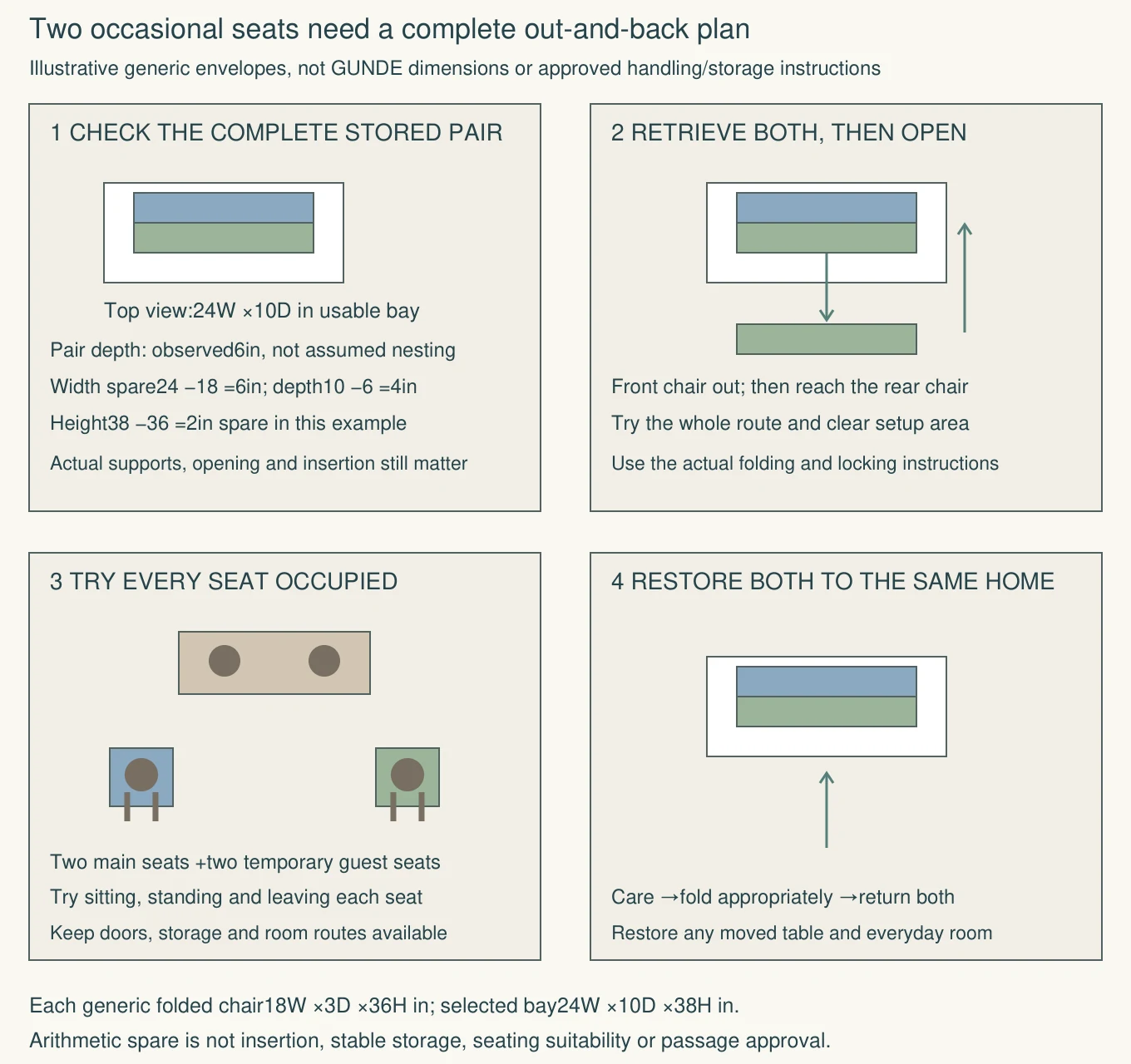
Follow the actual route into the living room. The folded chair's width and height both matter when passing a doorway or changing direction. Keep its whole shape and the person's handling space in the trial; a narrow edge passing a doorway is only one moment in the journey.
Use the actual model's instructions for handling, unfolding and any required locking action. Find an appropriate clear setup area rather than opening it between other people's feet. Check condition and suitability for the intended user before putting a chair into service. Storage convenience does not establish seating suitability.
If the first chair blocks access to the second, revise the order or the storage place. The goal is two usable extra seats without an awkward temporary pile in the doorway. IKEA's studio-planning guidance starts with the measured room and its functions; keep that whole-room view during the retrieval trial.
Check the Room with Every Seat Occupied
Place the extra chairs for the actual activity, with the sofa or other main seating occupied too. Include each chair's full open footprint and the space used by its occupant. Try sitting down, standing and entering or leaving the seat without requiring another guest to move first.
For conversation, check that people can face and hear each other comfortably in the actual room. Keep lamps, cables and side-table access in view. A small chair can still create a poor arrangement if its user's legs occupy the only route or its back prevents a cabinet from opening.
Check any change you propose elsewhere. If the coffee table moves out, it needs a suitable temporary destination. If a rug edge falls under a chair's feet, assess the actual setup rather than assuming a room photograph establishes stable support. Retain fewer seats if the complete arrangement cannot work appropriately.
Distinguish a Product’s Open, Folded and Packaged Sizes
One dimensional reference is IKEA's black GUNDE folding chair, article 002.177.97. The current US page describes one preassembled chair for indoor use, with listed width, depth and height fields of 16⅛, 17¾ and 30¾ inches. This is a candidate to check, rather than a promise that it suits every visitor.
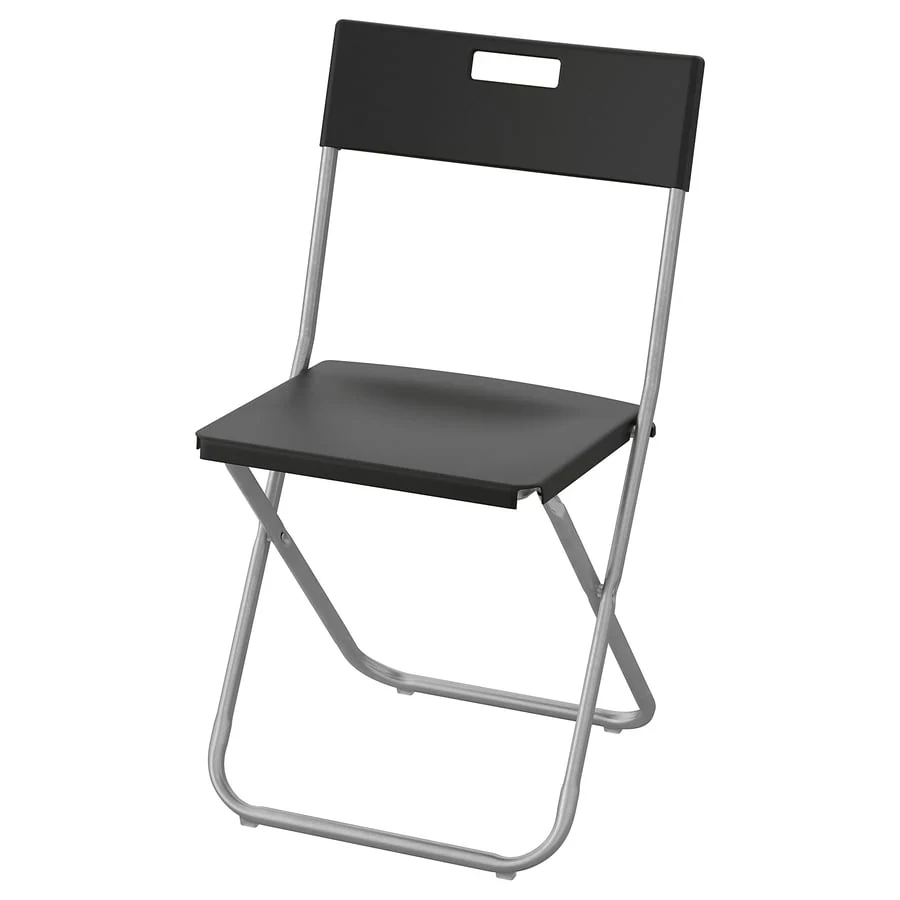
The manufacturer's dimension drawing marks 41 centimeters across the open chair's lower front frame but 42 centimeters across its upper back. Confirm the complete widest outline rather than treating the page's width field as the whole footprint. The separate folded view labels 90 centimeters in height and 6 centimeters in thickness; that view does not label a folded width. Measure the complete folded width for your storage check. The page's packaging fields instead list 16½ inches wide, 35¾ inches long and 2¾ inches high. Keep those two states separate when checking storage.
The real product photograph shows that single black-and-silver chair. The occupied room scene and the 18-by-3-by-36-inch storage exercise use different, generic furniture. Confirm the selected chair, count, actual condition, instructions and combined storage arrangement before buying. A set containing more chairs than you need also needs homes for the extras.
Finish the trial after the visit. Follow the actual care instructions, fold the chairs appropriately and return both to their agreed storage positions. Restore any moved table and check the entrance and everyday seating again. Keep the solution when putting the chairs away is as workable as bringing them out.